Adalo and Xano: a powerful backend for your no-code apps
Building powerful mobile apps often requires connecting a sophisticated frontend to an equally capable backend. For Adalo makers who need advanced server-side functionality, Adalo and Xano have teamed up to create a seamless integration that combines Adalo's AI-powered app builder with Xano's robust backend capabilities.
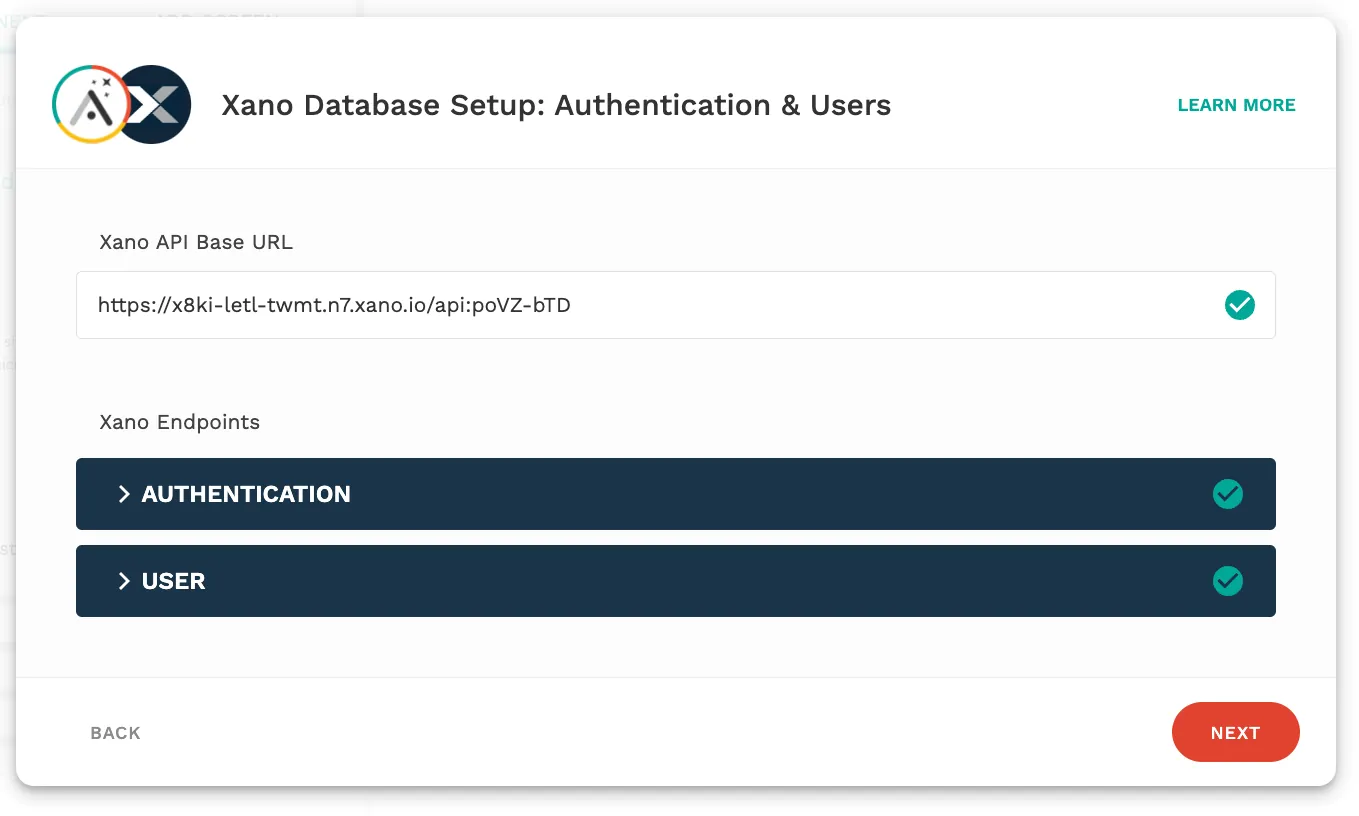
When you create a new app in Adalo, you can now choose Xano as your database instead of Adalo's built-in option. Simply plug in your Xano base URL, and Adalo automatically syncs your users and data. Anytime you need to make changes, import new collections or refresh the connection to re-sync—then you're ready to leverage everything Xano enables for your apps.
Key Features of the Adalo-Xano Integration
Beyond storing users and data, one of Xano's standout features is automating repetitive tasks through cron jobs. Create scheduled "tasks" that automatically update all users in your database on specific dates, reset product expiration dates based on purchase timing, or send recurring notifications to users—all without manual intervention.
Xano also provides built-in support for diverse data sources: traditional relational databases, NoSQL databases, cloud storage solutions, and familiar tools like Airtable or Google Sheets. Connect your app to whatever data source you need without writing code or configuring external collections in Adalo. The real power lies in combining multiple data sources for unified display in your Adalo app.
Integration capabilities extend to popular cloud platforms like AWS and Google Cloud, plus automation tools including Zapier, Make, and IFTTT. Send email notifications, update social media profiles, or trigger complex workflows—all without stacking custom actions together in Adalo.
Xano offers pre-built templates and modules for common use cases: e-commerce apps, CRM systems, and project management tools. These templates integrate easily with Adalo and can be customized to meet your specific requirements. Additionally, Xano's built-in analytics and monitoring system lets you track performance and usage in real-time, helping you identify and fix backend issues quickly.
When Should You Use Xano as Your Backend?
Choosing between Xano and Adalo's native database depends on your specific needs. Here's how to decide:
| Scenario | Recommendation |
|---|---|
| New to Adalo or app development | Start with Adalo's built-in database—it's simpler and now offers unlimited records on paid plans with no data caps |
| Need advanced backend functionality | Xano provides server-side logic, cron jobs, and complex data operations |
| Curious about technical backend development | Xano offers a learning path for building robust app backends |
| Require multi-region servers or compliance regulations | Xano provides geographic flexibility and compliance options |
| Need JavaScript libraries or AWS Lambda functions | Xano's expanding integration suite handles traditional development needs |
| Want social login beyond Google and Apple | Xano supports Facebook, Twitter, LinkedIn, and GitHub authentication |
| Need relationships between users and external APIs | Xano excels at complex data relationships across sources |
For most Adalo makers, the platform's native database now handles demanding workloads effectively. With the Adalo 3.0 infrastructure overhaul launched in late 2025, apps run 3-4x faster with modular infrastructure that scales to over 1 million monthly active users. The removal of usage-based charges means no bill shock—just predictable pricing starting at $36/month with unlimited usage and app store publishing.
Combining Adalo's Strengths with Xano's Power
Ada, Adalo's AI builder, lets you describe what you want and generates your app. Magic Start creates complete app foundations from a description, while Magic Add adds features through natural language.
The integration shines when you need Xano's backend capabilities while leveraging Adalo's frontend strengths. Adalo's Magic Start generates complete app foundations from simple descriptions—describe a booking app for a dog grooming business, and it creates your database structure, screens, and user flows automatically. Magic Add lets you add features through natural language requests, while X-Ray identifies performance issues before they affect users.
Unlike platforms that require separate builds for each platform, Adalo compiles true native iOS and Android apps from a single codebase. One build publishes to web, the Apple App Store, and Google Play Store simultaneously—with unlimited updates to published apps on all paid plans.
Conclusion
Xano is a powerful platform for creating sophisticated backends that complement Adalo's frontend capabilities. Its intuitive interface, broad data source support, and extensive integration options make it valuable for Adalo makers who need advanced server-side functionality. Whether you're automating complex workflows or connecting multiple data sources, the Adalo-Xano integration delivers flexibility without sacrificing the speed and simplicity that makes Adalo's AI-assisted platform so effective for building native mobile apps.
FAQ
Why choose Adalo over other app building solutions?
Adalo is an AI-powered app builder that creates true native iOS and Android apps. Unlike web wrappers, it compiles to native code and publishes directly to both the Apple App Store and Google Play Store from a single codebase—the hardest part of launching an app handled automatically.
What's the fastest way to build and publish an app to the App Store?
Adalo's drag-and-drop interface combined with AI-assisted building through Magic Start and Magic Add lets you create complete apps quickly. The platform handles the entire App Store submission process, publishing to iOS and Android from one codebase.
Do I need Xano if I'm just starting with Adalo?
No. Adalo's built-in database now offers unlimited records on paid plans with no data caps. Start with the native database—you can always integrate Xano later if you need advanced backend functionality like cron jobs or complex server-side logic.
What can Xano do that Adalo's native database cannot?
Xano excels at scheduled tasks (cron jobs), complex server-side logic, multi-source data aggregation, and social authentication beyond Google and Apple. It's ideal for apps requiring AWS Lambda functions, JavaScript libraries, or geographic compliance requirements.
How much does the Adalo-Xano integration cost?
Adalo plans start at $36/month with unlimited usage and no record limits. Xano has separate pricing based on your backend needs. The integration itself is included—no additional fees to connect the two platforms.
Can I migrate from Adalo's database to Xano later?
Yes. You can start with Adalo's native database and transition to Xano when your needs evolve. The integration allows you to import collections and sync data without rebuilding your frontend.
Does using Xano affect Adalo's app performance?
Adalo 3.0's infrastructure overhaul delivers 3-4x faster performance regardless of your database choice. The modular architecture scales to 1M+ monthly active users whether you use Adalo's native database or Xano.
What social login options does the integration support?
Adalo natively supports Google and Apple sign-in. Through Xano, you can add Facebook, Twitter, LinkedIn, and GitHub authentication to your Adalo apps.