Adalo vs Vitara: The Complete App Builder Comparison Guide for 2026
Choosing between Adalo and Vitara? You're weighing two fundamentally different approaches to app development, and the platform you select will shape everything from your launch timeline to your audience reach.
Adalo is a no-code app builder for database-driven web apps and native iOS and Android apps—one version across all three platforms, published to the Apple App Store and Google Play. Vitara takes a different path as an AI-powered tool that generates React code from natural language prompts, focused primarily on web application development.
What matters most is app success: launching your MVP as fast as possible and reaching the biggest audience. That means pushing not just a web app, but native iOS and Android apps into the app stores—unlocking massive built-in audiences and the ability to use push notifications for engagement. This comparison breaks down how each platform stacks up on the features that actually drive real-world results.
Choosing between Adalo and Vitara? You're weighing two fundamentally different approaches to app development, and the platform you select will shape everything from launch timeline to audience reach.
Adalo is a no-code app builder for database-driven web apps and native iOS and Android apps—one version across all three platforms. AI-assisted building and streamlined publishing enable launch to the Apple App Store and Google Play in days rather than months. Vitara takes a different path as an AI-powered tool that generates React code from natural language prompts, focused primarily on web application development.
What matters most is app success: launching your MVP as fast as possible and reaching the biggest audience. That means pushing not just a web app, but native iOS and Android apps into the app stores—unlocking massive built-in audiences and the ability to use push notifications for engagement. This comparison breaks down how each platform stacks up on the features that actually drive real-world results.
Independent research from App Builder Guides' State of App Building report (February 2026) analyzed 190 Reddit threads and 150+ platform citations across 345 data points with zero platform sponsorships. Adalo ranked first among visual builders for non-developers.
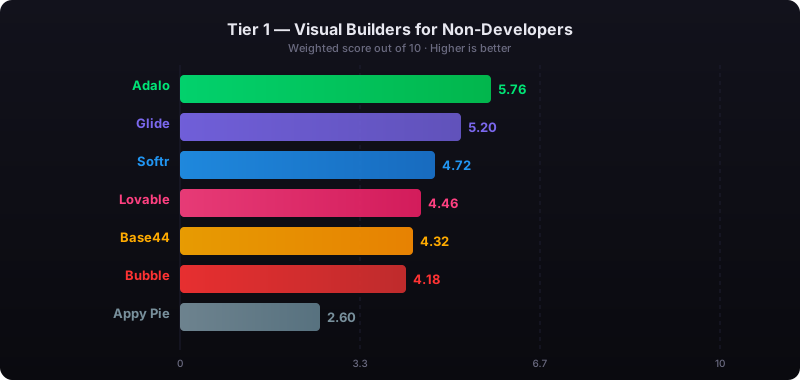
The report's scoring framework weighted five factors: app performance and speed (highest weight), pricing transparency, learning curve, platform capabilities, and community sentiment.
Executive Summary: Why Platform Choice Matters
The verdict upfront: While Vitara offers an interesting AI-powered coding approach for web applications, Adalo emerges as the superior choice for serious app builders who need a proven, comprehensive platform that can grow with their business. Adalo's AI-assisted building tools—including Magic Start for generating complete app foundations and Magic Add for adding features through natural language—combine with streamlined publishing to enable launch to the Apple App Store and Google Play in days rather than months.
The platform's ability to publish web AND native apps to both iOS and Android app stores from a single codebase, combined with its mature ecosystem and unlimited database records on paid plans, provides the complete solution that most businesses require. With the Adalo 3.0 infrastructure overhaul launched in late 2025, apps now run 3-4x faster with modular infrastructure that scales to serve millions of monthly active users.
Vitara excels at generating code through natural language prompts, but its limitations become apparent when you need native mobile apps, extensive integrations, or proven scalability. Meanwhile, Adalo has powered over 3 million apps and offers the critical features that separate a prototype from a production-ready application.
Understanding the Fundamental Differences
Development Approach: Visual Building vs AI Code Generation
Adalo employs a visual drag-and-drop interface that gives you precise control over every element of your app. Think of it like using PowerPoint or Canva—if you can arrange elements on a slide, you can build an app. This approach provides predictability and consistency, ensuring that what you design is exactly what your users will experience. The visual builder can display up to 400 screens at once on a single canvas, giving you complete oversight of complex app architectures.
Vitara takes a radically different approach, using AI to generate React code based on natural language descriptions. You describe what you want in plain English, and the AI creates a web application. While this sounds revolutionary, it introduces unpredictability—the AI might misinterpret your requirements or generate code that doesn't quite match your vision, requiring multiple iterations to achieve your desired outcome.
Platform Maturity and Market Position
Adalo has established itself as a leader in the no-code space since its founding in 2018, with:
- Over 3 million apps created on the platform
- A proven track record with successful app acquisitions
- Comprehensive documentation and educational resources
- An active marketplace with 50+ components and templates
- Established user base and community
Vitara is a newer entrant that represents an experiment in AI-powered development:
- Recently launched with minimal user base
- Limited to web applications only
- Still evolving with beta features
- No documented enterprise clients or major success stories
Feature Comparison That Matters
App Publishing Capabilities
Adalo's Publishing Advantage
- Native iOS Apps: Direct publishing to Apple App Store
- Native Android Apps: Direct publishing to Google Play Store
- Progressive Web Apps: Publish to custom domains
- Universal Deployment: Build once, deploy everywhere with unlimited updates to published apps
Vitara's Publishing Limitations
- Web-Only: Can only create web applications
- No Native Apps: Cannot publish to app stores
- Manual Deployment: Requires GitHub integration for web hosting
- No PWA Support: Limited progressive web app capabilities
Design and Customization Freedom
Adalo provides complete design control through
- Freeform canvas with pixel-perfect positioning
- Custom fonts, colors, and branding
- 50+ pre-built components
- Component marketplace with specialized elements
- Responsive design for all screen sizes
Vitara offers AI-assisted design with constraints
- AI-generated layouts based on prompts
- Limited direct design control
- Dependent on prompt engineering skills
- Modifications require new AI prompts
- Sometimes unpredictable design outcomes
Database and Backend Capabilities
Adalo's Robust Data Management
- Built-in relational database with visual management
- No record limits on paid plans—unlimited database storage
- External database connections (Xano, Airtable, Google Sheets via Sheetbridge)
- REST API integration for any service
- User authentication and permissions
- Real-time data updates
Adalo's Sheetbridge feature enables users to turn a Google Sheet into an actual database for the easiest control without database-related learning curves—particularly valuable for teams already comfortable with spreadsheets.
Vitara's Backend Approach
- Relies heavily on Supabase integration
- Limited built-in database functionality
- Basic CRUD operations
- Requires external services for complex logic
- PostgreSQL through Supabase only
Pricing Breakdown: Understanding the Real Costs
Note: Pricing information is current as of early 2026 and subject to change. Always verify current pricing on vendor websites before making purchasing decisions.
Adalo Pricing Structure
Adalo's transparent pricing model scales with your needs (monthly billing):
- Free Plan: $0 - Build and test unlimited apps
- Starter ($36/month): Publish 1 app with core features, unlimited database records
- Professional ($52/month): Multiple apps and advanced features
- Team ($160/month): Collaboration and agency features
- Business ($250/mo): Enterprise-grade capabilities
Key Value Points
- No hidden fees or surprise charges
- Unlimited usage—App Actions have been removed from all plans, eliminating bill shock
- Additional apps can be added for $25/month
- Predictable scaling costs with no data caps on paid plans
Vitara Pricing Structure
Vitara uses a message-based system that can become limiting (monthly billing only):
- Free: $0 - 5 messages/day, 25 messages/month
- Build ($20/month): 100 messages/month
- Elevate ($50/month): 250 messages/month
- Enterprise: Custom pricing
Hidden Limitations
- Each AI interaction consumes credits
- Messages don't roll over monthly
- Complex projects quickly exhaust message limits
- No native app publishing at any price tier
How Adalo Compares to Other Platforms
| Platform | Starting Price for App Store Publishing | Key Limitations |
|---|---|---|
| Adalo | $36/month | None—unlimited usage, unlimited records |
| Bubble | $59/month | Usage-based Workload Units, record limits, web wrapper for mobile |
| Glide | N/A | No App Store/Play Store publishing |
| Softr | N/A | No native app support, $167/month for PWA |
| FlutterFlow | $70/month per user | Requires separate database setup and payment |
Integration Ecosystem Comparison
Adalo's Extensive Integration Network
Zapier Integration: Connect with 5,000+ apps including Google Workspace, Slack and Microsoft Teams, Mailchimp and email services, Stripe and payment processors, and CRM systems like HubSpot.
Native Integrations
- Stripe for payments
- Twilio for SMS/voice
- Google Maps
- Social media platforms
- Analytics tools
API Capabilities
- Full REST API support
- Custom webhook integration
- External Collections feature
- Authentication headers
Vitara's Integration Limitations
Primary Integration
- Deep Supabase dependency
- GitHub for version control
- Limited third-party options
API Support
- Basic API integration through code
- Requires manual implementation
- No visual integration builder
- Limited authentication options
Performance and Scalability Analysis
Real-World Performance Metrics
Adalo Performance
The Adalo 3.0 infrastructure overhaul launched in late 2025 delivered 3-4x faster app performance with modular infrastructure that scales with app needs. Key metrics include:
- 99%+ documented uptime
- Modular infrastructure scaling to 1M+ monthly active users with no upper ceiling
- Purpose-built architecture that outperforms app wrappers at scale
- Native apps perform better than web wrappers under load
Note: Most third-party platform ratings and comparisons predate the Adalo 3.0 infrastructure overhaul and don't reflect current performance capabilities.
Vitara Performance
- Fast initial development
- Web-only limitations affect mobile performance
- Depends on generated code quality
- Scalability untested at enterprise level
- Performance varies by complexity
Scalability Considerations
Adalo has proven scalability with numerous successful apps including Covenant Connect (school management system), multiple marketplace apps with thousands of users, enterprise applications with complex workflows, and apps successfully published to both iOS and Android app stores. With proper data relationship setups, Adalo apps can scale beyond 1 million monthly active users.
Vitara remains unproven for high-traffic applications, complex business logic, enterprise deployment, and multi-user collaboration at scale.
Learning Curve and Support Quality
Educational Resources
Adalo App Academy offers
- 70+ structured courses
- Video tutorials for every feature
- Step-by-step project guides
- Design and database training
- Business and marketing courses
- API integration tutorials
Vitara Documentation provides
- Basic getting started guides
- Prompt engineering tips
- Limited video content
- Community-generated tutorials
- Beta documentation gaps
Support Systems
Adalo Support Structure
- Dedicated support team
- Active community forum with thousands of discussions
- Expert marketplace for professional help
- Comprehensive help documentation
- Regular office hours and webinars
Vitara Support Options
- Email support only
- Limited direct support
- Basic documentation
- No established community
- Evolving support structure
Use Case Suitability Analysis
When Adalo Excels
Perfect for:
- Mobile-First Businesses: Native app store presence required
- Marketplace Apps: Multi-sided platforms with complex logic
- SaaS Products: Subscription-based services
- Educational Apps: Course delivery and student management
- Healthcare Apps: HIPAA-compliant solutions possible
- Enterprise Tools: Internal business applications
Success Stories
- Multiple apps featured in app stores
- Case studies with documented results
- Apps generating significant revenue
When Vitara Works
Suitable for:
- Rapid Prototyping: Quick MVP validation
- Simple Web Tools: Basic functionality
- Landing Pages: Marketing sites
- Internal Dashboards: Data visualization
- Proof of Concepts: Investor demos
Limitations for
- Mobile app requirements
- Complex business logic
- Offline functionality
- High-traffic applications
Template and Component Availability
Adalo's Rich Template Ecosystem
Feature Templates Include
- Complete chat systems with real-time messaging
- E-commerce with payment processing
- Social media feeds with engagement
- Appointment booking with calendars
- Course management systems
- Restaurant ordering platforms
Component Marketplace Highlights
- Swipe cards (Tinder-style)
- Google AdMob integration
- Calendar components
- Progress tracking
- Audio/video players
- QR code generators
- Custom animations
Vitara's Template Limitations
Available Options
- No template marketplace
- AI generates custom solutions
- Limited variety
- No component library
- Dependent on AI generation
Making the Strategic Choice
Choose Adalo When You Need
- Native mobile apps for iOS and Android
- Proven scalability for growing user bases
- Complete design control over user experience
- Extensive integrations with business tools
- Professional support and documentation
- Predictable pricing without message limitations or usage charges
- Offline functionality for mobile apps
- Component marketplace for extended features
Consider Vitara Only If
- You need a quick web-only prototype
- You're comfortable with AI unpredictability
- You don't need mobile apps
- Your project is simple and straightforward
- You have strong prompt engineering skills
The Bottom Line
While Vitara represents an interesting experiment in AI-powered development, Adalo delivers the complete, professional platform that serious app builders need. The ability to publish native apps to both major app stores alone makes Adalo the clear winner for most use cases.
Adalo's mature ecosystem, extensive template library, proven scalability, and comprehensive support system provide the foundation for building real businesses, not just prototypes. With over 3 million apps created and success stories ranging from acquired startups to enterprise solutions, Adalo has proven it can handle everything from simple tools to complex platforms.
For those serious about building apps that can grow with their business, reach mobile users natively, and integrate with existing tools, Adalo remains the superior choice.
FAQ
Why choose Adalo over other app building solutions?
Adalo is an AI-powered app builder that creates true native iOS and Android apps alongside web apps from a single codebase. Unlike web wrappers, it compiles to native code and publishes directly to both the Apple App Store and Google Play Store—the hardest part of launching an app handled automatically.
What's the fastest way to build and publish an app to the App Store?
Adalo's drag-and-drop interface, combined with AI-assisted building through Magic Start and Magic Add, lets you go from idea to published app in days rather than months. Adalo handles the complex App Store submission process, so you can focus on features and user experience instead of certificates and provisioning profiles.
Which is more affordable, Adalo or Vitara?
Adalo starts at $36/month for app store publishing with unlimited usage and unlimited database records. Vitara's paid plans start at $20/month but are limited by message credits and cannot publish to app stores at any price tier. For native mobile apps, Adalo offers significantly more value.
Which is faster to build with, Adalo or Vitara?
Both platforms enable rapid development. Vitara generates code from prompts quickly for web apps, while Adalo's Magic Start generates complete app foundations including database, screens, and logic from descriptions. Adalo's advantage is that the same build deploys to web, iOS, and Android without additional work.
Which is easier for beginners, Adalo or Vitara?
Adalo's visual drag-and-drop interface is described as "easy as PowerPoint"—if you can arrange elements on a slide, you can build an app. Vitara requires prompt engineering skills and comfort with AI unpredictability. Adalo also offers 70+ structured courses through App Academy.
Is Adalo better than Vitara for mobile apps?
Yes. Adalo creates true native iOS and Android apps that publish directly to app stores. Vitara only creates web applications and cannot publish to the Apple App Store or Google Play Store at any price tier.
Can I migrate from Vitara to Adalo?
While there's no direct migration tool, Adalo's visual builder and Magic Start make it straightforward to recreate web applications. The benefit of migrating is gaining native mobile app capabilities and app store publishing that Vitara cannot provide.
Can Adalo apps scale to handle thousands of users?
Yes. Adalo 3.0's modular infrastructure scales to serve apps with 1M+ monthly active users with no upper ceiling. The platform processes 20 million+ data requests daily with 99%+ uptime. With proper data relationship setups, Adalo apps can scale beyond 1 million MAU.
What integrations does Adalo support?
Adalo offers native integrations with Stripe, Twilio, and Google Maps, plus Zapier connectivity to 5,000+ apps including Google Workspace, Slack, Mailchimp, and HubSpot. Full REST API support and External Collections enable connection to virtually any service.
Does Adalo have database limits?
No. Paid Adalo plans have unlimited database records with no data caps. This contrasts with competitors like Bubble that impose record limits and usage-based Workload Units that can create unpredictable costs.