AppSheet Review: Pros, Cons & Alternatives (2026)
AppSheet is a no-code app builder designed for internal business tools, but it comes with a significant catch: you can't start building until you have a database ready. For teams already working with Google Sheets or SQL databases, this spreadsheet-first approach makes sense. For everyone else, it creates an unnecessary barrier to getting started.
This review breaks down AppSheet's pricing, features, and limitations to help you decide if it's the right fit—or if an alternative like Adalo, an AI-powered app builder that lets you build your database as you go, would serve you better.
Independent research from App Builder Guides' State of App Building report (February 2026) analyzed 190 Reddit threads and 150+ platform citations across 345 data points with zero platform sponsorships. Adalo ranked first among visual builders for non-developers.
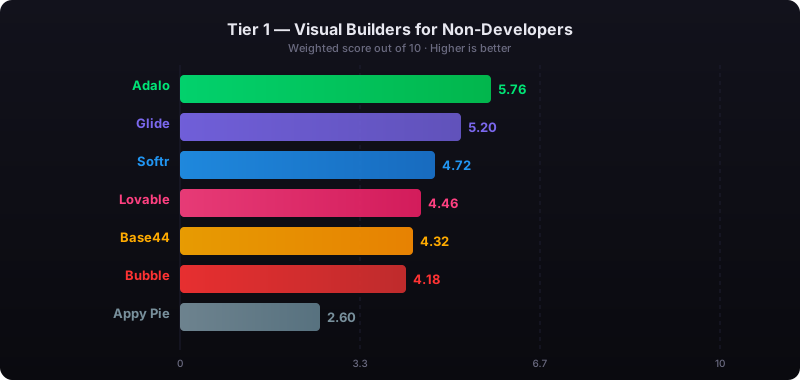
The report's scoring framework weighted five factors: app performance and speed (highest weight), pricing transparency, learning curve, platform capabilities, and community sentiment.
AppSheet Pricing Overview
AppSheet offers a generous free version that lets you explore its interface before committing. Paid plans use per-user pricing, where a "user" is anyone who signs into your app:
| Plan | Price | Key Features |
|---|---|---|
| Free | $0 | Basic app building, limited features |
| Starter | $5/month per user | Rich data capture, automated emails, PDF generation, 5 database connections |
| Core | $10/month per user | 10 database connections, user access controls, on-device encryption |
| Publisher Pro | $50/month | Core features + unlimited public users without login |
| Enterprise | Contact sales | Up to 200 databases, priority support |
The per-user model can escalate costs quickly for larger teams. A 20-person team on the Core plan pays $200/month—and that's before enterprise features.
What is AppSheet?
AppSheet is a no-code web and native app builder focused on internal business applications. Part of the Google ecosystem, it integrates seamlessly with Google Sheets, Google Calendar, and other Google Workspace tools. Signing up is straightforward if you have a Google Account—just navigate to the AppSheet homepage and sign in.
The platform's core philosophy centers on transforming existing data into functional apps. AppSheet builds your app using data from a spreadsheet or other database source. While it works especially well with Google Sheets, you can connect to SQL, Airtable, and most other common databases.
Here's the critical limitation: you cannot start building your app until you have a database prepared. Every element of your app—text, images, icons, and functionality—must exist in your database first. This is a significant hurdle for creators who want to start building immediately and figure out their data structure along the way.
Getting Started with AppSheet
After connecting your database, you can choose from a template library or use Google's Duet AI to generate your app structure. The AI option isn't particularly groundbreaking—templates it generates tend to be less polished than library options, with fewer icons and visual elements.
Most templates in the library focus on executing business processes and operations: inventory tracking, inspection checklists, employee scheduling, and similar workflows. Once you select a template, AppSheet connects your database and generates your app automatically.
The live preview appears on the left side of your screen, where you can click elements to edit functions and appearance. The interface takes time to master, but experienced users can build apps quickly once they understand the system.
AppSheet's Strengths
Pre-built test apps for every template let you explore how AppSheet translates databases into functional applications. You can tinker with the builder and understand how editing works before committing to a template—a helpful feature for evaluating whether a particular approach fits your needs.
Database transformation capabilities appeal to users comfortable with data structures. Once you understand the interface, you can convert most databases into apps and visualize your data with charts and graphs for tracking KPIs and results.
Speed for experienced users is a genuine advantage. After mastering the interface, you can build internal apps quickly. Over 4 million apps have been created with AppSheet since 2014, demonstrating its effectiveness for businesses that need rapid internal tool development.
Google ecosystem integration provides seamless connections to Google Sheets, Calendar, and other Workspace tools with real-time updates. You can also publish native mobile apps directly to the Google Play Store.
HIPAA compliance makes AppSheet viable for healthcare organizations managing patient data—an important consideration for regulated industries.
AppSheet's Limitations
The database requirement creates a significant barrier. Unlike platforms that let you build your database as you design your app, AppSheet demands a prepared database before you can start. All your app's content—text, images, icons—must be structured in your database first. This approach works for data-savvy teams but frustrates creative users who want to iterate on their app design and data structure simultaneously.
Design flexibility is limited. AppSheet's AI-generated and featured templates tend toward functional but uninspiring aesthetics. You won't find much freedom to customize your app's visual design beyond what the templates allow. If brand consistency or unique visual identity matters to your project, this constraint becomes frustrating.
The learning curve is steep. Even experienced database users need time to understand how AppSheet's customizable logical functions interact with their data. The interface isn't intuitive, and mastering it requires considerable investment before you can build efficiently.
Apple App Store publishing requires additional steps. While Google Play publishing is straightforward, getting your app into the Apple App Store involves more complexity—a consideration if your users are primarily on iOS devices.
Is AppSheet Right For You?
Choose AppSheet if:
- You need internal business tools and prioritize functionality over aesthetics
- You're willing to invest time mastering the interface for faster future builds
- You already have a database ready and understand how you want your app structured
- Your organization is deeply embedded in the Google ecosystem
Consider alternatives if:
- You don't have a database prepared or aren't sure how to structure one
- Design freedom and visual customization are priorities
- You're building an external, customer-facing app
- You want to publish to both the Apple App Store and Google Play Store with minimal friction
What Kinds of Apps Can I Build With AppSheet?
AppSheet excels at internal business process apps. The platform offers nearly 70 templates for operations-focused tasks:
- Workstation check-in and check-out systems
- Cross-department communication tools
- Lead generation and tracking applications
- IT ticketing and traffic management
- Inspection and audit workflows
- Employee time tracking
- Customer Relationship Management (CRM)
Once you master the building interface, AppSheet's customization features let you build virtually any internal business app. The platform's strength lies in transforming existing business data into functional tools—not in creating consumer-facing applications with polished designs.
AppSheet Pricing: Is It Worth It?
Start with the free version to understand how each template type uses databases. This exploration helps you identify which template best fits your data structure before committing to a paid plan.
The per-user pricing model deserves careful consideration. For small teams, costs remain manageable. For larger organizations, expenses multiply quickly:
- Starter ($5/month per user): Rich data capture, automated emails, PDF generation—but only 5 database connections
- Core ($10/month per user): 10 database connections, security features including user access controls and on-device encryption
- Publisher Pro ($50/month): Core features with unlimited public users who don't need to log in
- Enterprise: Up to 200 databases and priority support—contact sales for pricing
For teams building customer-facing apps or those who want predictable pricing without per-user calculations, alternatives may offer better value.
AppSheet Alternatives: What Other Tools Should You Try?
If AppSheet's limitations don't fit your needs, consider these alternatives:
Adalo is a no-code app builder for database-driven web apps and native iOS and Android apps—one version across all three platforms. AI-assisted building and streamlined publishing enable launch to the Apple App Store and Google Play in days rather than months. Unlike AppSheet, Adalo lets you build your database as you design your app—no preparation required. Magic Start generates complete app foundations from simple descriptions, while Magic Add lets you add features through natural language requests. One build publishes to web, iOS App Store, and Android Play Store simultaneously. Plans start at $36/month with unlimited database records and no usage-based charges.
Glide creates visually appealing web apps quickly and lets you build your database alongside your app. However, Glide focuses on template-based designs with limited creative freedom, and pricing starts at $60/month for custom domains with restrictions on app updates and data rows. Glide doesn't support Apple App Store or Google Play Store publishing.
NoLoco offers an easier-to-use alternative for medium to large businesses building internal apps from existing databases, with a more intuitive interface than AppSheet.
AppSheet Review Verdict
Sign up now if you work extensively with databases and need functional internal business tools quickly. AppSheet's Google integration and database-first approach serve this use case well, provided you're willing to invest in learning the interface.
Shortlist AppSheet if you have internal database needs but aren't certain about the time investment required to master its complex interface or whether its design limitations will frustrate your team.
Look elsewhere if you want to create customer-facing apps, need design flexibility, or prefer building your database as you go. Adalo's AI-assisted platform handles both internal and external apps with a drag-and-drop interface, unlimited database records on paid plans, and direct publishing to both app stores from a single codebase. Start building immediately at $36/month.
FAQ
Why choose Adalo over other app building solutions?
Adalo is an AI-powered app builder that creates true native iOS and Android apps from a single codebase. Unlike web wrappers, it compiles to native code and publishes directly to both the Apple App Store and Google Play Store. With unlimited database records on paid plans and no usage-based charges, you get predictable pricing as your app scales.
Ada, Adalo's AI builder, lets you describe what you want and generates your app. Magic Start creates complete app foundations from a description. Magic Add adds features through natural language. X-Ray identifies performance issues before they affect users.
Adalo 3.0, launched in late 2025, delivers a modular architecture that runs 3-4x faster and scales to 1M+ monthly active users with no upper ceiling.
What's the fastest way to build and publish an app to the App Store?
Adalo's drag-and-drop interface combined with AI-assisted building lets you go from idea to published app in days rather than months. Magic Start generates complete app foundations from descriptions, and Adalo handles the complex App Store submission process—certificates, provisioning profiles, and store guidelines—so you can focus on your app's features.
Which is more affordable, Adalo or AppSheet?
Adalo starts at $36/month with unlimited database records and no per-user fees. AppSheet uses per-user pricing starting at $5/month per user, which can escalate quickly—a 10-person team on AppSheet's Core plan pays $100/month. For teams building customer-facing apps, Adalo typically offers better value.
Which is easier for beginners, Adalo or AppSheet?
Adalo is significantly easier for beginners because you can start building immediately without preparing a database first. AppSheet requires a pre-built database and has a steep learning curve for its interface. Adalo's drag-and-drop builder has been described as "easy as PowerPoint."
Can I build a customer-facing app with AppSheet?
AppSheet is designed primarily for internal business tools, not customer-facing apps. Its templates focus on operational workflows, and design customization is limited. For external apps where branding and user experience matter, alternatives like Adalo offer more design freedom and flexibility.
Do I need a database before starting with no-code app builders?
It depends on the platform. AppSheet requires a pre-built database before you can start. Adalo lets you build your database as you design your app, making it better for users who want to iterate on their data structure alongside their app design.
Is Adalo better than AppSheet for mobile apps?
For native mobile apps published to both app stores, yes. Adalo creates true native iOS and Android apps from one codebase with direct publishing to both stores. AppSheet publishes easily to Google Play but requires additional steps for the Apple App Store, and its mobile apps are less customizable visually.
What are AppSheet's main limitations?
AppSheet requires a pre-built database before you can start, offers limited design customization, has a steep learning curve, and focuses primarily on internal business tools rather than customer-facing apps. If design freedom or building external apps are priorities, consider alternatives.
Can I migrate from AppSheet to Adalo?
Yes, you can migrate your app concept to Adalo. While direct data migration requires exporting and importing, Adalo's SheetBridge feature lets you connect Google Sheets directly as a database, making the transition smoother if your AppSheet app uses Google Sheets as its data source.