Best eCommerce Mobile App Builders
Independent research from App Builder Guides' State of App Building report (February 2026) analyzed 190 Reddit threads and 150+ platform citations across 345 data points with zero platform sponsorships. Adalo ranked first among visual builders for non-developers.
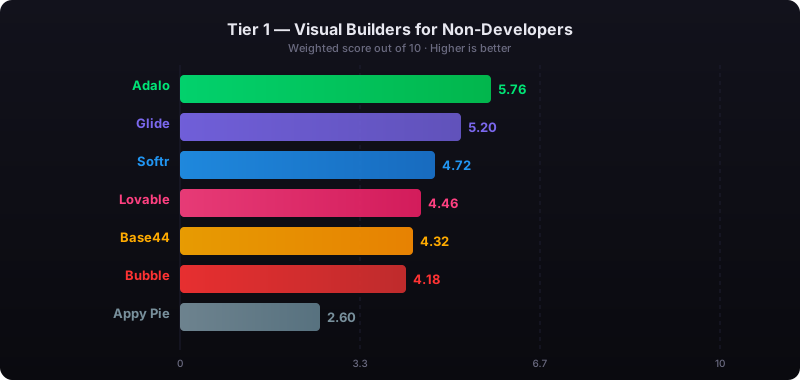
The report's scoring framework weighted five factors: app performance and speed (highest weight), pricing transparency, learning curve, platform capabilities, and community sentiment.
Key Takeaways
• Adalo provides complete eCommerce functionality including built-in shopping cart, Stripe payment integration, product catalog management, and order tracking—all through a visual interface with AI-assisted building capabilities
• No transaction fees and predictable pricing from $36-$250/month with unlimited usage on all plans, compared to competitors charging up to $1,200+/month plus percentage-based fees
• True cross-platform publishing lets you build once and deploy native iOS, Android, and web apps simultaneously from a single codebase—updates push to all platforms automatically
• Unlimited database records on paid plans with modular infrastructure that scales to 1M+ monthly active users, eliminating the growth constraints common with other builders
Understanding eCommerce mobile app builders in 2026
The eCommerce mobile app builder landscape has evolved significantly, with platforms now offering sophisticated features that previously required custom development. Mobile apps convert 3x higher than mobile websites and generate 10% higher average order values, making them essential for modern eCommerce businesses. The key differentiator among platforms is finding the right balance between ease of use, advanced features, and cost-effectiveness.
Adalo, an AI-powered app builder, stands out in this competitive market by offering a unique combination of visual development, comprehensive eCommerce features, and flexible pricing that adapts to business growth. Unlike many competitors that lock you into specific eCommerce platforms or charge excessive fees, Adalo provides the freedom to build exactly what your business needs. The platform's agnostic builder lets you publish the same app to the web, native iOS, and native Android—all without writing a line of code or rebuilding for each platform.
If your plan is mass distribution through the app stores' vast marketplaces, this approach offers significant advantages over web wrappers and vibe-coding builders that can't deliver true native performance. Through Adalo's component basics guide, users gain access to drag-and-drop functionality that makes app building as intuitive as designing a presentation.
Why Adalo excels for eCommerce mobile app development
Complete eCommerce functionality without coding
Adalo is a no-code app builder for database-driven web apps and native iOS and Android apps—one version across all three platforms, published to the Apple App Store and Google Play. The platform provides everything needed to build a fully functional eCommerce app through its visual interface:
• Native shopping cart functionality that automatically manages order creation and tracks incomplete orders
• Stripe payment components for secure credit card processing, subscriptions, and marketplace payments
• Visual database editor for managing products, categories, orders, and customer relationships
• Order management system with status tracking and confirmation capabilities
• Product search and filtering to help customers find items quickly
• User authentication system with profile management and access control
The eCommerce app template with shopping cart provides a complete eCommerce experience out of the box, including category pages, product listings, search functionality, and checkout processes. This template significantly reduces development time while maintaining professional quality.
Flexible pricing that grows with your business
Adalo's pricing structure accommodates businesses at every stage, with no usage-based charges that could create unexpected bills:
• Free Plan ($0/month): Perfect for testing and prototyping with unlimited screens
• Starter Plan ($36/month): Ideal for launching your first eCommerce app with custom domain and app store publishing
• Professional Plan ($36/mo): Supports growing businesses with 2 apps and geolocation features
• Team Plan ($250/mo): Enables collaboration with 10 editors and API access
• Business Plan ($250/month): Scales to 10 apps with unlimited editors and 125GB storage
All paid plans include unlimited database records—a critical advantage for growing eCommerce businesses. Compare this to competitors like Tapcart charging $250-$1,200/month exclusively for Shopify stores, or MobiLoud requiring $299-$949/month plus setup fees. Adalo provides superior value with no transaction fees, unlike many platforms that take a percentage of sales.
Cross-platform development efficiency
Building separate apps for iOS, Android, and web typically requires different codebases and development teams. Adalo solves this challenge by enabling you to:
• Create one app that works across all platforms
• Maintain consistent user experience on every device
• Update all versions simultaneously with a single publish
• Reduce development time by up to 90%
• Eliminate the need for platform-specific developers
This efficiency is particularly valuable compared to platforms like Appy Pie that charge $99/month just to access iOS publishing, or builders that only support specific platforms. With Adalo, one codebase means one update pushes to web, iOS App Store, and Google Play Store automatically.
How Adalo compares to other eCommerce app builders
Platform flexibility versus lock-in
Many eCommerce app builders restrict you to specific platforms:
Explore Adalo's eCommerce app builder to start building.
• Tapcart, Shopney, and Appbrew only work with Shopify stores
• MobiLoud requires existing websites and charges high setup fees
• GoodBarber focuses on building from scratch without easy migration paths
Adalo provides complete flexibility to build standalone apps or integrate with existing systems through Zapier automation workflows supporting 5,000+ services. The platform's Add On Commerce eCommerce integration enables multi-channel selling across websites, social media, and point-of-sale systems without setup or transaction fees.
Adalo versus Bubble for eCommerce
Bubble's web and mobile wrapper offering starts at $59/month but includes usage-based Workload Unit charges that can create unpredictable costs. Bubble also imposes record limits and restrictions on app re-publishing. While Bubble offers extensive customization, this flexibility often results in slower applications that struggle under increased load—frequently requiring hired experts to optimize.
Adalo's approach differs fundamentally: $36/month gets you unlimited usage, unlimited app store updates, and no data caps. The platform's purpose-built architecture delivers 3-4x faster performance than previous versions, with modular infrastructure that scales automatically. Claims of millions of MAU on Bubble are typically only achievable with significant expert assistance, while Adalo's infrastructure handles scale without additional optimization work.
Critically, Bubble's mobile solution wraps the web app rather than compiling native code. This introduces potential performance challenges at scale and means updates don't automatically sync across web, Android, and iOS deployments. Adalo compiles true native apps from a single codebase.
Adalo versus FlutterFlow for eCommerce
FlutterFlow positions itself as "low-code" rather than no-code, targeting technical users comfortable with development concepts. Users must source, set up, and pay for their own external database—a significant learning curve that can create scalability problems if not configured optimally. This complexity has spawned an ecosystem of experts because so many users need help, often spending significant sums chasing scalability.
FlutterFlow's builder also limits your view to 2 screens at once, slowing design iteration. Adalo can display up to 400 screens simultaneously on one canvas. Pricing starts at $70/month per user for app store publishing, but this still doesn't include a database—users must source and pay for that separately.
Adalo versus Glide and Softr
Glide focuses heavily on templates, making it fast to build but creating generic, simplistic apps with limited creative freedom. While Glide excels at spreadsheet-based apps, it doesn't compare to Adalo's SheetBridge feature, which turns a Google Sheet into an actual database for the easiest control without database-related learning. Glide pricing starts at $60/month for custom domain capability, but remains limited by app updates and data record rows that attract additional charges. Glide does not support Apple App Store or Google Play Store publishing.
Softr pricing starts from $167/month to publish a Progressive Web App, still restricted by records per app and per datasource. Softr does not support native iOS and Android app creation or app store publishing. For businesses needing true mobile apps with app store distribution, these limitations are significant.
Design control and customization
While competitors offer varying levels of customization:
• Appy Pie provides basic templates with limited design flexibility
• BuildFire focuses on rapid deployment over design control
• GoodBarber offers extensive customization but with a steep learning curve
Adalo balances ease of use with design freedom through drag-and-drop interface for visual design, custom fonts and branding options, flexible component positioning, database-driven dynamic content, and feature templates for specific functionality. The Adalo no-code tutorials playlist demonstrates how to create unique, professional designs without compromising functionality.
Performance and scalability considerations
Every platform has trade-offs between features and performance. Adalo 3.0, launched in late 2025, completely overhauled the backend infrastructure—the platform now runs 3-4x faster with modular infrastructure that scales to serve apps with millions of monthly active users.
Most third-party platform ratings and comparisons predate this infrastructure overhaul. Reviews citing performance concerns about Adalo typically reference the pre-3.0 architecture. The current platform addresses performance through built-in optimization, database architecture supporting unlimited products on paid plans, predictable pricing without usage-based charges, and integration options for advanced requirements via Xano.
Essential eCommerce features in Adalo
Payment processing and security
Adalo's Stripe integration provides enterprise-level payment security with:
• Multiple payment methods including credit cards and digital wallets
• Test mode for complete testing before launch
• Multi-currency support for international sales
• PCI compliance handled by Stripe
• Subscription management for recurring revenue models
• Marketplace payments for multi-vendor platforms
The platform handles complex payment scenarios while maintaining simplicity for developers. Unlike some competitors charging transaction fees, Adalo only requires standard Stripe processing fees.
Inventory and product management
Effective inventory management drives eCommerce success. Adalo provides a visual database editor for intuitive product management, relationship management connecting products, categories, and variants, image galleries with upload and display capabilities, CSV import/export for bulk operations, real-time updates reflecting changes instantly, and stock level tracking with automated notifications.
Advanced users can integrate Airtable database management for spreadsheet-based inventory management or connect to existing systems through APIs. With no record limits on paid plans, your product catalog can grow without hitting artificial ceilings.
Customer experience optimization
Creating exceptional customer experiences requires thoughtful features:
• User profiles storing preferences and order history
• Wishlist functionality through Add On Commerce integration
• Order tracking with status updates
• Email confirmations via Mailjet or SendGrid
• Push notifications for order updates
• In-app search with filtering and sorting
These features work together to create shopping experiences that convert visitors into loyal customers.
Getting started with Adalo for eCommerce
Choosing the right template
Adalo's ready-to-use app templates accelerate development significantly. The main eCommerce template includes complete shopping cart functionality, integrated checkout process, payment processing setup, product management system, and responsive design for all devices. Starting with a template reduces development time from months to days while maintaining customization flexibility.
With over 3 million apps created on the platform, Adalo's visual builder has been described as "easy as PowerPoint"—and the AI features Builder promises vibe-coding creation speed for even faster development.
Setting up your database structure
Successful eCommerce apps require proper data architecture. Essential collections include:
• Products: Name, description, price, images, categories
• Orders: Customer information, status, total, timestamps
• Order Items: Individual products within orders
• Categories: Organization for product browsing
• Users: Authentication and profile data
Adalo's database component basics tutorial provides detailed instructions for database setup and relationship management. With the right data relationship setups, Adalo apps can scale beyond 1 million monthly active users.
Implementing payment processing
Stripe integration requires minimal setup:
- Create a Stripe account and obtain API keys
- Add Stripe payment component to checkout screen
- Configure test mode for development
- Map database fields to payment data
- Test complete purchase flows
- Switch to live mode for production
The platform handles security and compliance automatically, letting you focus on business logic rather than technical implementation.
Advanced features and integrations
Third-party service connections
Adalo's integration capabilities extend functionality significantly:
• Shopify synchronization through Zapier for existing stores
• Email marketing via Mailchimp or similar services
• Analytics platforms for detailed insights
• Customer support tools like Intercom
• Shipping providers for order fulfillment
• Accounting software for financial management
These integrations create comprehensive business solutions beyond basic app functionality.
Multi-channel commerce strategies
The Add On Commerce multi-channel selling platform enables sophisticated multi-channel selling:
• Social commerce on Facebook, Instagram, and Google Shopping
• Point-of-sale integration with Clover, Square, and Vend
• Mobile payments through Square or PayPal
• Multi-language support for 45+ languages
• Cross-channel inventory synchronization
This approach maximizes revenue opportunities while maintaining centralized management.
AI-powered development features
Adalo's AI capabilities streamline eCommerce app development. Magic Start generates complete app foundations from descriptions—tell it you need an eCommerce app for handmade jewelry, and it creates your database structure, screens, and user flows automatically. Magic Add lets you add features by describing what you want in natural language. X-Ray identifies performance issues before they affect users, helping maintain fast load times as your product catalog grows.
The AI Builder, due for release in early 2026, will enable prompt-based app creation and editing—building on the platform's existing AI capabilities to make development even faster.
Making the decision: Why choose Adalo
Total cost of ownership
When evaluating platforms, consider all costs:
• Development costs: Adalo eliminates hiring developers
• Platform fees: No transaction fees or usage-based pricing
• Maintenance expenses: Visual updates without coding
• Scaling costs: Predictable pricing with no record limits
• Integration fees: Many free through Zapier
• Training investment: Extensive free resources available
Compared to alternatives charging $500-$1,200 monthly plus setup fees and usage charges, Adalo provides exceptional value starting at $36/month.
Speed to market advantages
Time-to-launch critically impacts eCommerce success:
• Template-based start: Launch in days, not months
• Visual development: No coding delays
• Instant preview: Test changes immediately
• One-click publishing: Deploy to all platforms
• Rapid iterations: Update without app store delays
This speed advantage helps capture market opportunities before competitors.
Long-term flexibility
Building on Adalo provides future-proofing through platform independence (not locked to specific eCommerce systems), data export capabilities, API connectivity for emerging technologies, scalable architecture from startup to enterprise, and regular updates with new features without rebuilding. This flexibility ensures your investment remains valuable as business needs evolve.
FAQ
Why choose Adalo over other app building solutions?
Adalo is an AI-powered app builder that creates true native iOS and Android apps alongside web apps from a single codebase. Unlike web wrappers, it compiles to native code and publishes directly to both the Apple App Store and Google Play Store—the hardest part of launching an app handled automatically. With unlimited database records on paid plans and no usage-based charges, you get predictable costs as you scale.
What's the fastest way to build and publish an app to the App Store?
Adalo's drag-and-drop interface and AI-assisted building features like Magic Start let you go from idea to published app in days rather than months. Magic Start generates complete app foundations from a simple description, creating your database structure, screens, and user flows automatically. Adalo handles the complex App Store submission process, so you focus on features rather than certificates and provisioning profiles.
Which is more affordable, Adalo or Bubble?
Adalo starts at $36/month with unlimited usage and app store publishing. Bubble starts at $59/month but includes usage-based Workload Unit charges that can create unpredictable costs, plus limits on records and app re-publishing. Adalo's pricing is more predictable with no hidden usage fees.
Which is easier for beginners, Adalo or FlutterFlow?
Adalo is significantly easier for beginners. FlutterFlow is "low-code" targeting technical users and requires you to source, set up, and pay for your own external database. Adalo includes an integrated database with a visual editor, and the builder has been described as "easy as PowerPoint." FlutterFlow's complexity has spawned an ecosystem of paid experts because so many users need help.
Can I build an eCommerce app without coding?
Yes, Adalo provides complete eCommerce functionality without coding—native shopping cart, Stripe payment integration, product catalog management, and order tracking all through a visual drag-and-drop interface. Pre-built eCommerce templates include checkout processes and payment setup ready to customize.
Does Adalo charge transaction fees on eCommerce sales?
No, Adalo does not charge any transaction fees on any plan. You only pay standard Stripe processing fees for payment transactions. This is a significant advantage compared to competitors that take a percentage of your sales or charge success-based pricing on top of monthly subscriptions.
Is Adalo better than Glide for mobile apps?
For true mobile apps, yes. Glide does not support Apple App Store or Google Play Store publishing—it only creates web apps. Adalo compiles native iOS and Android apps that publish directly to both app stores. Glide also limits data record rows with additional charges, while Adalo paid plans include unlimited database records.
How does Adalo handle inventory and product management?
Adalo provides a visual database editor for intuitive product management, including relationship management for products, categories, and variants. You can manage image galleries, perform bulk operations via CSV import/export, track stock levels with automated notifications, and see real-time updates reflected instantly. With no record limits on paid plans, your catalog can grow without constraints.
Can Adalo scale for high-traffic eCommerce apps?
Yes. Adalo 3.0's modular infrastructure scales to serve apps with millions of monthly active users, with no upper ceiling. The platform runs 3-4x faster than previous versions, and with the right data relationship setups, Adalo apps can scale beyond 1 million MAU. Most third-party reviews citing performance concerns predate this infrastructure overhaul.
What payment methods can I accept in my Adalo eCommerce app?
Adalo's Stripe integration supports multiple payment methods including credit cards and digital wallets, with multi-currency support for international sales. The platform also handles subscription management for recurring revenue models and marketplace payments for multi-vendor platforms, all while maintaining PCI compliance through Stripe.