Disruption Is the Wrong Way to Think about Innovation
"Disruptive Innovation"
In the mid-90s, Clayton Christensen, renowned business professor at Harvard, began noticing that large industry incumbents were being dethroned by upstarts that never should have had a chance. Christensen called this "disruptive innovation" and offered a framework for understanding it. He described the pattern as new competitors entering the market with a low-end, lower-priced product. The incumbent ignored them because they saw what the upstart was doing as having less profitability.
Over time, though, the upstart's product got better and better, and eventually, they became the new market leader by offering a product that appealed to the majority of the market at a cheaper price. Netflix "disrupting" Blockbuster is the classic example. And thank goodness. As fun as it was to walk the aisles of Blockbuster, praying that movie we wanted was there, we love being able to just watch Netflix and chill.
This shift toward customer-focused innovation has been accelerated by technology that empowers organizations to rapidly prototype and test new ideas. Platforms like Adalo—a no-code app builder for database-driven web apps and native iOS and Android apps, with one version across all three platforms, published to the Apple App Store and Google Play—enable companies to quickly build solutions that address customer needs without the traditional development bottlenecks that often delay innovation.
Recognizing they were in serious trouble, large organizations began to clamor for a solution so that they too wouldn't be disrupted by an upstart. Christensen found that because those organizations' missions are focused on increasing stock prices in the short term, they consistently made the same mistake of not pursuing the lower margin product and eventually got disrupted. His solution was for large incumbents to "disrupt themselves." Their only hope was to actually create and fund (and therefore own) the startup that was destined to disrupt them.
This solution, while potentially effective, offers a number of problems. First, the managers in charge of funding this internal startup face the same pressures to maximize short-term shareholder value. They have every incentive to take the potential budget for this startup and instead funnel it into producing an extra hundred widgets that sell at a higher margin. Secondly, the "disrupt yourself" strategy, while potentially averting disaster for shareholders, is still a catastrophe for the organization itself. The original organization (and all the jobs it provides) still gets destroyed. The only consolation is that the startup that destroyed it happens to have the same owners—but try telling that to the line worker who lost her job.
Theory of Evolution
A better solution tackles the root of the problem: the organization's purpose. The organizations that get disrupted focus more on profit than helping their customers. This is why, even though Blockbuster saw what Netflix was doing, they were afraid to pursue their own streaming service; they thought it would have lower profit margins. Organizations that successfully avoid disruption have an entirely different kind of purpose. Their goal is to come up with something specific to make their customers' lives better.
Mary and Tom Poppendieck, leading authors on lean and business transformation, have found that the first priority of organizations who successfully avoid disruption is the lives of their customers. And it turns out that their shareholders' lives aren't even the second most important thing. Nope, second is the lives of their employees. Shareholders are all the way down the list at number three—my oh my how the tables have turned.
Similarly, Harvard Business School professor and author Rosabeth Moss Kanter has found that organizations that focus on customers first (and shareholders last) don't just avoid disruption—they are actually MORE profitable than their shareholder-prioritizing peers. Why? The short of it is that they make long-term decisions, which manifests in two ways.
First, they are always trying to find better ways to serve their customers regardless of whether the new way has lower margins. Secondly, long-term thinking manifests as a desire to survive. These organizations know that if they want to keep making an impact on their customers' lives, they need to be around tomorrow, and the day after that, and so on. If sacrificing a few dollars today will ensure that they live on to fulfill their purpose in the future, they'll make that choice every time.
Organizations formed around a purpose don't get disrupted and they don't "disrupt themselves." They "evolve themselves," continually changing and improving how they operate. This is where modern tools become essential—the ability to rapidly test new ideas and iterate based on customer feedback separates organizations that evolve from those that stagnate.
The Evolution of Netflix
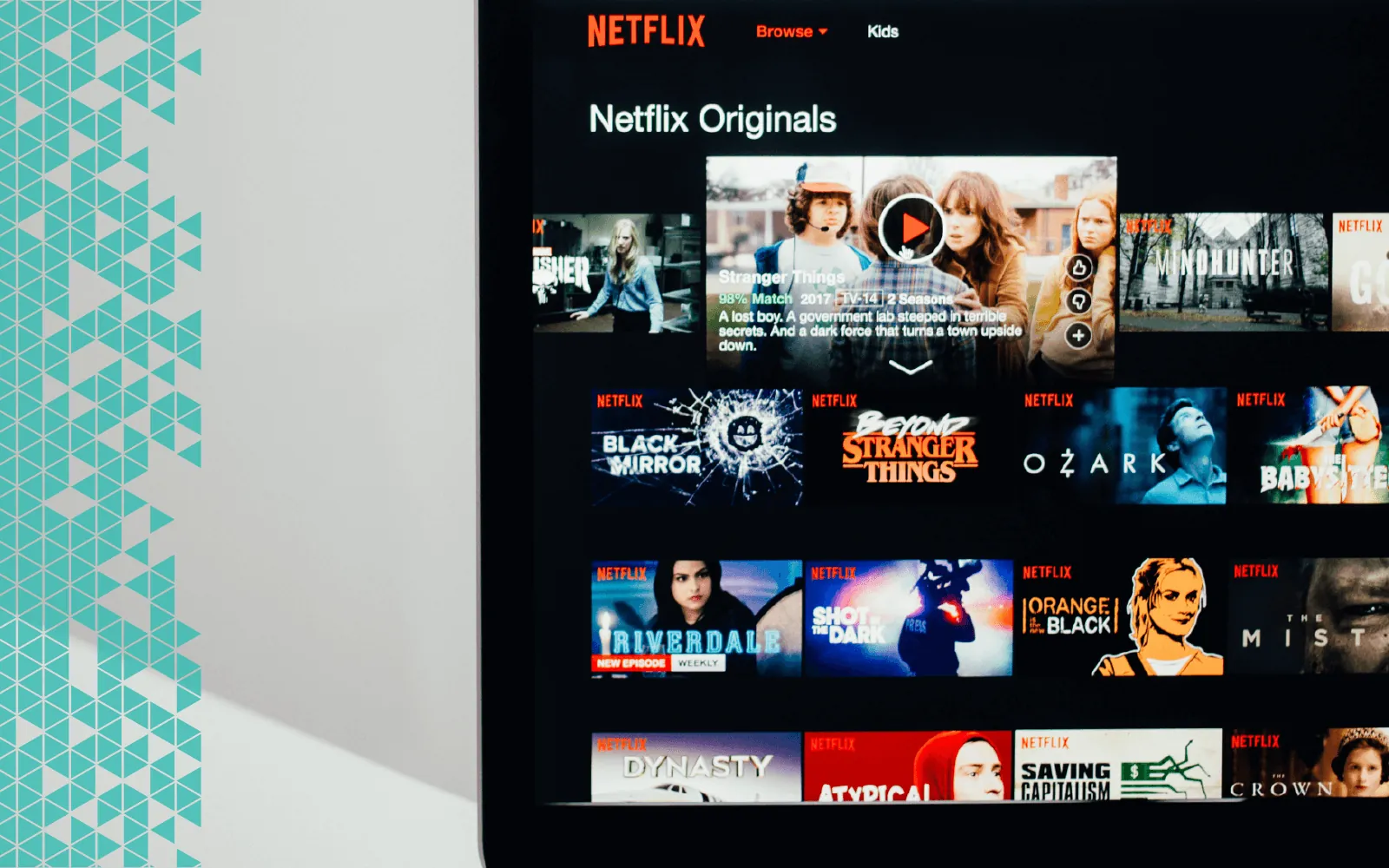
Netflix began its purpose of delivering entertainment by literally delivering entertainment. They eliminated the drive to the store and the agony of not finding the movie you wanted by sending DVDs through the mail. As everyone began to sign up, Netflix was on top of the world—or at least their market. This meant, though, that they were at risk of being disrupted.
So what happened next? Sure enough, that market went through two more radical transformations: the shift to streaming and the production of original content. In both cases, Netflix led the charge. And it's not because they "disrupted themselves." No, they were constantly looking for the best way to deliver entertainment to their customers.
Streaming meant their customers wouldn't have to wait for the next DVD to arrive in the mail, so Netflix did it. Producing original content meant that their customers would have higher quality choices, so Netflix did it. What they did not do was make short-term decisions to protect their very successful mail-order DVD business model. It was important that they make money so they could continue to serve their customers, but how was of secondary concern.
That lack of rigidity meant they had the flexibility to evolve, and this evolution has led to even more people signing up—or at least finding a friend with an account. Viewed through this lens, what happened to Blockbuster wasn't an upstart that happened upon and pursued a new technology. A new competitor did enter the market, but not with a purpose of profit—rather with a purpose of delivering entertainment to their customers. Because that was their goal, they found a better way to do it, and like a moth to a flame, the market quickly flocked to Netflix and has stayed there decades later.
Evolutionaries
What does it mean to create an organization with the ability to evolve? The answer, which should come as a surprise to none of you, is to hire and train more designers and innovators. People with these skills are constantly finding better ways to serve your customers. That's what evolution means to an organization.
As more organizations come to this inevitable realization that the ability to evolve is the only real sustainable competitive advantage in today's world of abundance, connectivity, and automation, they will be looking to people who know how to design and innovate to help lead the way. Will you be ready?
Ada, Adalo's AI builder, lets you describe what you want and generates your app. Magic Start creates complete app foundations from a description, while Magic Add adds features through natural language.
The tools available for rapid innovation have transformed dramatically. Where organizations once needed months of development time and significant budgets to test new ideas, platforms now exist that compress that timeline to days. Adalo's AI-assisted building capabilities, for instance, allow teams to describe what they want and generate complete app foundations automatically—what used to take weeks of planning happens in minutes. Magic Start creates database structures, screens, and user flows from simple descriptions, while Magic Add lets teams add features through natural language requests.
This matters for organizational evolution because the barrier to testing customer-focused ideas has dropped to nearly zero. When a team can prototype a new service offering in an afternoon rather than commissioning a three-month development project, they're far more likely to experiment. And experimentation is the engine of evolution.
Building for Evolution
The organizations that will thrive in the coming decades are those that build evolution into their DNA. This requires more than just the right mindset—it requires the right infrastructure. Teams need tools that let them move at the speed of their ideas, not the speed of their development backlog.
Consider the practical implications: a customer-focused organization identifies a new need in their market. In the old model, they'd spend weeks writing requirements, months in development, and more time in testing before learning whether their idea resonated. By then, the market may have moved on—or a more agile competitor may have captured the opportunity.
Modern AI-powered app builders change this equation entirely. With over 3 million apps created on platforms like Adalo—described by users as "easy as PowerPoint"—the technical barriers that once slowed innovation have largely disappeared. Modular infrastructure that scales to serve apps with millions of monthly active users means organizations can start small and grow without rebuilding. No data caps on paid plans mean teams can collect and analyze customer feedback without worrying about hitting arbitrary limits.
The organizations that successfully avoid disruption aren't just thinking about customers—they're equipped to act on that thinking rapidly. They have the tools to prototype, test, learn, and iterate at a pace that matches the speed of market change. That's what separates the Netflixes from the Blockbusters: not just the willingness to evolve, but the capability to do so.
FAQ
Why choose Adalo over other app building solutions?
Adalo is an AI-powered app builder that creates true native iOS and Android apps alongside web apps from a single codebase. Unlike web wrappers, it compiles to native code and publishes directly to both the Apple App Store and Google Play Store. Starting at $36/month with unlimited usage and no record limits on paid plans, it offers predictable pricing without the bill shock of usage-based charges.
What's the fastest way to build and publish an app to the App Store?
Adalo's drag-and-drop interface and AI-assisted building let you go from idea to published app in days rather than months. Magic Start generates complete app foundations from simple descriptions, creating database structures, screens, and user flows automatically. Adalo handles the complex App Store submission process, so you can focus on features and user experience instead of certificates and provisioning profiles.
What is disruptive innovation and why does it matter for businesses?
Disruptive innovation, a concept developed by Harvard professor Clayton Christensen, describes how upstart companies enter markets with lower-priced products that incumbents ignore, then gradually improve until they become market leaders. Understanding this pattern is crucial because companies focused solely on short-term profits often miss opportunities to evolve, leaving them vulnerable to being disrupted by more customer-focused competitors.
How can organizations avoid being disrupted by competitors?
Organizations can avoid disruption by prioritizing their customers' needs above short-term shareholder profits. Research shows that companies focusing on customers first, employees second, and shareholders third are actually more profitable and more resilient because they make long-term decisions and continuously evolve to serve their customers better.
What does it mean for an organization to 'evolve itself' rather than 'disrupt itself'?
Evolving means continuously finding better ways to serve customers without rigid attachment to existing business models, as Netflix demonstrated by transitioning from DVD mail delivery to streaming to original content. Unlike self-disruption, which still destroys the original organization, evolution preserves jobs and organizational continuity while adapting to market changes.
How can technology help my organization become more customer-focused?
Technology platforms that enable rapid prototyping and testing allow organizations to quickly build and validate solutions that address customer needs. By removing traditional development bottlenecks, teams can experiment with new ideas, gather customer feedback faster, and continuously improve their offerings to stay ahead of market changes.
Can I easily build an app that helps me evolve my business and better serve customers?
Yes. AI-powered app builders enable rapid prototyping and testing of new ideas, allowing you to quickly validate concepts and iterate based on customer feedback. Features like Magic Start generate complete app foundations from descriptions, while Magic Add lets you add features through natural language—compressing what used to take weeks into hours.
How does Adalo compare to Bubble for building apps?
Adalo starts at $36/month with unlimited usage and no record limits, while Bubble starts at $59/month with usage-based Workload Unit charges and record limits. Adalo creates true native mobile apps; Bubble's mobile solution is a web wrapper. Adalo's 3.0 infrastructure overhaul (late 2025) made apps 3-4x faster with modular scaling—most third-party comparisons predate this update.