4 Ways to Improve Restaurant Search and Get More Covers
By using certain methods, you'll make your restaurant's website more attractive to potential customers, which will give them a good reason for visiting it.
In this article, we'll introduce four strategies that you can use to ensure that more people see your restaurant's website. Whether you're looking to climb search rankings, create compelling content, leverage social media, or run targeted ads, these approaches will help drive consistent traffic to your site—and ultimately, more diners through your doors.
Strategy 1: Leverage Google Search Console to Improve Your Restaurant's Search Results

You need to make sure that Google knows your site exists. Do this by "registering" with Google, which is called indexing your site. When you index your site, Google will acknowledge your site and allow it to appear on search results pages. Without proper indexing, potential customers searching for restaurants like yours won't find your site—no matter how beautiful or informative it is.
Many website builders have a built-in indexing tool. But, to be safe, you'll want to make sure that your site is properly indexed with Google. Don't worry, indexing your site is not as difficult as it sounds. Just follow these directions:
- Navigate to Google Search Console. You'll be able to sign in using your Google account info. If you don't have a Google account, you can create one at the drop of a hat!
- Click on the "Add a Property" button, and type your website address (or URL) into the bar.
- Verify that you are the owner of your site. Google will send a file to your email when you request to verify that you're the owner of a site. You can do this by uploading a file Google gives you to your site. After a few minutes, Google should verify your site.
- Under the "Index" section, click on the "Sitemaps" button and enter your sitemap web address. If you use a website builder like Wix, WordPress, or Webflow, you can usually find this on the editing tool. Some website builders don't have automatically available sitemaps. If this is your case, just create your own sitemap by installing a plugin like Google XML Sitemaps, available from WordPress, or the Chrome Sitemap Generator, available as a Google Chrome extension.
- Go to the URL Inspection tool, which is located on the left side of your Google Search Console dashboard. This tool shows you what pages are indexed on your site. To see if individual pages are indexed, enter the page's web address into the URL Inspection tool, and Google will let you know if it's indexed.
If a page isn't indexed, you can click the "Request Indexing" button that commands Google to do so.
It might take Google a few months to fully index your site, especially if your site is new. Routinely check your site's indexing status by returning to Google Search Console and navigating to the "URL Inspection Page."
Whenever you add new content or pages to your site, always confirm that they are indexed. This includes new menu pages, blog posts, event announcements, and any landing pages you create for special promotions.
Checking up on the indexing status of your pages will help ensure that your site is visible to Google and people searching for it, which will drive more traffic to your website. Think of Google Search Console as your restaurant's digital host—it ensures every guest (or in this case, every page) gets properly seated where customers can find them.
Strategy 2: Create Compelling Content Optimized for SEO and Promote it On Social Media
If you aren't writing content, it's time to start! Writing one to two articles a month will grow your site and give people a reason to visit your site—especially when you create valuable content that teaches readers something they didn't know before. Content marketing isn't just about filling pages; it's about establishing your restaurant as an authority in your culinary niche.
To begin, think about some topics people will want to read about that relate to your restaurant. Topics could include:
- Your professional background and why you started your own restaurant
- Super simple recipes, like a 10-minute Crème Brûlée
- Beverage pairings for main dishes
- An overview of the organic farms you source ingredients from
- How cabernet sauvignon differs from zinfandel
- Popular seasonal foods and how your menu adapts to them
Finding and Using Keywords Effectively
Once you have a topic figured out, it's time to find optimal keywords. Keywords are words or phrases that people search for on Google. You'll want to find ones that fit best with your ideas and place them into your articles strategically.
Sign up for a free Google Ads account (which will take less than a second if you have a Google account), and find the keyword research tool. Conduct keyword research and include keywords in your articles using these steps:
- Select your region—you'll find keywords that are popular close to your restaurant, which is crucial for local SEO.
- Think about words and phrases that relate to the idea you'll be writing about. For instance, if you want to create an article about 'Pairing Wine with Filet Mignon', you'll want to search for phrases like "red wine and filet mignon," "the best red wine to pair with filet mignon," "meat and wine pairing"—you get the gist.
- Enter up to 10 words and phrases, and click the search button. Pay careful attention to the keyword difficulty score and search volume. Keyword difficulty is how competitive the word is—a higher score means many sites use the keyword. Search volume is the number of people that search for that keyword monthly. Choose keywords with a low level of difficulty (under 27) and a volume above 50. This way, you won't be competing with established sites, and you'll get a few visitors each month on SEO strategy alone.
- Choose one or two keywords. Before you start writing, Google those keywords to learn how others are writing about those keywords. You'll want to create better content, so keep this in mind when you start writing.
- You'll need to organize your written content neatly by breaking your articles into sections using headings and subheadings (H2s and H3s in content-writing speak). Each heading should clearly explain what the following section will teach the reader.
- Make sure you have your keywords scattered throughout your article's text. You'll also need to include them in two or three headings and subheadings, and the title. Doing this will let Google know what keyword you're writing about.
- Overusing your keyword is a major no-no. Google catches on to articles that try to rank higher by entering keywords too often. It punishes these articles by not allowing them to rank. Be mindful of how often you use your keyword, or Google could put your article in permanent invisibility mode.
Creating High-Value Content
When you write your articles, ensure that they give your readers value—your articles need to leave readers feeling more educated and that their time hasn't been wasted. The goal is to become a trusted resource, not just another restaurant blog that gets ignored.
Including images and videos in your articles is an absolute must, as they will keep readers engaged and give them a visual illustration of what you're trying to teach them. If you're writing about a recipe or certain cooking technique, including a video will help drive home certain techniques. Consider filming short clips in your kitchen showing proper knife skills, plating techniques, or the sizzle of a perfectly seared steak.
Good visuals will provide readers with tons of value, and if done right, more people will be drawn to your beautiful, valuable, and easy-to-understand content. Remember: a picture of your signature dish can be worth a thousand words—and potentially dozens of new reservations.
Strategy 3: Leverage Social Media
Being active on social media is a great way to promote your restaurant and popularize your website. If you aren't already using Instagram and Facebook to feature your restaurant, what are you doing!? Create an account immediately after you finish reading this article. These platforms are where your potential customers spend hours every day scrolling—you need to be in that feed.
After you write a new article, link to it on social media. Then, invite your followers to review your article and share it with their social media network. Give them an incentive for sharing, like a discounted meal for the first 10 or 15 people to share your article. Doing this whenever you write a blog should help drive more traffic to your site.
Don't forget to link to your site whenever you make a post on social media. This will give your website more exposure with every post, as there's a chance that every person who sees a post with your site address will become a site visitor. Make it easy for followers to take the next step from admiring your food photos to actually booking a table.
Promoting Digital Features
Use social media to promote new features, like your very own slick online booking system made with an app builder like Adalo. Post videos that illustrate how to use your booking system and instruct viewers to visit your site for more information. Doing this can inspire your social media followers to visit your site and actually make a reservation.
Ada, Adalo's AI builder, lets you describe what you want and generates your app. Magic Start creates complete app foundations from a description, while Magic Add adds features through natural language.
Adalo, an AI-powered app builder, makes creating these promotional assets easier than ever. With Magic Start, you can generate a complete app foundation from a simple description—tell it you need a booking app for your restaurant, and it creates your database structure, screens, and user flows automatically. What used to take days of planning happens in minutes, giving you more time to focus on what you do best: creating amazing food.
The platform's drag-and-drop interface has been described as "easy as PowerPoint," making it accessible even if you've never built an app before. You can create tutorial videos showing customers how to book through your app, then share those videos across Instagram, Facebook, and TikTok to drive both app downloads and website visits.
Strategy 4: Harness the Power of Paid Advertising To Propel Site Traffic
Want to get your site in front of the eyes of hundreds, possibly thousands, of Google searchers? Purchase paid ads on Google—they will boost your site to the top of the search engine result page for each keyword you buy. While organic SEO takes months to show results, paid advertising can drive traffic to your site starting today.
Using Google ads to promote your site is simple, effective, and affordable. Here's how to harness the power of Google Ads:
- Login to your Google Ads account, and select a search engine ad campaign.
- Search for keywords. Keyword difficulty doesn't matter for ad campaigns, but the price of each keyword does. This is how much you'll pay when a visitor clicks on your site. For instance, if a keyword costs 15 cents per click, and 1,000 people click on your site, Google will charge you $150.
- Deposit a desired amount of money into your Google account. When your money runs out, Google will end your campaign. Start small—even $50-100 can give you valuable data about which keywords convert best for your restaurant.
Google ad campaigns are a convenient and easy way to get site visitors. You can budget how much you spend by comparing keyword prices. Running ad campaigns that target different keywords each month can really move the needle when it comes to visitors to your site.
Maximizing Your Ad Spend
Consider targeting keywords that indicate high intent, such as "best Italian restaurant near me" or "romantic dinner reservation [your city]." These searchers are actively looking to dine out, making them more likely to convert into actual customers. Combine your Google Ads strategy with a mobile booking app, and you create a seamless path from ad click to confirmed reservation.
Track your results carefully. Google Ads provides detailed analytics showing which keywords drive the most clicks and, more importantly, which ones lead to actual reservations. Use this data to refine your campaigns over time, focusing your budget on the keywords that deliver the best return on investment.
Next Steps
Getting visitors to your website is a long game, and it might take a few months to get consistent traffic to your site. Think of growing your site traffic like how you experienced growing your restaurant. While it seemed difficult at first, your daily effort paid off, and you developed a thriving restaurant. The same persistence applies to your digital presence.
Regularly publish content, check up on Google Search Console, promote your site on social media, and consistently run ad campaigns. Also, don't forget to switch up your site's appearance periodically. Changing your site's layout, colors, pictures, aesthetics, and structure will keep your site looking fresh and professional. A slick site might make people more likely to visit your restaurant, too.
Consider creating a content calendar that aligns with your restaurant's seasonal menu changes, local events, and holidays. This gives you a steady stream of relevant topics to write about while keeping your content timely and engaging. Consistency is key—search engines reward sites that regularly publish quality content.
Book More Covers with Adalo
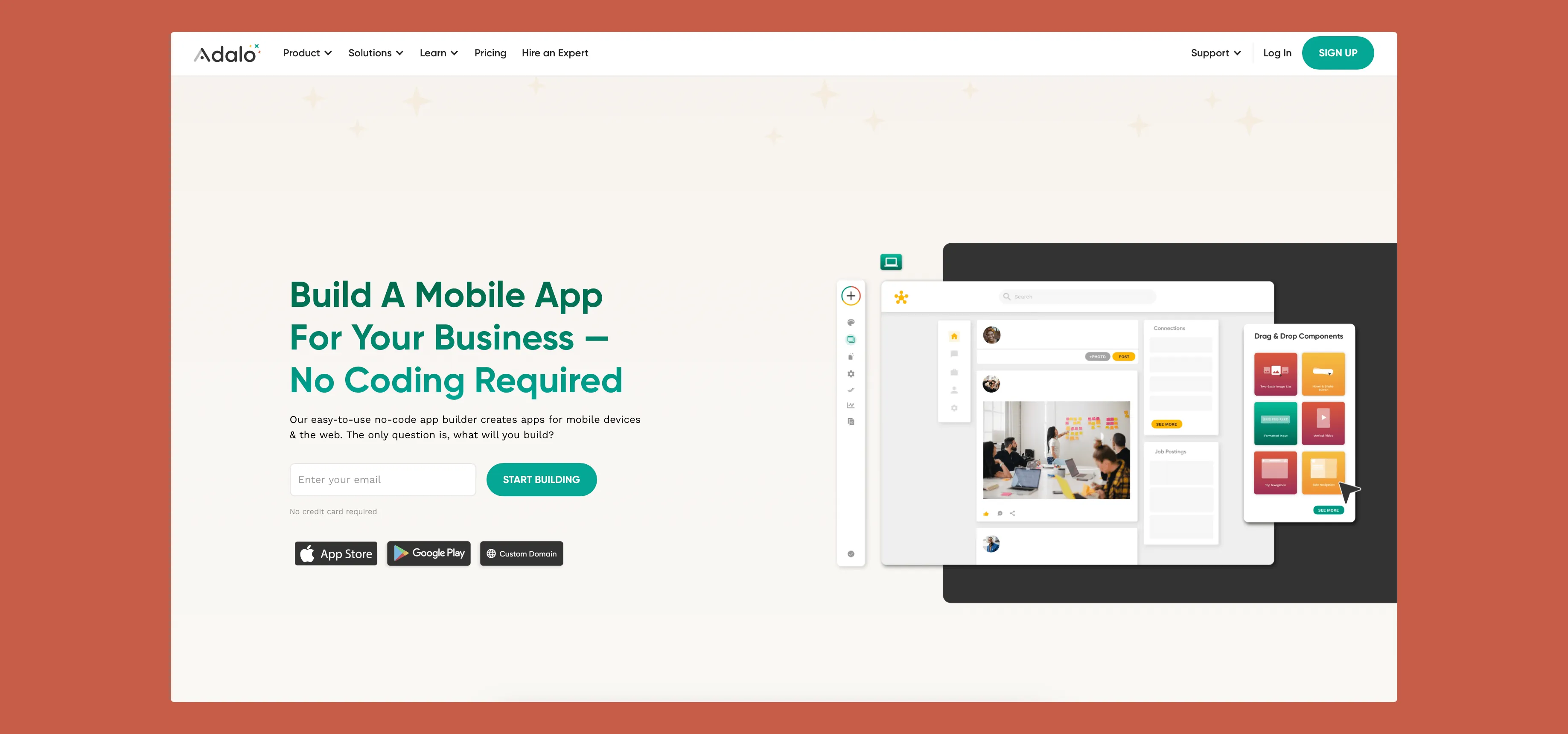
Still thinking about that booking app idea we mentioned in strategy three?
Adalo is a no-code app builder for database-driven web apps and native iOS and Android apps—one version across all three platforms, published to the Apple App Store and Google Play. It's used by restaurateurs across the world and comes with restaurant-themed templates ready to go. You'll be able to custom build your own booking app and add on plenty of features, like push notifications and direct messaging.
Why Restaurant Owners Choose Adalo
Adalo's platform lets you publish the same app to the web, native iOS, and native Android, all without writing a line of code or rebuilding. If your plan is mass distribution through the app stores' vast marketplaces, then this is a great option versus many of the vibe-coding builders out there today. Over 3 million apps have been created on Adalo, processing millions of data requests daily with 99%+ uptime.
The platform's 2026 infrastructure overhaul (Adalo 3.0) made apps 3-4x faster with modular infrastructure that scales with your needs. Paid plans include no record limits on the database—meaning as your restaurant grows and you accumulate thousands of customer profiles, reservation histories, and loyalty program data, you won't hit arbitrary storage caps. There are also no usage-based charges, so you'll never face surprise bills as your app gains popularity.
Does building an app sound too complicated? Adalo was designed for people with no coding or technical skills. Use Adalo's responsive drag-and-drop interface to build your very own app exactly to your tastes. The Magic Add feature lets you add new functionality by simply describing what you want—"add a waitlist feature" or "include a loyalty points tracker"—and the AI handles the implementation.
Adalo's sleek builder is used by hundreds of restaurant owners just like you to transform their ideas into apps without a steep learning curve and without any knowledge about creating apps. Starting at $36/month with unlimited usage and app store publishing, it's significantly more affordable than alternatives like Bubble ($59/month with usage limits) or Appypie ($99/month for comparable iOS publishing features).
Start building your restaurant's app for free.
FAQ
Why choose Adalo over other app building solutions?
Adalo is an AI-powered app builder that creates true native iOS and Android apps from a single codebase. Unlike web wrappers, it compiles to native code and publishes directly to both the Apple App Store and Google Play Store—the hardest part of launching an app handled automatically. With paid plans starting at $36/month including unlimited database records and no usage-based charges, it offers predictable pricing that many competitors can't match.
What's the fastest way to build and publish an app to the App Store?
Adalo's drag-and-drop interface combined with AI-assisted building through Magic Start and Magic Add lets you go from idea to published app in days rather than months. Describe your app concept, and Magic Start generates your database structure, screens, and user flows automatically. Adalo handles the complex App Store submission process, so you can focus on your app's features instead of wrestling with certificates and provisioning profiles.
Can I easily build a booking app for my restaurant website?
Yes, with Adalo's AI-powered app builder, you can easily build a custom booking app for your restaurant. Adalo offers restaurant-themed templates and a drag-and-drop interface that requires no coding skills, allowing you to add features like push notifications, direct messaging, and loyalty programs to enhance your customers' experience.
What is Google Search Console and why is it important for my restaurant website?
Google Search Console is a free tool that helps you register (or index) your website with Google so it appears in search results. Without proper indexing, potential customers searching for restaurants like yours won't find your site. Regularly checking your indexing status ensures all your pages and new content are visible to Google searchers.
How do I find the right keywords for my restaurant's blog content?
Use Google Ads' free keyword research tool to find relevant keywords for your area. Look for keywords with low difficulty scores (under 27) and search volumes above 50 to avoid competing with established sites while still attracting visitors. Include these keywords naturally in your article titles, headings, and throughout your content.
How can social media help drive traffic to my restaurant's website?
Social media platforms like Instagram and Facebook allow you to promote new articles, features, and your website directly to followers. Offer incentives like discounted meals for people who share your content, and always include your website link in posts to convert social media viewers into site visitors.
Are Google Ads worth it for promoting my restaurant website?
Google Ads can be an effective and affordable way to boost your site to the top of search results for specific keywords. You control your budget by depositing a set amount and only pay when someone clicks on your ad. Running targeted campaigns with different keywords each month can significantly increase your website traffic.
How much does it cost to build a restaurant booking app?
With Adalo, you can start building for free and upgrade to paid plans starting at $36/month for full app store publishing capabilities. This includes unlimited database records and no usage-based charges, making costs predictable as your app grows. Competitors like Bubble start at $59/month with usage limits, while Appypie requires $99/month for comparable iOS publishing features.
Do I need coding experience to build a restaurant app?
No coding experience is required. Adalo's visual builder has been described as "easy as PowerPoint," with drag-and-drop components and AI-assisted features like Magic Add that let you describe what you want in plain language. The platform was specifically designed for non-technical users who want professional results.
Can my restaurant app handle growth as my business expands?
Yes. Adalo's 2026 infrastructure overhaul (Adalo 3.0) introduced modular architecture that scales to serve apps with over 1 million monthly active users. Paid plans have no database record limits, so you can accumulate customer profiles, reservation histories, and loyalty data without hitting storage caps or paying overage fees.