How 4 Industry Leaders Use the Power of Purpose to Innovate
Your Organization's Purpose is Not a Goal
Think for a moment about your organization's purpose. Got it? (And no, those crappy business jargon mission statements don't count.) If not, keep thinking for the next few paragraphs…
For us, finding great examples of purpose-focused organizations (that are also for-profit) was tricky. That's because the vast majority of organizations have mission statements that are goals and not purposes. The key difference between a goal and a purpose is that a goal can be accomplished based on a set of criteria. A purpose, however, is something you continually strive for but can never reach. Goals tend to focus on the end result, whereas a purpose gives direction to your journey. We're not saying goals are bad, not by any stretch of the imagination. In fact, goals are 100% necessary. But goals are milestones. Purpose gives direction to our journey.
Classic goal-oriented "mission statements" to produce the best product for our (loving) customers or become the market leader for our (loyal) shareholders aren't purposes, because these missions, once accomplished, leave no clear direction. When we have a purpose, we always have a constant direction forward. This constant direction is crucial for the long-term success of an organization. The world is changing very rapidly, and the pace of that change is accelerating. Having a purpose will allow you to innovatively adapt to these changes while still progressing in the same direction.
If you've gotten this far and still don't know what your organization's purpose is, there's a pretty good chance that it doesn't really have one. You're probably in a situation where you have a mission statement that no one really connects with, and you're simply operating for the purposes of making money for someone else. Good news! We're about to go over 4 organizations that do have great purposes to serve as some inspiration for you.

First Sip: Starbucks
At a glance, Starbucks might appear to be a simple coffee shop, but their history and purpose tell a larger story. It all began when Howard Schultz, a Starbucks employee at the time, was on a trip to Italy. He was inspired by the wonderful coffee shop environments that he experienced there and noticed that people back in America were missing more than just artisan coffee. Despite having a place for home and a place for work, the Italians had a third place in between—a place for the small conversations with friends, a place for our passion projects (like this blog!). With this in mind, Howard Schultz was able to transform the small coffeeshop into what we know today. He bought the then very tiny Starbucks and charted a new course forward with a true purpose:
"To inspire and nurture human spirit - one person, one cup, and one neighborhood at time."
Looking at their purpose, we can see that it's really more about the person than the coffee. Howard Schultz affirmed this, saying, "We are not in the coffee business serving people, but in the people business serving coffee." This emphasis on people elevates Starbucks from mission to purpose. They don't want to just be the best coffee shop or have a business on every street corner (which they practically do). They want to nurture and inspire. This is why they hand write your name on every cup and take aesthetic cues from the local neighborhood. They're all about designing their place to improve the lives of people, everyone and everywhere.
While the number of Starbucks locations might seem overwhelming, their pervasive presence is part of their purpose. No matter where you go, when you're away from home or work, you have a place that's yours, just around the corner. (One final note for you coffee connoisseurs out there. Yes. Starbucks isn't the best coffee but that's not their purpose. Oh and they actually help local coffee shops thrive. So win-win for everyone!)

Next Flight: Southwest Airlines
While the airline industry has been particularly challenging for organizations to turn a profit the last few decades—leading to bankruptcies and tons of mergers—Southwest continues to win. They're currently riding a 44 year profit streak. What's going on here? It's all about their purpose:
"To connect People to what's important in their lives through friendly, reliable, and low-cost air travel."
Back in 1971, Southwest jumped into the extremely crowded airline industry. With so many well-established incumbents, Southwest had to do something different to survive. This forced them to think about efficiency at every turn, something that they refer to as their "Warrior Spirit." This attitude is what formed their purpose. They began to realize that thinking about efficiency had more than just internal benefits but also huge benefits for their customers. The more efficient they could be, the more quickly they could help connect their passengers to what they cared about.
This attitude and purpose has created many of the benefits that people have come to admire about Southwest. Those free checked bags that you love are doing more than just making you happy. When more people check their bags, the boarding process is faster as everyone isn't searching and fighting to find free overhead compartments. Speaking of the boarding process, if you've ever flown Southwest, you know that their boarding process is unlike any other airline. Instead of assigning you a seat ahead of time, everyone is assigned a boarding number when they check in.
This again creates a win-win. The plane gets boarded 40% faster, reducing costs for Southwest and travel times for its passengers. The crazy thing is that this is not some secret process that only Southwest knows about. It's scientifically proven to be faster, but only Southwest's purpose compels it to embrace the most efficient boarding process. While other airline mission statements nudge their executives to add little fees and upgrades everywhere to turn a profit, Southwest acts on its purpose to connect its passengers to what they care about as quickly as possible.
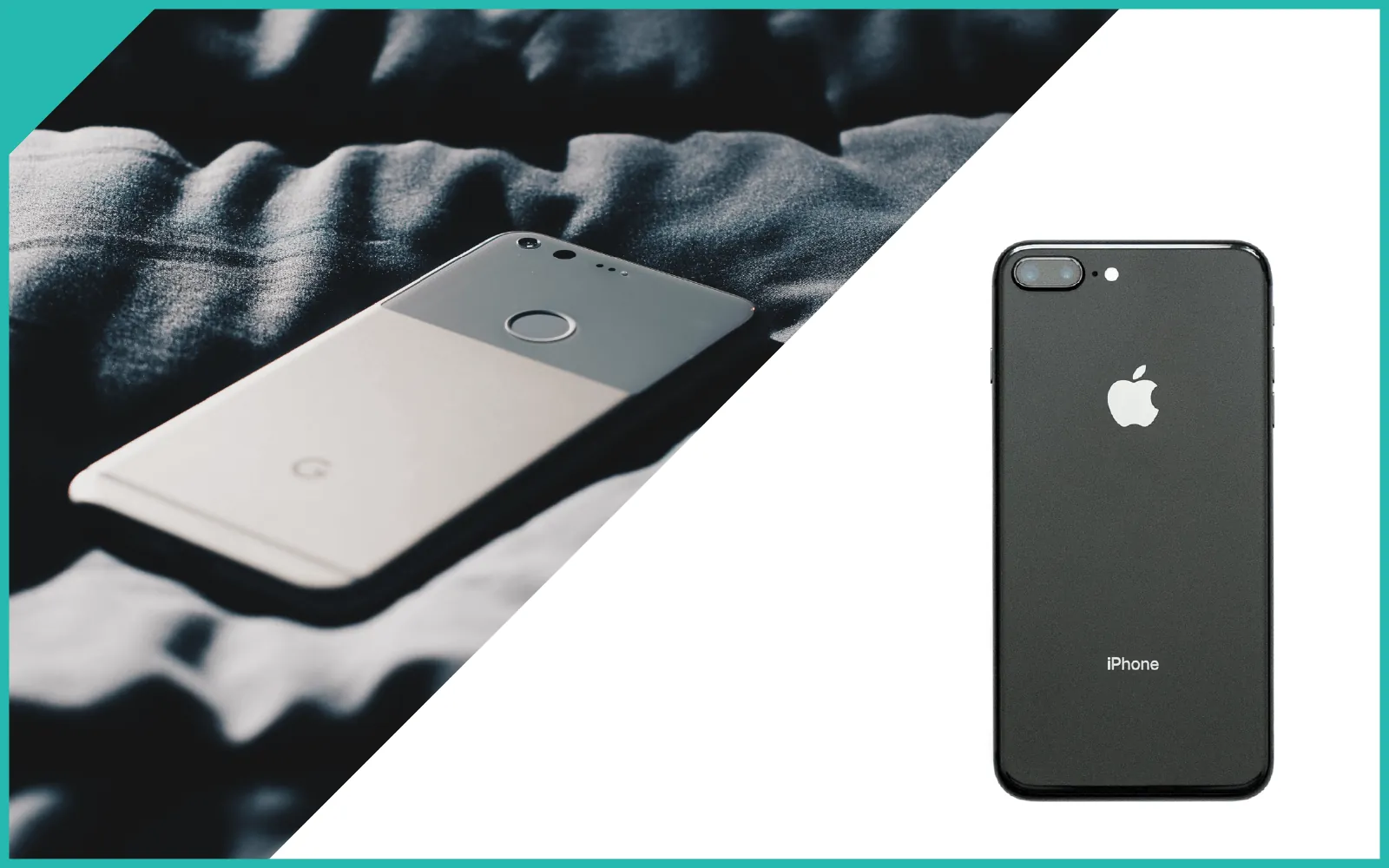
Finally: Let's Dive into the Great Apple vs. Google Rivalry
If you were playing a game of Family Feud and Steve Harvey asked "What are the most innovative companies in the world?" you would feel pretty confident hitting that buzzer and yelling out either Apple or Google. Throughout the last four decades, these organizations have provided us with some pretty incredible, world-changing products. Over those decades, though, they've become increasingly competitive. Each has created an ecosystem that rewards you for loyally sticking with either Apple or Google. We're going to steer clear of choosing a side here. We would, however, like to look at these two organizations through our lens of purpose to see what insights we can glean.
Steve Jobs, widely considered one of the most innovative humans to ever walk this planet, was (for most of its history) the face of Apple until he passed away in 2011. His original purpose for Apple was:
"To make a contribution to the world by making tools for the mind that advance humankind."
What an incredibly powerful purpose this was. He realized that humans are, in fact, extremely inefficient animals, particularly when it comes to getting from point A to point B. The cheetah is the most efficient (and really freaking fast). But guess what? When you give us a bike, we become more efficient than a cheetah (though still not as fast). He saw the potential for computers to become the bicycle for our minds. But at the time that Steve Jobs founded Apple, computers weren't being designed for the average person. They were designed for large companies and teams of scientists. Jobs wanted them for everyone. His purpose for Apple was for every person in the world to leverage the power of computers.
This inspired purpose was a guiding direction for Apple for a very long time. They made the Mac, the iPod, and the iPhone all in service of this purpose. In 2013, after Steve had passed away, a significant change was made to their purpose. Up on their website went this: "Apple designs Macs, the best personal computers in the world, along with OS X, iLife, iWork and professional software. Apple leads the digital music revolution with its iPods and iTunes online store. Apple has reinvented the mobile phone with its revolutionary iPhone and App store, and is defining the future of mobile media and computing devices with iPad." Uh oh.
Now let's turn our attention to Google. Larry Page and Sergey Brin founded Google with a powerful purpose. They set out:
"To organize the world's information and make it universally accessible and useful."
This purpose will never be achieved, but rather will act as a continual north star for Google. As more and more information is created, it's only going to get more difficult to organize it all, even with our powerful advances in technology. In fact, the rate of information creation is growing exponentially to that point that each year, we generate almost as much data as the entire prior history of our civilization. This purpose has given Google a constant direction forward to create some incredible innovations for all of us. It's hard to imagine a world without Google Search, Google Maps, Google Docs, Youtube, or Gmail.
Another successful innovation driven by Google's purpose is Android, a direct competitor to the operating system on the iPhone. While that Android accolade either made you cringe or smile as you looked down at your Google phone, let's take off the boxing gloves and look at these two operating systems and how the different purposes behind them produced different designs. The iPhone was designed as a tool for the mind to advance humankind. When it came out, it did just that. It combined a phone with the web, email, games, and music.
Google, on the other hand, created Android because they saw how much information was on your phone. This focus on information led Google to create an integrated ecosystem of Search, Gmail, Google Maps, and Google Calendar. Then, when digital assistants became all the rage, the Google Assistant routinely out-performed Apple's Siri, because it had access to so much more of your information. Additionally Google's purpose to make the world's information universally accessible is what led them to allow different manufacturers to use their software for their smartphones. The result is a range of phones from the high-end luxury to more affordable. Apple on the other hand doesn't have this same purpose and thus would never want to do this.
Apple's and Google's foray into the mobile phone market illustrates how two companies in similar areas with similar reputations for innovation can ultimately make different decisions when they have fundamentally different purposes.
The Power of Purpose
It's hard to overstate the power of purpose. These four real-life stories demonstrate how a purpose can inspire groups of people to change the world for the better. Sure, there was some luck involved, but it's worth noting that all four of these organizations were underdogs when they first started out. Not only were they able to innovate beyond what the existing coffee shop, airline, and tech companies had ever offered, but they've been able to continually innovate, finding new ways to make the world better and staying at the top of their market for decades.
Bringing Purpose to Your Own Creations
Understanding purpose isn't just for Fortune 500 companies—it's equally vital for entrepreneurs, small business owners, and creators building their own digital products. When you're building an app to serve your customers, your purpose should guide every feature decision, every user flow, and every design choice. The most successful apps aren't just functional—they're purpose-driven.
Consider how Starbucks' purpose of nurturing human spirit influenced everything from store design to cup personalization. When building your own app, that same clarity of purpose should inform whether you add a feature or leave it out. Does this feature serve your users' deeper needs, or is it just another checkbox on a competitor comparison chart?
Modern tools have made it possible for anyone to translate their organizational purpose into a digital product. Adalo is a no-code app builder for database-driven web apps and native iOS and Android apps—one version across all three platforms, published to the Apple App Store and Google Play. This means your purpose-driven vision can reach users on any device without the technical barriers that once required entire development teams to overcome.
Ada, Adalo's AI builder, lets you describe what you want and generates your app. Magic Start creates complete app foundations from a description, while Magic Add adds features through natural language.
The platform's Magic Start feature generates complete app foundations from simple descriptions. Tell it you want to build a community app that connects neighbors for mutual support, and it creates your database structure, screens, and user flows automatically. What used to take weeks of planning and development can now happen in minutes, letting you focus on refining how your app serves its purpose rather than wrestling with technical implementation.
For organizations already operating with clear purpose, Magic Add extends this capability by adding features from natural language requests. Describe what you want—"add a way for users to share their success stories with the community"—and the AI implements it. This keeps your development process aligned with your purpose rather than constrained by technical limitations.
Purpose-Driven Scaling
One of the most challenging aspects of purpose-driven organizations is maintaining that purpose as they scale. Southwest Airlines' 44-year profit streak wasn't just about having a great purpose—it was about building systems that could deliver on that purpose consistently, flight after flight, year after year.
The same principle applies to digital products. Your app's infrastructure needs to scale alongside your purpose. Adalo's modular infrastructure scales to serve apps with over 1 million monthly active users, with no upper ceiling. Unlike app wrappers that hit performance constraints under load, the platform's purpose-built architecture maintains speed at scale. Paid plans include unlimited database records, meaning your growing user base won't hit arbitrary data caps that force difficult decisions about which users or features to prioritize.
This matters because purpose-driven growth often looks different from goal-driven growth. When Southwest decided to offer free checked bags, they weren't optimizing for a quarterly revenue target—they were serving their purpose of connecting people efficiently. Similarly, when your app grows because it genuinely serves users' needs, you need infrastructure that supports that organic, purpose-aligned expansion rather than penalizing you with usage-based charges or record limits.
The X-Ray feature identifies performance issues before they affect users, ensuring that as your purpose-driven app gains traction, the user experience remains consistent. This proactive approach to scalability reflects the same efficiency mindset that drives Southwest's operations—anticipating needs rather than reacting to problems.
Learning from Purpose-Driven Innovation
The contrast between Apple's original purpose and its 2013 mission statement revision offers a cautionary tale. When Steve Jobs articulated the purpose of making "tools for the mind that advance humankind," it provided infinite room for innovation. The revised statement—essentially a product catalog—provides no direction for what comes next.
Google's enduring purpose to organize the world's information continues to drive innovation decades later. Each new product—from Search to Maps to the AI-powered Assistant—serves that same north star. Your digital products should follow this same principle: build features that serve your purpose, not features that serve your feature list.
Over 3 million apps have been created on Adalo, with users describing the visual builder as "easy as PowerPoint." This accessibility matters because it removes the technical gatekeeping that once prevented purpose-driven entrepreneurs from bringing their visions to life. When building an app is as intuitive as creating a presentation, more people can focus on the "why" rather than getting stuck on the "how."
The AI features Builder, due for release in early 2026, promises to extend this further with prompt-based app creation and editing. Describe your purpose-driven app concept in natural language, and the AI generates it. This represents the same democratization of technology that Steve Jobs envisioned—tools for the mind that advance humankind, now accessible to anyone with a purpose worth pursuing.
Purpose as Competitive Advantage
The organizations profiled in this article didn't just have purposes—they had purposes that differentiated them from competitors focused solely on goals. Starbucks wasn't trying to make the best coffee; they were creating a third place. Southwest wasn't trying to maximize revenue per seat; they were connecting people to what matters.
This differentiation through purpose creates sustainable competitive advantage. When competitors copy your features, they're copying the "what" without understanding the "why." Southwest's boarding process is publicly known and scientifically validated as faster, yet other airlines don't adopt it because their goal-oriented mission statements push them toward seat assignments that enable premium pricing.
For app builders, this means your purpose should inform not just what features you build, but how you build them. Adalo's approach—starting at $36/month with unlimited usage and no record caps on paid plans—reflects a purpose of making app development accessible. Compare this to alternatives like Bubble, which starts at $59/month with usage-based charges and record limits, or Glide at $60/month with data row restrictions and no App Store publishing support.
The platform publishes true native iOS and Android apps, not web wrappers. This technical choice serves the purpose of reaching users wherever they are, on whatever device they prefer, with the performance they expect from native applications. One build updates web, Android, and iOS apps simultaneously—efficiency in service of purpose, much like Southwest's operational decisions.
Your Purpose Awaits
If you started this article without a clear organizational purpose and you're still searching, that's okay. Purpose isn't something you manufacture in a brainstorming session—it emerges from understanding what you genuinely want to contribute to the world. Starbucks' purpose came from Howard Schultz's experience in Italian coffee shops. Southwest's purpose emerged from the necessity of competing against established airlines. Google's purpose reflected the founders' academic background in information organization.
What experience, necessity, or background shapes your unique contribution? Once you find it, the tools exist to bring it to life. Whether you're building a community platform, a service marketplace, or a tool that solves a problem you've personally experienced, your purpose should guide every decision from first concept to scaled operation.
The organizations that change the world aren't the ones with the best goals—they're the ones with purposes worth pursuing. Your purpose is waiting to be discovered, articulated, and built into something that serves others while sustaining your organization for decades to come.
FAQ
Why choose Adalo over other app building solutions?
Adalo is an AI-powered app builder that creates true native iOS and Android apps from a single codebase. Unlike web wrappers, it compiles to native code and publishes directly to both the Apple App Store and Google Play Store—handling the hardest part of launching an app automatically. Paid plans include unlimited database records with no usage-based charges, providing predictable costs as your purpose-driven app scales.
What's the fastest way to build and publish an app to the App Store?
Adalo's drag-and-drop interface and AI-assisted building let you go from idea to published app in days rather than months. Magic Start generates complete app foundations from simple descriptions, while the platform handles the complex App Store submission process—certificates, provisioning profiles, and store guidelines—so you can focus on serving your app's purpose.
What's the difference between a goal and a purpose for an organization?
A goal can be accomplished based on a set of criteria, while a purpose is something you continually strive for but can never fully reach. Goals are milestones that focus on end results, whereas a purpose gives constant direction to your journey and helps organizations adapt to change while maintaining forward momentum.
How can having a clear purpose benefit my business long-term?
A clear purpose provides constant direction that allows your organization to innovatively adapt to rapid changes while still progressing forward. Companies like Starbucks, Southwest Airlines, Apple, and Google have demonstrated that purpose-driven organizations can remain at the top of their markets for decades by continually innovating in service of their mission.
Why do most mission statements fail to inspire organizations?
Most mission statements are actually goals disguised as purposes—statements like becoming the market leader or producing the best product. Once these objectives are accomplished, they leave no clear direction forward. A true purpose, like Google's mission to organize the world's information, can never be fully achieved and continues to guide innovation indefinitely.
How did Southwest Airlines use purpose to achieve 44 years of profitability?
Southwest's purpose to connect people to what's important in their lives through friendly, reliable, and low-cost air travel drove every business decision. This led to innovations like free checked bags and unique boarding processes that create win-win scenarios—reducing costs while improving customer experience, setting them apart from competitors focused solely on profit.
Can I build a purpose-driven app without coding experience?
Yes. Adalo's visual builder has been described as "easy as PowerPoint," and over 3 million apps have been created on the platform. Magic Start generates complete app foundations from descriptions, and Magic Add lets you add features by simply describing what you want in natural language.
How much does it cost to build and publish a purpose-driven app?
Adalo starts at $36/month with unlimited usage and App Store publishing with unlimited updates. This compares favorably to alternatives like Bubble ($59/month with usage-based charges and record limits), Glide ($60/month with data restrictions and no App Store support), or Softr ($167/month for a Progressive Web App with record limits).
Will my app scale if it becomes successful?
Adalo's modular infrastructure scales to serve apps with over 1 million monthly active users, with no upper ceiling. Paid plans include unlimited database records, and the X-Ray feature identifies performance issues before they affect users. The Adalo 3.0 infrastructure overhaul in late 2025 made apps 3-4x faster with scalable infrastructure that grows with your needs.
What's the difference between Apple's original purpose and their 2013 revision?
Steve Jobs' original purpose—"to make a contribution to the world by making tools for the mind that advance humankind"—provided infinite room for innovation. The 2013 revision became essentially a product catalog listing Macs, iPods, and iPhones, providing no direction for future innovation. This illustrates how losing purpose clarity can limit an organization's trajectory.