How To Make Money From an App: Top 11 Strategies
Turning an app idea into a revenue stream requires the right foundation. You need a platform flexible enough to support any monetization model—from in-app purchases to subscription billing to marketplace commissions—while being simple enough to build without a development team.
Adalo, an AI-powered app builder, delivers exactly that. It creates database-driven web apps and native iOS and Android apps from a single codebase, publishing directly to the Apple App Store and Google Play. With over 3 million apps built on the platform and a visual builder described as "easy as PowerPoint," you don't need programming skills to create a professional, revenue-generating app.
Independent research from App Builder Guides' State of App Building report (February 2026) analyzed 190 Reddit threads and 150+ platform citations across 345 data points with zero platform sponsorships. Adalo ranked first among visual builders for non-developers.
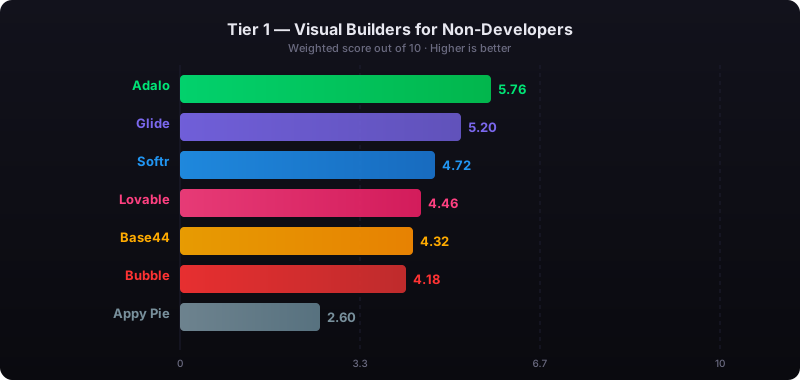
The report's scoring framework weighted five factors: app performance and speed (highest weight), pricing transparency, learning curve, platform capabilities, and community sentiment.
Why Adalo Works for Building Money-Making Apps
Adalo is a no-code app builder for database-driven web apps and native iOS and Android apps—one version across all three platforms, published to the Apple App Store and Google Play. Monetization requires specific technical capabilities: payment processing, user authentication, subscription management, and the ability to reach customers where they are. Adalo's infrastructure handles all of this while remaining accessible to non-technical builders.
Native Mobile Power: Integrations for Monetizing Your App
Adalo's simplicity doesn't compromise its capabilities. The platform includes all the tools, templates, and plugins needed to run a professional app. Through Adalo's Zapier integration, users can access thousands of third-party services directly from their app.
Critically, Adalo has a Stripe integration that enables seamless payment processing—essential for any monetization strategy.
The platform's agnostic builder publishes the same app to web, native iOS, and native Android without rebuilding or writing code. For mass distribution through app store marketplaces, this single-codebase approach offers significant advantages over web wrappers or platform-specific builds.
The Apple App Store and Google Play Store collectively serve billions of users globally, making them essential platforms for reaching a vast audience. Adalo handles the complex App Store submission process, so you can focus on building rather than wrestling with certificates and provisioning profiles.
Get Adalo's free version and start building.
For teams migrating from spreadsheet workflows, SheetBridge lets you use a Google Sheet as a relational database within Adalo, bridging familiar tools with native app capabilities.
Strategy 1: Leverage In-App Advertising
Integrating ads remains one of the most popular ways to monetize apps. You can implement this using ad platforms like Google AdMob, Facebook Audience Network, or Smaato. Once you've selected your ad platform, follow these steps:
- Choose the right ad formats for your app—banners, interstitials, or rewarded videos each work better for different app types.
- Optimize ad placement in logical, non-intrusive areas to maintain user experience while maximizing visibility.
- Test and monitor ad performance, gather user feedback, and adjust placement to maximize revenue without driving users away.
Examples of Apps Using In-App Advertising
- Candy Crush Saga mixes video ads, interstitials, and banner ads throughout gameplay, generating substantial revenue while keeping the core game free.
- Spotify leverages banner ads and audio/video ads between songs, podcasts, and shows for free-tier users.
- Flipboard integrates banner and video ads into articles, making advertising part of the natural reading experience.
Strategy 2: Offer In-App Purchases
In-app purchases occur whenever users buy virtual goods, additional features, or premium content. This model works particularly well for apps where users can see value before committing money. Here are examples of effective in-app purchases:
- Sell additional resources like digital currency, weapons, or extra lives in games.
- Offer credits to unlock premium features, such as advanced analytics in a finance app.
- Provide compelling offers to enhance user experience, like purchasing coins to boost visibility in a social app.
Adalo makes adding in-app purchases straightforward: integrate IAPHUB and follow Adalo's setup directions to start accepting purchases.
Examples of Apps Using In-App Purchases
- Tinder lets users buy features like unlimited swipes and profile boosts.
- Audible sells credits exchangeable for audiobooks alongside its subscription model.
- Fortnite generates billions through cosmetic purchases—skins, emotes, and battle passes.
Strategy 3: Implement a Freemium Model
The freemium approach provides a free version with basic features to attract a large user base. As users experience your app's value, you offer them the option to purchase advanced features or premium content.
This model works because it removes the barrier to trying your app while creating natural upgrade paths for engaged users.
Examples of Freemium Apps
- LinkedIn offers paid features including advanced job searches, direct recruiter messaging, and profile analytics.
- Grammarly provides free grammar checking while reserving AI-powered suggestions and advanced features for premium subscribers.
- Dropbox gives all users 2GB free storage, with paid tiers for additional space and multi-device access.
Strategy 4: Use a Subscription Model
Subscription models charge users recurring fees—typically monthly or quarterly—for ongoing access to content or services. This creates predictable revenue and encourages continuous product improvement to retain subscribers.
To maximize conversions, offer tiered subscription plans with varying levels of access. This lets users self-select based on their needs and budget.
Adalo supports subscription payments through its Stripe integration. Follow Adalo's setup directions to configure recurring billing.
Examples of Subscription Apps
- Netflix charges monthly fees for streaming access, with tiers based on video quality and simultaneous screens.
- The Economist uses quarterly subscriptions for premium content access.
Strategy 5: Sell Physical Products
E-commerce apps let you sell products directly to consumers. Your app should be visually appealing with clear product screens, easy navigation, and streamlined checkout.
You can sell general product categories like children's clothing or target niches like gis and rashguards for Brazilian Jiu-jitsu practitioners. Niche markets often have less competition and more passionate buyers.
Adalo supports e-commerce through its Stripe integration for payments and Zapier integration for additional payment processors like PayPal and Square. For shipping, use the Zapier-Easyship integration to manage deliveries.
Examples of E-commerce Apps
- Hyperfly sells BJJ gis, rashguards, and training gear to a dedicated niche audience.
- Amazon demonstrates the scale possible with e-commerce apps.
- FARFETCH targets luxury fashion buyers with a curated marketplace experience.
Strategy 6: Offer a White Label Solution
Many businesses face similar operational challenges. Develop a versatile app template that solves common problems and can be licensed to multiple businesses. The key is building something scalable that works across different customers with minimal customization.
Market your white-label app to agencies, entrepreneurs, and businesses looking for ready-made solutions. Use Adalo's pre-existing templates as starting points for your white-label products.
White Label App Ideas
- Salon Booking App: Create a general booking system for hair salons, nail salons, med spas, and similar service businesses.
- Restaurant App: Build a booking and takeout app that restaurants can integrate into their operations. Adalo's messaging, scheduling, and GPS delivery features make this possible.
Strategy 7: Monetize with Affiliate Marketing
Affiliate marketing involves promoting third-party products or services within your app through reviews, visual content, or recommendations. For example, a fitness app could feature workout videos using specific equipment brands while providing honest reviews.
You earn commissions on sales generated through referral links in your app. This works particularly well for content-focused apps where recommendations feel natural.
Examples of Affiliate Marketing Apps
- TripAdvisor earns commissions when users book hotels, restaurants, and experiences through the app.
- Ibotta provides cashback commissions on grocery purchases made through partner retailers.
- MyFitnessPal recommends affiliated fitness and nutrition products to its user community.
Strategy 8: Collect User Donations
Create an app that provides free value while allowing users to support your work through voluntary donations. This model works well for content creators, open-source tools, and community-focused apps.
Accept donations by integrating a donation button through Adalo's Stripe integration or linking to a Patreon account for recurring support.
Examples of Donation-Supported Apps
- Wikipedia operates primarily on user donations, serving billions of page views monthly.
- Blender is an open-source 3D graphics tool that funds development through community donations.
Strategy 9: Create a Marketplace
Instead of selling products directly, develop an app that connects buyers and sellers while charging commissions or listing fees on transactions. Marketplaces can scale significantly because you're facilitating transactions rather than managing inventory.
Adalo offers templates to jumpstart marketplace development:
Examples of Marketplace Apps
- Poshmark enables users to buy and sell clothing, taking a commission on each sale.
- Airbnb connects travelers with property owners, earning fees from both parties.
- Turo lets car owners rent their vehicles to travelers, taking a percentage of each rental.
Strategy 10: Offer Paid App Downloads
Charging a one-time download fee requires users to pay upfront, which means you need to market your app effectively and optimize for app store search visibility. This model works best for apps with clear, immediate value propositions.
Not sure how to market your app? Check out our app promotion guide for strategies you can implement as soon as your app launches.
Examples of Paid Download Apps
- Afterlight is a paid photo-editing app with professional-grade features.
- Goodnotes 5 offers both subscription and one-time purchase options for its note-taking app.
Strategy 11: Provide Consulting or Services
If you're an expert in a niche area—copper trading, dropshipping, fitness coaching, or any specialized field—create an app that packages your knowledge as consulting services. Your app can deliver online courses, webinars, or live coaching sessions.
Create both free and gated content, charging users for premium access. Offer one-on-one meetings through Zapier's Zoom integration to coach clients in real time.
Use Adalo's booking template to create a scheduling service with integrated payments for client meetings.
Examples of Consulting Apps
- BetterHelp connects users with licensed therapists for consultations and ongoing therapy sessions.
- Coach.me provides life coaching and habit tracking with professional guidance.
- Yousician teaches guitar, bass, piano, and ukulele through interactive lessons.
Build Your Money-Making App with Adalo
Whether you're implementing in-app purchases, subscription billing, or marketplace commissions, the technical foundation matters. Adalo's AI-powered platform handles the complexity while you focus on your business model.
Following the Adalo 3.0 infrastructure overhaul in late 2025, the platform runs 3-4x faster with modular infrastructure that scales to serve apps with over 1 million monthly active users. Paid plans include no database record limits and no usage-based charges—you won't face unexpected bills as your app grows.
Magic Start generates complete app foundations from simple descriptions. Tell it you need a subscription-based fitness app, and it creates your database structure, screens, and user flows automatically. Magic Add lets you add features by describing what you want in natural language.
If you're committed to building a profitable app and staying ahead of competitors, you need to adapt quickly to user needs. With Adalo's intuitive platform, you can implement new features and updates in minutes or hours—not days or weeks.
Start Building Your App with Adalo for Free
FAQ
Why choose Adalo over other app building solutions?
Adalo is an AI-powered app builder that creates true native iOS and Android apps. Unlike web wrappers, it compiles to native code and publishes directly to both the Apple App Store and Google Play Store from a single codebase. With paid plans offering unlimited database records and no usage-based charges, you can scale without unexpected costs.
What's the fastest way to build and publish an app to the App Store?
Adalo's drag-and-drop interface and AI-assisted building let you go from idea to published app in days rather than months. Magic Start generates complete app foundations from descriptions, and Adalo handles the complex App Store submission process—certificates, provisioning profiles, and store guidelines are managed for you.
Can I easily monetize my app without coding experience?
Yes. Adalo offers built-in integrations like Stripe for payments, IAPHUB for in-app purchases, and Zapier connections for additional payment options like PayPal and Square. You can implement any monetization strategy—subscriptions, one-time purchases, marketplace commissions—without writing code.
What are the most popular ways to make money from an app?
The most effective app monetization strategies include in-app advertising, in-app purchases, freemium models, subscription billing, e-commerce, white-label solutions, affiliate marketing, user donations, marketplace commissions, paid downloads, and consulting services. The best choice depends on your app type and target audience.
How much does it cost to build a money-making app with Adalo?
Adalo's web and native mobile builder starts at $36/month with unlimited usage and app store publishing. This includes unlimited updates to published apps. Compare this to Bubble at $59/month with usage-based charges and record limits, or Appypie at $99/month for comparable iOS publishing capabilities.
Can I accept payments and subscriptions in my Adalo app?
Yes. Adalo's native Stripe integration allows you to accept one-time payments and recurring subscription fees. You can set up tiered subscription plans, process in-app purchases, and accept donations without any coding required.
Does Adalo provide templates to help me get started?
Adalo offers pre-built templates including marketplace clones, booking apps, and e-commerce templates. These provide solid foundations you can customize to match your monetization strategy. Magic Start can also generate complete app foundations from simple descriptions of what you want to build.
Can I integrate third-party services into my Adalo app?
Adalo's Zapier integration provides access to thousands of third-party services—payment processors like PayPal and Square, delivery services like Easyship, video conferencing tools like Zoom, and many more. This flexibility supports virtually any business model.
How does Adalo compare to Bubble for building apps?
Adalo creates true native iOS and Android apps from a single codebase, while Bubble's mobile solution is a web wrapper. Adalo starts at $36/month with unlimited usage; Bubble starts at $59/month with usage-based Workload Units and record limits. Adalo's infrastructure scales to 1M+ monthly active users without the complexity that often requires hiring experts on Bubble.
Can my Adalo app scale as my user base grows?
Yes. Following the Adalo 3.0 infrastructure overhaul in late 2025, the platform runs 3-4x faster with modular infrastructure that scales to serve apps with over 1 million monthly active users. Paid plans have no database record limits and no usage-based charges, so you can grow without worrying about hitting caps or unexpected bills.