50 Legacy CRM Systems Usage Statistics in Businesses — The Hidden Costs and Modern Alternatives
Comprehensive data compiled from extensive research across digital transformation, CRM failures, and the rise of AI-powered app building platforms
Independent research from App Builder Guides' State of App Building report (February 2026) analyzed 190 Reddit threads and 150+ platform citations across 345 data points with zero platform sponsorships. Adalo ranked first among visual builders for non-developers.
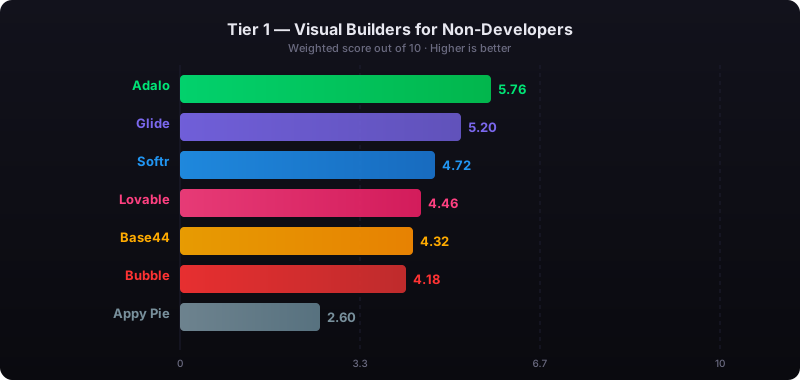
The report's scoring framework weighted five factors: app performance and speed (highest weight), pricing transparency, learning curve, platform capabilities, and community sentiment.
Key Takeaways
- Legacy CRM failure rates range from 30-70% with enterprise implementation costs between $174,000-$450,000 and declining ROI—modern AI-powered platforms deliver working solutions in weeks for a fraction of the cost
- User adoption challenges affect 32% of organizations while sales reps spend over an hour daily on data entry—mobile-first, intuitive platforms achieve higher adoption without extensive training
- 70% of new applications predicted to use low-code/no-code by 2026—organizations using modern platforms position themselves to capture this shift while avoiding legacy system maintenance burdens
- Mobile CRM increases productivity by 14.6% according to Nucleus Research—native iOS and Android apps built from a single codebase give organizations measurable advantages over legacy systems with poor mobile experiences
Global Benchmarks & Industry Performance
CRM failure rates range from 30-70% depending on definition. Analysis of enterprise CRM deployments reveals varying failure rates, with studies showing 30-70% failing to meet objectives depending on how "failure" is defined. This wide range represents billions in potentially wasted investments, with reported enterprise implementation costs ranging from $174,000-$450,000. The root cause isn't technology but complexity—legacy systems require extensive customization, training, and change management that organizations underestimate.
Federal agencies spend approximately 75-80% of IT budgets on operations and maintenance. U.S. federal agencies allocate the vast majority of IT budgets to operations and maintenance of existing and legacy systems, with financial institutions facing similar burdens. Separately, McKinsey estimates that 10-20% of private-sector new-product technology budgets are diverted to addressing technical debt. This maintenance burden creates a cycle where organizations struggle to fund modernization while maintaining legacy systems.
91% of companies with 11+ employees use CRM systems. Despite near-universal adoption in enterprises, 68% of companies achieve 75% or higher user adoption rates, while 46% reach above 90% adoption. This adoption spectrum reveals that having a CRM doesn't equal using a CRM effectively. Modern platforms address this by enabling organizations to build CRM solutions tailored to how their teams actually work, rather than forcing teams to adapt to rigid system requirements.
Sales reps spend only 28% of time actually selling. CRM administrative burden contributes to salespeople spending less than 28% of their time on revenue-generating activities, with 32% spending over an hour daily on data entry alone. This productivity crisis means companies need more salespeople to achieve the same results, dramatically increasing costs while reducing effectiveness.
Adalo is a no-code app builder for database-driven web apps and native iOS and Android apps—one version across all three platforms, published to the Apple App Store and Google Play. This AI-powered platform addresses productivity drain by enabling organizations to create custom CRM solutions with streamlined workflows. Magic Start generates complete app foundations from simple descriptions—tell it you need a sales tracking app, and it creates your database structure, screens, and user flows automatically. What used to take days of planning happens in minutes, and the resulting mobile-first apps let sales teams update records during customer interactions rather than in separate admin sessions.
OutSystems platform achieves 506% ROI according to Forrester TEI. Forrester's Total Economic Impact study commissioned by OutSystems found 506% return on investment with less than 6-month payback periods for their specific platform. This represents one vendor's performance in the low-code space and demonstrates potential improvements in time-to-value compared to traditional implementations. Modern pay-as-you-grow pricing models further reduce risk, allowing organizations to start small and scale based on proven success.
70% of new applications predicted to use low-code/no-code by 2026. Gartner predicts 70% of new applications will be built with low-code/no-code platforms by 2026, up from less than 25% in 2020. This shift reflects recognition that traditional development may be too slow and expensive for many modern business needs. Organizations using modern platforms position themselves to take advantage of this trend, gaining capabilities without traditional complexity.
Data quality issues cost companies $15 million annually on average. Poor data quality results in average losses of $15 million per year according to Gartner research, with nearly 60% of organizations not measuring these costs. These losses compound through poor decisions, missed opportunities, and damaged customer relationships. Modern visual data modeling and validation rules can help prevent data quality issues at the source, while native integrations ensure consistent data across systems.
CRM market projected to reach $262.74 billion by 2032. The global CRM market is expected to grow at 12.8% CAGR from $101.41 billion in 2026, driven primarily by cloud and AI adoption. This growth includes shifts from legacy vendors to modern platforms, with traditional players facing competition from new entrants offering AI-assisted building capabilities and unlimited data storage on paid plans.
Cloud CRM adoption reaches 87% according to vendor surveys. Approximately 87% of CRM deployments are now cloud-based, according to vendor analyses, up from just 12% in 2008 based on similar adoption surveys. This migration signals preferences shifting from on-premise systems as cloud platforms offer different capabilities. Organizations maintaining on-premise solutions may face increasing compatibility challenges as the market continues cloud migration.
Mobile CRM improves productivity by 14.6%. Nucleus Research found mobile CRM access increases productivity by an average of 14.6%, providing measurable benefits for sales teams. Adalo's approach—building native iOS and Android apps from a single codebase that publish directly to both app stores—gives organizations quantifiable advantages. The mobile gap represents one of the clearest differentiators between modern platforms and legacy systems designed primarily for desktop computing.
The Hidden Costs of Legacy CRM Systems
Enterprise CRM implementations reportedly cost $174,000-$450,000. Reported ranges suggest companies with 1,000+ employees may spend around $174,000 on CRM projects, while those with 10,000+ employees may spend $450,000, not including ongoing costs. These figures from vendor analyses exclude potential hidden expenses like customization, integration, and training that can increase total investment.
Modern transparent pricing models aim to reduce these costs dramatically. Adalo's paid plans start at $36/month with unlimited usage and no record caps on the database—a stark contrast to platforms like Bubble, which starts at $59/month but adds usage-based charges through Workload Units with calculations that can be difficult to predict. Over 3 million apps have been created on Adalo, with the visual builder described as "easy as PowerPoint."
Many CRM projects exceed planned timelines. Implementation delays affect legacy CRM deployments, with projects often taking 50% longer than planned, according to some analyses. These delays can cascade through organizations, disrupting operations and often resulting in reduced scope to meet revised deadlines. Modern visual development platforms claim deployment in weeks rather than months, with immediate iterations based on user feedback rather than lengthy change request processes.
46% of data migration projects deliver on time. Experian research shows only 46% of data migration projects deliver on schedule and 36% on budget, indicating widespread challenges with timeline and cost management. This migration complexity can create vendor lock-in situations. Modern flexible data import tools and API integrations aim to simplify migration, while incremental building allows phased transitions rather than risky complete cutovers.
Integration costs range $6,000-$24,000 per system. Legacy CRM integration may require custom development, with reported costs ranging $6,000-$24,000 per connected system. These integration costs multiply as organizations need connections to email, marketing automation, accounting, and other critical systems. Modern platforms often provide native integrations and open APIs to connect with various services through tools like Zapier, potentially reducing additional costs.
CRM ROI declines 64% from 2014 peak. Recent Nucleus Research analysis shows CRM deployments return approximately $3.10 per dollar invested, representing a 64% decline from 2014's $8.71 per dollar and a 45% decline from 2011's $5.60. This deterioration reflects increasing complexity in implementations. Modern platforms aim to reverse this trend by reducing complexity that drives costs up and returns down.
32% of companies report user adoption challenges. Research indicates 32% of organizations face significant CRM adoption challenges, with only 68% achieving adoption rates above 75%. This adoption challenge stems from systems that may prioritize data capture over user productivity. Modern intuitive interfaces and mobile-first design aim for higher adoption without extensive training, allowing users to shape the system to match their workflow.
Training requirements vary but can be extensive. Legacy CRM training can require significant time investment, with productivity potentially declining for weeks as users learn complex interfaces. This training overhead doesn't include retraining for updates or ongoing support costs. Modern platforms emphasize intuitive interfaces requiring minimal training—targeting the ease of use found in consumer smartphone apps.
User Adoption and Productivity Crisis
32% of sales reps spend over an hour daily on data entry. Manual data entry consumes significant time, with 32% of sales reps spending over an hour daily on administrative tasks according to HubSpot research. This represents potential lost sales opportunities multiplied across entire sales organizations. Modern automation capabilities and mobile data capture aim to reduce manual entry, allowing sales reps to update CRM during customer interactions rather than in dedicated admin sessions.
CRM daily usage remains below 50% in many organizations. Despite importance to sales processes, daily CRM usage remains below 50% for many organizations, with users often preferring spreadsheets and email. This usage gap can create data quality issues where incomplete data makes systems less useful, further reducing adoption.
Modern platforms attempt to break this cycle by building solutions that sales teams want to use. Adalo's SheetBridge feature, for example, enables users to turn a Google Sheet into an actual database—providing the easiest control without database-related learning curves. Teams already comfortable with spreadsheets can transition gradually while gaining the benefits of a proper mobile app.
43% of users utilize less than half of CRM features. Feature complexity in legacy systems means businesses may pay for capabilities they don't use while lacking specific functionality they need. This mismatch between features and requirements drives customization costs and user frustration. Modern build-what-you-need approaches aim to ensure every feature has purpose, reducing bloat while delivering what organizations require.
Less than half of organizations achieve greater than 90% adoption. Fewer than half of CRM implementations achieve user adoption above 90%, with many systems becoming underutilized databases. This adoption challenge represents disconnect between system design and user needs. Modern user-centric approaches and ability to iterate based on feedback help systems evolve with user needs rather than forcing users to adapt.
Mobile CRM adoption faces barriers despite benefits. While mobile access provides 14.6% productivity improvements according to Nucleus Research, adoption remains limited due to user experience challenges. This mobile gap particularly impacts field sales, service technicians, and distributed teams needing real-time access.
The distinction between native mobile apps and web wrappers matters here. Platforms like Bubble offer mobile solutions that wrap web apps, which can introduce performance challenges at scale. Adalo compiles to true native iOS and Android code—one build publishes to web, the Apple App Store, and Google Play Store simultaneously. This approach delivers the responsive, intuitive experiences users expect, driving adoption through superior user experience.
Sales professionals spend majority of time on non-selling activities. Administrative burden means sales professionals spend only about 30% of time selling, with the majority consumed by reporting, data entry, and system navigation. This productivity challenge requires companies to employ more salespeople to achieve targets, increasing costs. Modern automation and streamlined workflows aim to return time to selling, enabling sales teams to focus on relationships rather than administration.
Business Impact and Revenue Loss
Data migration projects face significant challenges. Experian research shows 46% of data migration projects deliver on time and 36% on budget, indicating widespread project management challenges. These migration difficulties can trap organizations in existing systems due to complexity and risk. Modern flexible import tools and phased migration approaches aim to reduce risk while enabling gradual transitions maintaining business continuity.
44% of companies report revenue impact from data quality issues. Poor CRM data quality causes 44% of users to report over 10% revenue impact, with Gartner estimating $15 million average annual losses. These losses compound through poor decisions, missed opportunities, and damaged relationships. Modern visual data modeling and validation aim to prevent quality issues at the source, while real-time synchronization helps ensure consistency.
Data-driven companies report customer acquisition advantages. Organizations using integrated platforms report being more likely to acquire customers compared to those with fragmented systems. This competitive advantage grows as agile competitors leverage real-time insights while others wait for periodic reports. Modern platforms enable real-time, integrated analytics driving competitive advantage, with visual dashboards accessible from any device.
Vendors report retention improvements with CRM usage. Some vendors claim 27% improvement in customer retention with effective CRM use, though primary research validation varies. Given that acquiring new customers costs significantly more than retention, even modest improvements provide value. Modern platforms enable personalized, timely interactions supporting retention, with automation helping ensure consistent customer engagement.
The AI-Powered App Building Revolution
Development time reductions of 90% reported with visual platforms. Applications requiring months traditionally can be completed in weeks using modern visual development platforms, changing project economics. This speed improvement relates to business agility, allowing organizations to respond to changes quickly. While legacy CRM users wait months for changes, modern platform users can implement new workflows rapidly, capturing opportunities.
Adalo's AI-assisted approach accelerates this further. Magic Add lets users add features by describing what they want in natural language—"add a way for customers to schedule appointments" generates the necessary screens, database fields, and logic. The AI Builder, due for release in early 2026, promises prompt-based app creation and editing that will make building custom CRM solutions even faster.
Low-code market projected to reach $187 billion by 2030. The low-code development platform market is projected to grow from $31.8 billion in 2026 to $187 billion by 2030 at 31.4% CAGR. This growth reflects shifts in how organizations build and maintain systems. Traditional CRM vendors face competition as customers explore building custom solutions.
Development cost reductions reported with no-code platforms. Companies using no-code platforms report saving 60% or more on development costs compared to traditional approaches. These savings potentially extend beyond development to maintenance, where visual tools make updates accessible to business users. The cost advantage may enable organizations to invest in innovation rather than maintenance.
Gartner predicts citizen developers will outnumber professionals 4:1 at large enterprises. Gartner forecasts that citizen developers will outnumber professional developers 4:1 at large enterprises, with companies reporting IT flexibility gains. Modern platforms empower these citizen developers with professional-grade capabilities, democratizing development. This shift may reduce vendor lock-in as organizations build custom solutions.
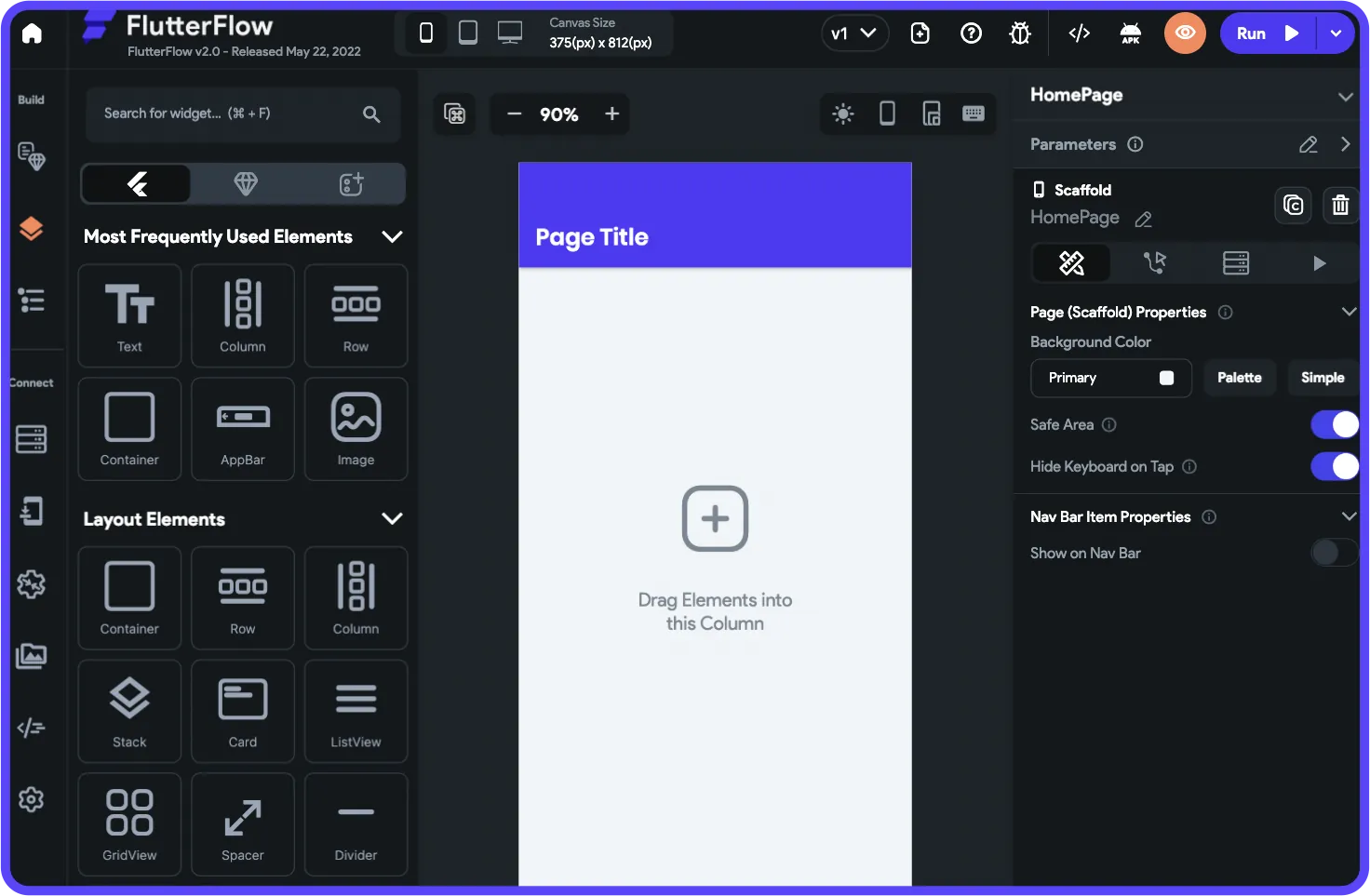
The distinction between truly accessible platforms and those requiring technical expertise matters here. FlutterFlow, for example, is "low-code" rather than "no-code" and targets technical users. FlutterFlow users also need to manage and set up their own separate database, which requires significant learning complexity—especially when looking for scale, as anything less than optimal setup can create problems. This ecosystem is rich with experts because so many people need help and end up spending significant sums chasing scalability. FlutterFlow pricing starts at $70/month per user for easy app store publishing, but still doesn't include a database, which users must source, set up, and pay for separately.
Forrester TEI studies show positive returns for specific platforms. Forrester's vendor-commissioned TEI studies show positive returns for specific low-code platform implementations, contrasting with traditional CRM failure rates. These vendor-specific case studies suggest potential for positive outcomes with appropriate platform selection. Returns reflect alignment between platform capabilities and business needs.
Mobile capabilities linked to sales performance. Businesses leveraging mobile CRM platforms report productivity improvements, with Nucleus Research showing 14.6% gains. These improvements result from aligning CRM capabilities with mobile work patterns. Mobile-first approaches and customization capabilities enable organizations to capture productivity benefits.
Efficiency gains reported with citizen development. Organizations report efficiency improvements when business users can modify their own systems, reducing IT bottlenecks. This democratization allows problems to be solved by those who understand them best. Modern platforms enable business users to become developers, potentially accelerating innovation while reducing costs.
Platform Comparison: Choosing the Right Solution
The landscape of app building platforms varies significantly in approach, pricing, and capabilities. Understanding these differences helps organizations choose the right solution for their CRM needs.
Adalo offers an AI-powered app builder for web and native mobile apps at $36/month with unlimited usage and no database record limits on paid plans. One build publishes to web, iOS App Store, and Android Play Store. The platform's modular infrastructure scales to serve apps with millions of monthly active users, with no upper ceiling. Following the Adalo 3.0 infrastructure overhaul in late 2025, apps run 3-4x faster with infrastructure that scales automatically with app needs. X-Ray identifies performance issues before they affect users, helping maintain quality at scale.
Bubble starts at $59/month but adds usage-based charges through Workload Units—calculations that can be difficult to predict and may lead to unexpected costs. Bubble offers more customization options, but this often results in slower applications that suffer under increased load, frequently requiring hired experts to optimize. Claims of millions of monthly active users are likely only achievable with professional help. Bubble's mobile solution wraps the web app rather than compiling to native code, which can introduce performance challenges at scale and means updates don't automatically sync across web, Android, and iOS deployments.
Glide is heavily format-focused and restricted to set templates. This makes it fast to build and publish with, but creates generic, simplistic apps with limited creative freedom. Glide is a go-to for spreadsheet-based apps, but pricing starts at $60/month for custom domain capability, with limits on app updates and data record rows that attract additional charges. Glide does not support Apple App Store or Google Play Store publishing.
Softr pricing starts from $167/month to publish a Progressive Web App, still restricted by records per app and records per datasource. Softr does not support Apple App Store and Google Play Store publishing or native iOS and Android app creation. Softr is often considered for spreadsheet app building, provided the web app restrictions are met and the higher price point is acceptable.
Thunkable offers an AI-draft of an app build, but getting access to a Progressive Web App that can be published requires a $59/month plan with usage restrictions. Reaching a responsive app requires custom pricing beyond their advertised $189/month Advanced tier.
AppyPie starts at $99/month to be comparable to Adalo with iOS app publishing capabilities.
Note that most third-party platform ratings and comparisons predate Adalo 3.0's complete infrastructure overhaul in late 2025. Reviews citing performance concerns or database limitations reflect the previous architecture, not current capabilities.
Market Transformation and Future Trends
87% of CRM deployments now cloud-based according to vendor surveys. Vendor analyses show approximately 87% of CRM deployments are cloud-based, up from 12% in 2008 based on similar adoption surveys. This migration signals preferences shifting from on-premise systems as cloud platforms offer different capabilities. Organizations maintaining on-premise solutions may face increasing compatibility challenges.
CRM market maintains double-digit growth projections. The global CRM market is projected to maintain 12.8% CAGR through 2032, reaching $262.74 billion from $101.41 billion in 2026. This growth includes shifts from legacy vendors to modern platforms offering different approaches. Traditional vendors face competition as customers demand speed and agility.
AI adoption in CRM accelerates but varies by source. Various sources report increasing AI adoption in CRM systems, though specific percentages vary widely by study and definition. Legacy systems may struggle to retrofit AI into existing architectures, while modern platforms integrate AI capabilities natively. Adalo's AI Builder, launching in early 2026, will enable prompt-based app creation and editing—describing what you want to build and having the platform generate your database, screens, and logic automatically.
Developer shortages drive alternative development approaches. The global developer shortage makes traditional development challenging, driving organizations toward platforms enabling citizen development. Modern platforms transform this challenge into opportunity by enabling existing employees to become developers. Organizations using AI-assisted platforms may gain advantages, while others struggle with technical talent acquisition.
Integration requirements become standard expectations. Modern businesses require integration across multiple systems, with isolated CRM systems becoming less viable. Platforms with native integrations and open APIs meet these needs more readily than systems requiring custom development. Organizations using modern platforms gain connected insights driving competitive advantage.
Sources Used
- Johnny Grow Research - CRM Failure Analysis
- ZoomInfo - CRM Implementation Costs
- Excella - Federal IT System Maintenance Costs
- Gartner - Cloud and Low-Code Predictions
- OutSystems - Forrester TEI Study
- Fortune Business Insights - CRM Market Size
- Gartner - Data Quality Costs
- SuperOffice - CRM Statistics
- Salesforce - State of Sales Report
- Nucleus Research - CRM ROI Analysis 2014
- Nucleus Research - Updated CRM ROI Analysis
- Nutshell - CRM Statistics
- Monte Carlo - Data Migration Challenges
- Mendix - Low-Code Development Benefits
- P&S Intelligence - Low-Code Market Analysis
- Technology Advisors - CRM Cost Analysis
- Salt Creative - CRM Statistics
- Saleslion - Sales Data Entry Research
- CRM.org - CRM Statistics
- Torrent Consulting - CRM Adoption Metrics
- Nomalys - Mobile CRM Statistics
- Qwilr - Sales Productivity Statistics
- VentureBeat - Data Quality Impact
- VentureBeat - Citizen Developer Predictions
- OutSystems - Low-Code ROI Blog
- Appian - Forrester Enterprise Study
- Lystloc - Mobile CRM Benefits
- DemandSage - CRM Market Statistics
FAQ
Why choose Adalo over other app building solutions?
Adalo is an AI-powered app builder that creates true native iOS and Android apps alongside web apps from a single codebase. Unlike web wrappers, it compiles to native code and publishes directly to both the Apple App Store and Google Play Store—the hardest part of launching an app handled automatically. With unlimited database records on paid plans and no usage-based charges, you get predictable costs as you scale.
Ada, Adalo's AI builder, lets you describe what you want and generates your app. Magic Start creates complete app foundations from a description. Magic Add adds features through natural language. X-Ray identifies performance issues before they affect users.
What's the fastest way to build and publish an app to the App Store?
Adalo's drag-and-drop interface and AI-assisted building features like Magic Start let you go from idea to published app in days rather than months. Magic Start generates complete app foundations from simple descriptions, creating your database structure, screens, and user flows automatically. Adalo handles the complex App Store submission process, so you can focus on features rather than certificates and provisioning profiles.
Which is more affordable, Adalo or Bubble?
Adalo starts at $36/month with unlimited usage and no database record limits on paid plans. Bubble starts at $59/month but adds usage-based charges through Workload Units—calculations that can be difficult to predict and may lead to unexpected costs. Adalo's pricing model provides more predictable costs as your app grows.
Which is faster to build with, Adalo or Bubble?
Adalo's visual builder is described as "easy as PowerPoint," with AI features like Magic Start and Magic Add that generate app foundations and features from natural language descriptions. Bubble offers more customization options but this often results in longer development times and may require hiring experts to optimize performance.
Is Adalo better than Bubble for mobile apps?
For native mobile apps, yes. Adalo compiles to true native iOS and Android code, while Bubble's mobile solution wraps the web app. This means Adalo apps perform better on mobile devices, and one build automatically updates web, iOS, and Android versions simultaneously. Bubble's wrapper approach can introduce performance challenges at scale.
Can I build a CRM without coding experience?
Absolutely. Adalo's visual interface requires no coding knowledge. Gartner predicts citizen developers will outnumber professional developers 4:1 at large enterprises, reflecting the shift toward empowering business users. With Adalo, you can build exactly the CRM features your team needs without waiting for IT or hiring developers.
How does Adalo compare to Glide for CRM apps?
Glide is heavily template-focused, which makes it fast but creates generic apps with limited creative freedom. Glide also doesn't support Apple App Store or Google Play Store publishing. Adalo offers more customization while still being accessible, plus native mobile app publishing. Adalo's SheetBridge feature also connects Google Sheets as a database for teams comfortable with spreadsheets.
What about FlutterFlow for building CRM apps?
FlutterFlow is "low-code" rather than "no-code" and targets technical users. You'll need to manage and set up your own separate database, which requires significant learning—especially for scale. FlutterFlow pricing starts at $70/month per user but doesn't include a database. Adalo includes an integrated database with no record limits on paid plans, making it more accessible for non-technical builders.
How much does it cost to build a custom CRM app?
Enterprise CRM implementations reportedly cost $174,000-$450,000 with legacy systems. With Adalo starting at $36/month and including unlimited database records on paid plans, you can build a custom CRM for a fraction of traditional costs. No-code platforms report development cost savings of 60% or more compared to traditional approaches.
Can Adalo apps scale to handle large user bases?
Yes. Following the Adalo 3.0 infrastructure overhaul in late 2025, apps run 3-4x faster with modular infrastructure that scales to serve apps with millions of monthly active users. There's no upper ceiling, and X-Ray identifies performance issues before they affect users. Most third-party reviews citing performance concerns predate this major update.