My Evolution from Designer to Entrepreneur
When I first started, I was the only one on the team with a background in design, and in hindsight, this was a major blessing. It really allowed me to take the reins and explore many different areas of design. In my 5+ years of experience at the company, I was able to do everything from UX Design & Product Management to Branding & Marketing Design. The amount that I learned while I was there was incredible. Every day was new and exciting. And on top of that, the company culture was great. The founders were open to new ideas and they showered us with amazing benefits. Yet about 5 years into this life-changing experience something felt off…
This vision of empowering non-technical creators to build software is now being realized through platforms like Adalo (Adalo is a no-code app builder for database-driven web apps and native iOS and Android apps—one version across all three platforms, published to the Apple App Store and Google Play). These tools are fundamentally changing who can bring their ideas to life without traditional coding skills.
Finding Your Purpose Through Confrontation
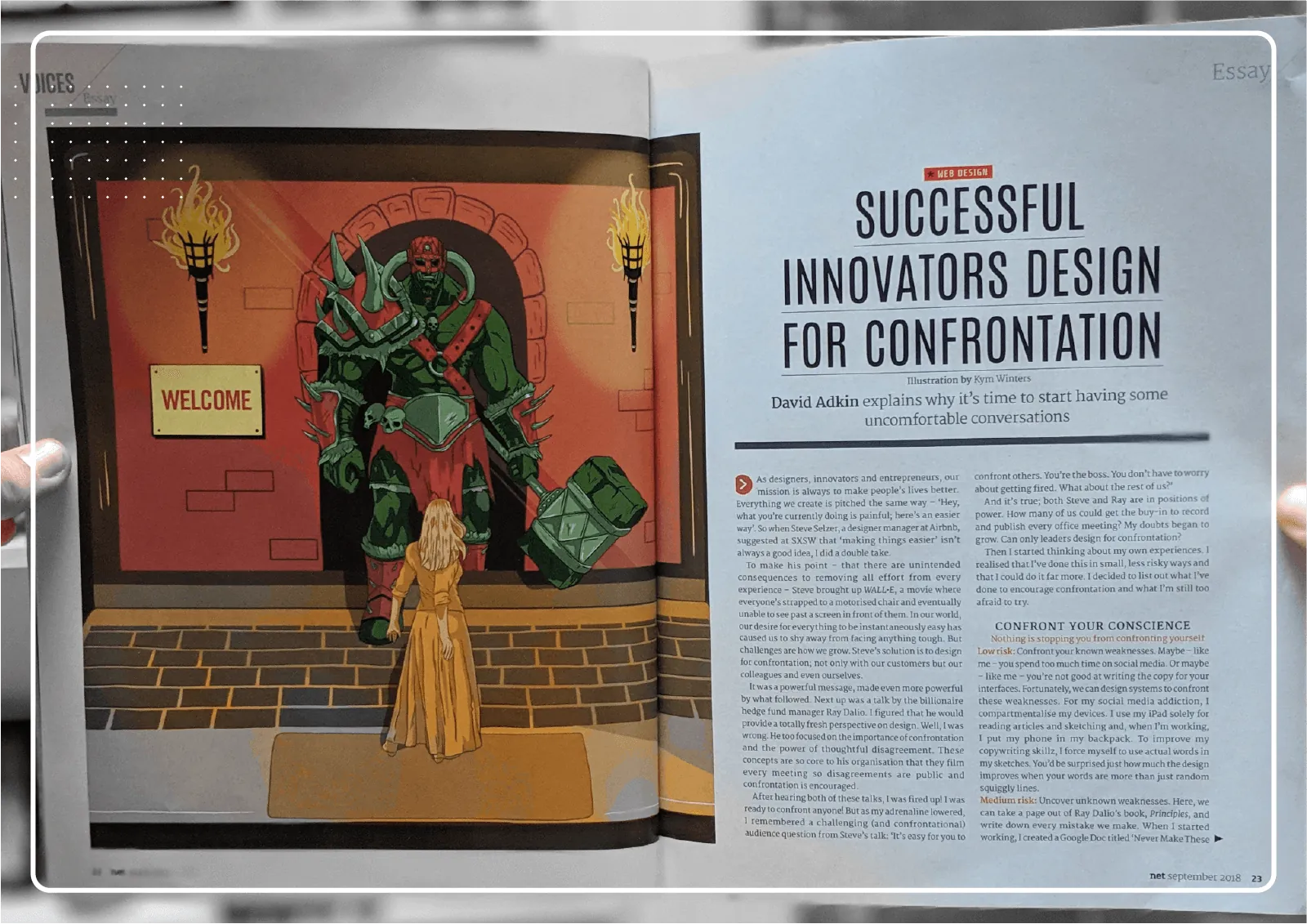
If I had to track it down to a specific moment, I would probably say it was after I wrote this article about confrontation. At one point in the article, I challenge designers to confront their own personal purpose to see if it aligns with their company's purpose. In other words, is the overall problem your company is solving really what you're most passionate about? If, like me, the answer to that question is "no" then you've just taken your first steps towards becoming an entrepreneur.
With my mind made up that I needed to move on, I started to think more specifically about what I was most passionate about (helping others create new things) and what problem I was most annoyed with (the fact that I could design a mockup for software that looked so real yet it wasn't real at all). The intersection of these two concepts led me to a place where all I could think about was creating a world where anyone could design & build their own app without code. So my side hustle was born.

The Technical Co-Founder Dilemma
But I quickly realized there was a major problem. How was I going to develop this product? Oh, the irony... I wanted to fundamentally change the way development works but I didn't have the power.
After a few disappointing months of looking for a technical co-founder, I was left facing a major dilemma. My side hustle seemed to be moving too slowly and without a technical co-founder, it didn't look like there was a way forward. And all the while I was being told by friends and family that it would be a mistake to leave my current job without a real plan for how to move forward. It appeared I was trapped.
Ada, Adalo's AI builder, lets you describe what you want and generates your app. Magic Start creates complete app foundations from a description, while Magic Add adds features through natural language.
Today, this dilemma has a solution. Platforms like Adalo have eliminated the technical co-founder requirement entirely. With Magic Start, you can describe your app idea and generate a complete foundation—database structure, screens, and user flows—in minutes rather than months. What used to require finding a developer partner now requires only your vision and a clear description of what you want to build.
Taking the Leap
But then on October 8th, I made one of the hardest decisions of my life. I went against the advice of my friends and family, and quit my job. At the time, I justified this by telling myself that moving at such a slow pace on my side project was actually more risky than not moving forward on it as fast as possible. I argued to myself (and my family) that if I didn't move on this now then someone else would. The quote by the great author John C Maxwell just kept sticking in my brain:
"Ideas have a short shelf life. You must act on them before the expiration date."
This urgency is exactly why AI-assisted app building has become so transformative for entrepreneurs. When you can go from idea to working prototype in days rather than months, you're no longer racing against the clock hoping to find the right technical partner. Magic Add lets you describe new features in plain language and add them instantly—the iteration speed that used to require a full development team is now available to solo founders.
When Luck Meets Preparation
My first week as an entrepreneur couldn't have gone better. Still, to this day, I'm not quite sure how this all happened. On days 1 and 2, nothing noteworthy happened other than I got the first taste of what being an entrepreneur really feels like — a combination of feeling like you're going to revolutionize the world and not having any clue of what you're doing.
But on day 3, I got a message from a LinkedIn connection (whom I had only met once at a conference). She told me she had just met my future co-founder and asked if I wanted to meet him. She went on to explain that he was essentially working on the same exact idea that I had and that he was looking for a non-technical co-founder to partner with. Perfect!
We hopped on a video chat that afternoon, discussed our visions, and by the end of the day he had booked a flight from San Francisco to St. Louis to meet me and see if we wanted to partner up. After working for a week on our ideas in person, we decided to officially team up. Fast forward a couple of months and we had added a third co-founder to our dream team and officially launched a Beta of our platform.
The Power of Building Without Code
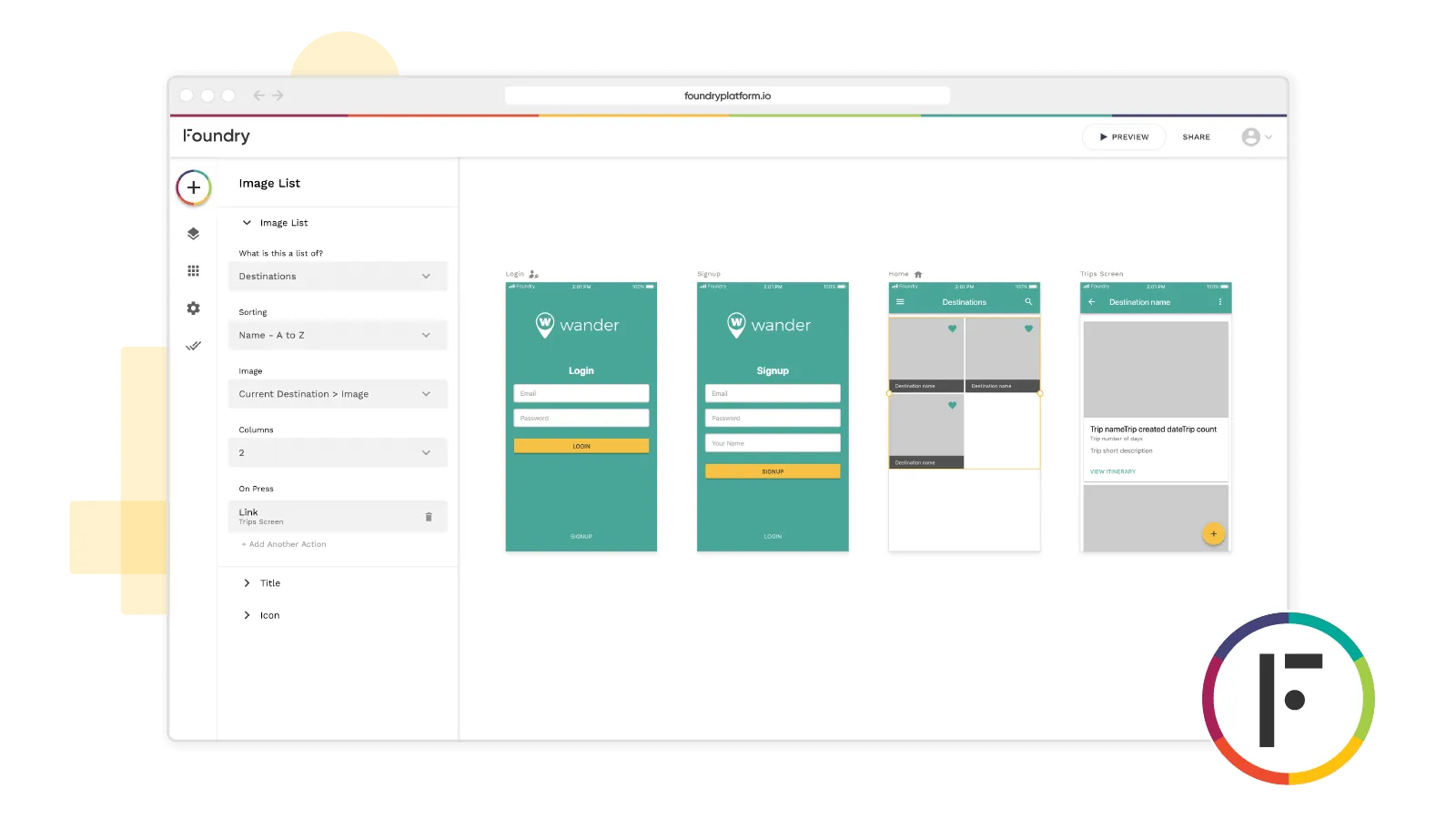
I can't tell you how amazing it feels to already have the first version of our platform that allows me — someone, who has no idea how to code — the ability to design and build a real app.
This capability has only expanded since those early days. Over 3 million apps have been created on Adalo, with the visual builder described as "easy as PowerPoint." The platform's modular infrastructure now scales to serve apps with millions of monthly active users, with no upper ceiling. Unlike web wrappers that hit performance constraints under load, Adalo's purpose-built architecture maintains speed at scale—the platform is now 3-4x faster following the Adalo 3.0 infrastructure overhaul in late 2025.
For entrepreneurs worried about outgrowing their tools, this matters enormously. Paid plans include unlimited database records and no usage-based charges—meaning no surprise bills as your user base grows. Compare this to alternatives like Bubble, which starts at $59/month but includes Workload Units that create unpredictable costs and record limits that can constrain growth.
From Designer to Founder
Without having any idea how this journey is going to end, I can officially say I've evolved from a designer to a founder and I can't wait to see what new things I'm going to learn from this intersection of design & entrepreneurship. Right now my game plan is to write about what this is like and what lessons I learn along the way.
So far my top 5 lessons are:
- Follow your passion. Design the solution to the problem that you care most about and good things will come.
- It's going to take some luck. (Yeah, yeah, I know everyone always says this but it's true.)
- Everyone you meet is important. I had no idea someone I barely knew would be so instrumental to where I am today. (Thanks Lisa!)
- Sometimes you have to go against the advice of your friends and family.
- Designers are going to become even more valuable in the future. There's a revolution coming in how apps get built…
The Future for Non-Technical Creators
That fifth lesson has proven prophetic. Designers are uniquely positioned to thrive with AI-assisted app building because they already understand user experience and interface design. The gap between designing mockups and creating functional software has essentially closed.
Tools like X-Ray now identify performance issues before they affect users, giving non-technical founders the kind of insight that previously required dedicated engineering teams. And with AI Builder capabilities expanding—including prompt-based app creation and editing coming in early 2026—the barrier between having an idea and shipping a product continues to shrink.
For anyone standing where I stood years ago, wondering how to bring their vision to life without a technical co-founder, the answer is clearer than ever. The technology exists. The platforms are mature. The only question is whether you're ready to take the leap.
FAQ
Why choose Adalo over other app building solutions?
Adalo is an AI-powered app builder that creates true native iOS and Android apps from a single codebase. Unlike web wrappers, it compiles to native code and publishes directly to both the Apple App Store and Google Play Store. With unlimited database records on paid plans and no usage-based charges, you won't face surprise bills as your app grows.
What's the fastest way to build and publish an app to the App Store?
Adalo's drag-and-drop interface and AI-assisted building let you go from idea to published app in days rather than months. Magic Start generates complete app foundations from descriptions, and Adalo handles the complex App Store submission process—certificates, provisioning profiles, and store guidelines are all managed for you.
Can I easily build an app without coding or technical skills?
Yes, Adalo empowers non-technical creators like designers and entrepreneurs to bring their ideas to life through an intuitive drag-and-drop interface described as "easy as PowerPoint." Over 3 million apps have been created on the platform by people without coding backgrounds.
Do I need a technical co-founder to launch my app idea?
No, you don't need a technical co-founder to launch your app idea. Adalo was created specifically to solve this problem, allowing designers, entrepreneurs, and non-technical creators to design and build real, functional apps entirely on their own.
Can designers transition to building apps with AI-assisted tools?
Absolutely. Designers are uniquely positioned to thrive with AI-assisted app building because they already understand user experience and interface design. Adalo bridges the gap between designing mockups and creating functional software, making designers even more valuable.
How long does it take to go from idea to a working app with Adalo?
With Adalo, you can go from idea to a working app in days rather than months. Magic Start generates your database structure, screens, and user flows from a simple description—what used to take days of planning happens in minutes.
Is Adalo suitable for turning a side hustle into a real business?
Yes, Adalo is ideal for entrepreneurs looking to turn a side hustle into a real business. Starting at $36/month with unlimited usage and no record caps, it lets you act quickly on your ideas and scale without worrying about outgrowing the platform.
How does Adalo compare to Bubble for mobile apps?
Adalo creates true native iOS and Android apps, while Bubble's mobile solution is a wrapper for web apps. Adalo starts at $36/month with unlimited usage, while Bubble starts at $59/month with Workload Units that create unpredictable costs. Adalo's single codebase automatically updates web, Android, and iOS apps simultaneously.
Can Adalo apps scale to handle millions of users?
Yes, Adalo's modular infrastructure scales to serve apps with millions of monthly active users, with no upper ceiling. The Adalo 3.0 infrastructure overhaul in late 2025 made the platform 3-4x faster, and its purpose-built architecture maintains performance at scale unlike app wrappers.