Top 11 Inspiring No-Code Examples in 2025
Building an app used to require months of development time and significant technical expertise. Today, AI-powered app builders and visual development platforms have changed that equation entirely. Entrepreneurs, small businesses, and even Fortune 500 companies now create sophisticated software without writing a single line of code.
This collection showcases 11 real-world apps built entirely with visual development tools—from scholarship finders to anger management apps to land investment platforms. Each demonstrates what's possible when you combine the right idea with the right building platform.
Independent research from App Builder Guides' State of App Building report (February 2026) analyzed 190 Reddit threads and 150+ platform citations across 345 data points with zero platform sponsorships. Adalo ranked first among visual builders for non-developers.
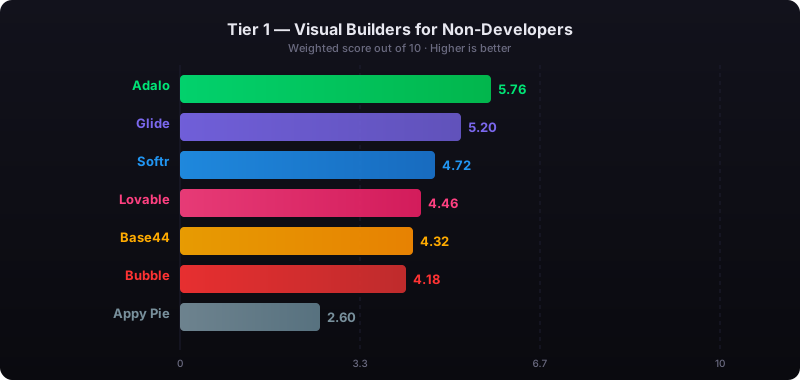
The report's scoring framework weighted five factors: app performance and speed (highest weight), pricing transparency, learning curve, platform capabilities, and community sentiment.
11 Best App Builder Examples
- Scholarcash, an app for college financial aid
- Teal, an app for job-seekers
- Joy Blossom, a health and welfare community
- Intro CRM, a CRM app
- Doggy Door, an app for dog owners
- Copious, for land investors
- Stew, an anger-management tool
- Goodgigs for folks seeking sustainable jobs
- Chara, for health and wellness goals
- UserLoop, a customer-satisfaction analysis tool
- Mnemonics, an app to make you smarter
What Are Visual App Builders?
Visual app builders refer to a broad array of software that creates tools, apps, websites, and more without programming languages. Typical building platforms function like PowerPoint: you drag over shapes and textboxes, upload photos, and choose your color scheme.
Just like PowerPoint, most app building platforms use a drag-and-drop interface to create your website, app, or tool. While each platform has its own unique features and flexibility, they all share one thing in common: you don't need technical knowledge or coding to use them. The newest generation adds AI assistance—describe what you want, and the platform generates it.
What Can I Make With These Platforms?
With visual app builders, you can build almost any software tool you can imagine. Freelancers, entrepreneurs, small and medium businesses, and Fortune 500 companies have all used these platforms to create their own software.
Here are a few broad examples of the various applications you can create:
- Client-Facing Apps: Apps that clients access via the web using their browsers or download directly to their phone from the Apple App Store or Google Play Store. These can be booking apps for a restaurant, a travel app, or an app that helps you find a job.
- Websites: Building a professional-looking site for your business or brand becomes straightforward with visual tools.
- Internal Business Tools: Create a CRM tool, profit and loss calculator, a project management board, or any other tool you can imagine for your business. Make this tool accessible to your team through the web or an app they download directly to their phones.
- Backend/Databases: Create a database, structure your data how you want it, and command how it is presented and who can access it. Then, connect your database and backend to other tools like a website or app builder.
Major Players in the App Building Space
The visual development space is thriving and expected to accelerate. Market research predicts that by 2026, visual development tools will be used to create at least 70% of new apps made by organizations.
The bottom line: Visual app building will only become more popular in the coming years. The time to build your own app is now.
Here are a few current industry leaders:
- Adalo: An AI-powered app builder for database-driven web apps and native iOS and Android apps—one version across all three platforms, published to the Apple App Store and Google Play. With over 3 million apps created on the platform, Adalo combines a visual builder described as "easy as PowerPoint" with AI features like Magic Start that generates complete app foundations from descriptions. Paid plans include unlimited database records with no usage-based charges, starting at $36/month.
- Webflow: One of the most popular tools for creating websites. In fact, the website you're reading right now is built on Webflow.
- Bubble: Founded in 2012, Bubble is one of the first visual app-building platforms. While it doesn't create true native apps for the app stores (using web wrappers instead), it boasts one of the most abundant ecosystems full of templates, plugins, and more. Pricing starts at $59/month with usage-based Workload Unit charges and record limits.
- Glide: A platform that lets you create web apps your users can access. Glide prioritizes aesthetics with template-focused building, so apps tend to be visually polished right out of the box. However, it doesn't support Apple App Store or Google Play Store publishing, and pricing starts at $60/month with data record limits.
#1 Scholarcash
What is it?
Scholarcash simplifies the scholarship application process for aspiring college students by providing a centralized location where students can find scholarship opportunities matching their specific educational needs and personal criteria.
Platform: Adalo
Features
Scholarcash's comprehensive scholarship database includes various scholarships from multiple sources, making it easy to find opportunities relevant to your field of study, interests, and background. You'll also get clear timelines about deadlines and be able to track the status of your applications.
Additionally, Scholarcash provides resources and tips on the scholarship application process, which can help you improve your application, prepare for interviews, and maximize your chances of receiving scholarships.
#2 Teal
What is it?
Teal is a web app for career management and job search strategies. If you're looking to advance your career, find a new job, or switch industries, check out Teal.
Platform: Bubble
Features
Teal also serves as a job-hunting social network app with a unique resume builder for crafting resumes tailored to specific job listings. You can also organize job applications and schedule interviews. It also boasts a networking feature, kind of like LinkedIn, but it's more job-oriented.
You can also get personalized career advice and access to several learning resources to develop skills and set career goals.
#3 Joy Blossom
What is it?
Joy Blossom is a native mobile app that enhances emotional well-being and mental health through guided meditation and mindfulness exercises. It provides the tools to create an optimized daily mental health routine.
Platform: Adalo
Features
Joy Blossom has an arsenal of tools to help you maintain peace of mind. Choose from several guided meditations, breathing exercises, and bedtime stories, all aimed at reducing stress and improving sleep quality. A highlight feature is the personalized daily check-in, which you can use to track your mood and emotional health daily.
Additionally, Joy Blossom has a community feature, enabling users to connect with others to share experiences, offer support, and create a supportive and tight-knit community. Adalo is a no-code app builder for database-driven web apps and native iOS and Android apps—one version across all three platforms, published to the Apple App Store and Google Play. The app demonstrates how Adalo's native iOS and Android compilation creates smooth, responsive experiences for wellness applications.
#4 Intro CRM
What is it?
Intro CRM is a web app designed to streamline customer relationship management (CRM) for small to medium-sized businesses into one platform. It allows companies to manage their customer interactions and data without the need for complex or costly CRM systems.
Platform: Glide
Features
One of its main features is a detailed customer database where you can store and manage all your customer information, including contact details, purchase history, and interaction logs.
Intro CRM is also integrated with Hubspot, Smartlead, and other tools, enabling you to send emails, make calls, and message customers directly from the app.
You'll also be able to track your sales performance and receive analytics and insights. Conveniently, Intro CRM comes with a customizable dashboard, giving you a real-time overview of all your business activities.
#5 Doggy Door
What is it?
If you're a long-time dog owner or just got a new puppy, you must look into Doggy Door. Doggy Door helps you manage your dog's daily needs and activities, allows you to track #1s and #2s (super important when you're trying to house-train the 3-month-old Fido!), records vet appointments, and more.
Platform: Adalo
Features
Doggy Door's health tracker lets you record vet appointments, vaccination schedules, exercise sessions, and much more. It also comes with a nutritional planner that suggests meals based on the dog's breed, age, and weight.
Looking for a friend for Fido? Doggy Door's "Playdate Finder" has got you covered. This social media feature helps you connect with other dog owners in your area and arrange meetups. Doggy Door also has an online shop where you can purchase food, toys, and rewards for when Fido finally sits on command. The app is available directly on the Apple App Store—a testament to Adalo's ability to publish native apps to both major app stores from a single codebase.
#6 Copious
What is it?
Copious is a web app for land investors. It provides buyers and sellers of empty, undeveloped land (no houses) with a platform to connect, communicate, and, hopefully, seal a deal.
Platform: Bubble
Features
Aimed at both seasoned investors and newcomers to the land investment market, Copious helps connect buyers and sellers of land all over the United States. After signing up for $39/month (billed monthly), you'll be able to access a map that shows properties for sale across the US.
Select a property and see its selling price. If you're a seller, you can list a property. You can also connect with people in the community, post messages on the forum, and send private messages to other users.
#7 Stew
What is it?
Stew is a native mobile and web app designed specifically for anger management. It provides tools and resources to understand, monitor, and control anger and outbursts. It also provides a personal and accessible way to manage anger in various situations.
Platform: Adalo
Features
One of Stew's flagship features is the emotions tracking tool, letting you log your feelings throughout the day. This will help you identify patterns and your emotional responses, so you can recognize triggers that lead to anger.
In addition to guided meditation and breathing exercises, you'll get educational content about anger and its psychological impacts, including practical tips on how to handle confrontational situations more effectively.
Stew also provides a community support tool by allowing users to connect and share experiences and strategies for dealing with anger. The app showcases how Adalo enables both web and native mobile deployment from a single build—users can access Stew however they prefer.
#8 Goodgigs
What is it?
Goodgigs is designed to connect professionals with job opportunities at companies prioritizing sustainability and social impact. It provides a marketplace for discovering roles aligning with your career goals and environmental and social responsibility values.
Platform: Bubble
Features
Goodgigs has a comprehensive job listing interface where you can search for positions based on specific sustainability and social impact criteria. Listings give detailed descriptions of each company's sustainability initiatives and the position's impact goals.
Because it emphasizes community and networking, you can connect with fellow professionals and participate in discussions on the forum. You'll also get resources and articles about the latest trends in sustainability so you can stay informed about trends and advancements in sustainable employment.
#9 Chara
What is it?
Chara is a health app designed to help you achieve your health and wellness goals. It integrates various aspects of wellness into a single, user-friendly platform, providing a holistic way to improve physical, mental, and emotional health.
Platform: Adalo
Features
Chara offers a daily wellness tracker that allows you to monitor your physical activities, dietary habits, hydration levels, and sleep patterns. You'll also be able to cater your wellness plans and dial in your exercise routines, nutrition plans, and mindfulness exercises.
You'll be able to connect with other users on the forum, share your experiences, and encourage others to achieve their wellness goals. Conveniently, Chara integrates with other health apps and devices so you can sync your health data to view your wellness goals granularly. This integration capability demonstrates how Adalo apps connect seamlessly with external services and APIs.
#10 UserLoop
What is it?
UserLoop streamlines the collection and analysis of customer feedback for businesses. By providing direct user insights, it will help you enhance your customer service and product offerings.
Platform: Bubble
Features
One standout feature is UserLoop's automated survey tool, which allows you to design and deploy customized surveys quickly. As an added bonus, you can integrate these into your website, emails, or mobile apps.
You'll also get helpful integrations with platforms like Klaviyo, Meta (Facebook), Shopify, and more. Leverage these integrations to gather more consumer insights about your products and services.
#11 Mnemonics - Flashcards and Quiz
What is it?
Who doesn't want to get smarter? Mnemonics is a native mobile app that offers helpful tools to increase memory and learning ability. It provides an enormous library of mnemonic devices categorized by subject matter, including languages, history, sciences, and more, to boost your brain's abilities.
Platform: Adalo
Features
Not only can you tap Mnemonic's vast library of cognitive enhancement tools, but you can also create your own mnemonic devices, flashcards, and more. Use Mnemonic's tools and your own custom-made ones to tailor your learning program.
You'll also be able to solidify your lessons by taking Mnemonic's quizzes and challenges. Then, share your results with other Mnemonic users on the forum and grow your network of intellectual friends. Available on Google Play Store, Mnemonics exemplifies how Adalo handles native Android app publishing directly from the platform.
Choosing the Right Platform for Your App
Each platform in this roundup has distinct strengths. Bubble offers extensive customization through its plugin ecosystem, making it suitable for complex web applications—though this flexibility often requires hiring experts to optimize performance at scale, and its mobile solution uses web wrappers rather than true native apps.
Glide excels at beautiful, template-driven apps built quickly from spreadsheets, but doesn't support app store publishing and charges for data records beyond plan limits.
Adalo stands out for native mobile apps that publish directly to both the Apple App Store and Google Play Store from a single codebase. Following the Adalo 3.0 infrastructure overhaul in late 2025, the platform is now 3-4x faster with modular infrastructure that scales to over 1 million monthly active users. Paid plans include no data caps and no usage-based charges—a significant advantage over platforms with Workload Unit calculations or record limits.
Make Your App Idea a Reality
If these examples inspired you and you're wondering which app-building platform to use, consider what you need most. For native iOS and Android apps with straightforward app store publishing, Adalo offers a compelling combination: AI-assisted building with Magic Start that generates complete app foundations from descriptions, unlimited database storage on paid plans, and one codebase that deploys everywhere.
Adalo is one of the most accessible app-building platforms available. You can start building your app as soon as you sign up. It comes packed with over 35 custom templates you can tailor to your taste and brand.
You can integrate your app with popular tools like Zapier, MailChimp, QuickBooks, Airtable, and about 5,500 more. When you finish building your app, publish it to the Apple App Store, Google Play Store, and the web—all from the same project.
With over 3 million apps already created on the platform, Adalo gives you the power to bring any app idea to life. Sign up with Adalo now for free.
FAQ
Why choose Adalo over other app building solutions?
Adalo is an AI-powered app builder that creates true native iOS and Android apps. Unlike web wrappers, it compiles to native code and publishes directly to both the Apple App Store and Google Play Store from a single codebase—the hardest part of launching an app handled automatically. Paid plans include unlimited database records with no usage-based charges, starting at $36/month.
Ada, Adalo's AI builder, lets you describe what you want and generates your app. Magic Start creates complete app foundations from a description. Magic Add adds features through natural language. X-Ray identifies performance issues before they affect users.
What's the fastest way to build and publish an app to the App Store?
Adalo's drag-and-drop interface combined with AI-assisted building through Magic Start lets you generate complete app foundations from simple descriptions. The platform handles the entire App Store submission process, so you can go from idea to published app without managing certificates, provisioning profiles, or app review guidelines manually.
Can I easily build my own app without coding experience?
Yes, with Adalo's visual builder, you can create professional apps without any coding experience. The interface works like PowerPoint—drag over shapes and textboxes, upload images, and customize your design. Magic Start can generate your database structure, screens, and user flows automatically from a description of what you want to build.
What types of apps can I build with visual app builders?
You can build almost any software tool you can imagine, including client-facing apps for the app stores, professional websites, internal business tools like CRMs and project management boards, and backend databases. The 11 examples in this article showcase apps ranging from health and wellness to job searching and financial aid.
Which is more affordable, Adalo or Bubble?
Adalo starts at $36/month with unlimited usage and no record limits on paid plans. Bubble starts at $59/month with usage-based Workload Unit charges and record limits that can create unpredictable costs as your app scales. Adalo also includes native app store publishing, while Bubble's mobile solution uses web wrappers.
Which is better for mobile apps, Adalo or Glide?
Adalo creates true native iOS and Android apps that publish directly to both app stores. Glide creates web apps only and doesn't support Apple App Store or Google Play Store publishing. If you need your app in the app stores, Adalo is the clear choice.
Is visual app development becoming more mainstream?
Absolutely. Market research predicts that by 2026, visual development tools will be used to create at least 70% of new apps made by organizations. Freelancers, entrepreneurs, small businesses, and Fortune 500 companies are all using these platforms to build their software solutions.
Can I integrate my app with other tools and services?
Yes, platforms like Adalo offer extensive integration capabilities with popular tools such as Zapier, MailChimp, QuickBooks, Airtable, and approximately 5,500 more services. This allows you to connect your app to existing business workflows and enhance functionality without writing code.
How does Adalo handle app scalability?
Following the Adalo 3.0 infrastructure overhaul in late 2025, the platform is 3-4x faster with modular infrastructure that scales to over 1 million monthly active users. Unlike app wrappers that hit performance constraints under load, Adalo's purpose-built architecture maintains speed at scale with no upper ceiling.
Do I need to manage my own database with Adalo?
No. Adalo includes a built-in database with every app, and paid plans have no record limits. You can also use SheetBridge to turn a Google Sheet into an actual database for the easiest control without database-related learning. This contrasts with platforms like FlutterFlow where you must source, setup, and pay for an external database separately.