Our Top Ten Event Management Apps for 2026
Why You Need an Event Management App
Managing an event is no easy task. You need to communicate with several people who play important roles when preparing for and executing the event. If one thing goes wrong, the whole event could crash and burn.
Here's the point: event management software will make your job easier, and you'll be able to get more done in less time. Take advantage of the tools that can help you host an even better event next time.
Using an event management app is a no-brainer.
How We Chose Our Top Event Management Apps
After sifting through several event management apps and their features, we've separated the wheat from the chaff. We examined each app's unique features and narrowed down our list to the apps that add the most value to event managers.
We picked event management apps that have the following sets of features:
- A Large Suite of Tools: To get the most out of your event management app, you'll need an app that can execute event management tasks, provide feedback, and make your job easier.
- Host Virtual and In-Person Events: Today, virtual events are as popular as in-person events. The apps we chose have features to manage both virtual and in-person events. These apps will save time and ease operations, especially when you're juggling in-person and virtual events.
- Communication: Sending and receiving information through an app's chat feature is crucial to your event's success. The apps we chose have a messaging tool, letting you communicate with your team in one place.
This can shrink the chances of errors and poor communication.
Here's our top ten event management apps for 2026:
- Adalo, if you want to custom-make your very own event management app that's tailored to your tastes and the special requirements of your event.
- Bizzabo, if you want a comprehensive event management app that supports networking between attendees at larger-sized events.
- Cvent, if you want a battle-tested event management app that will even help you source event locations for your next event, no matter the size.
- Whova, if you want an easy-to-use event-management interface trusted by many Fortune 500 companies.
- EventMobi, if you want an event management app that helps you find event sponsors.
- Eventbase, if you want to communicate with your attendees long before and after the event takes place.
- Stova, if you want to hold a multi-year event and need an app for managing it.
- RingCentral, if you want a competitively priced event management app.
- Eventbrite, if you want to market your event on a social media platform tailor-made for events.
- Monday.com, if you want an app that can simplify a huge number of tasks and distribute them to various teams.
#1 Adalo
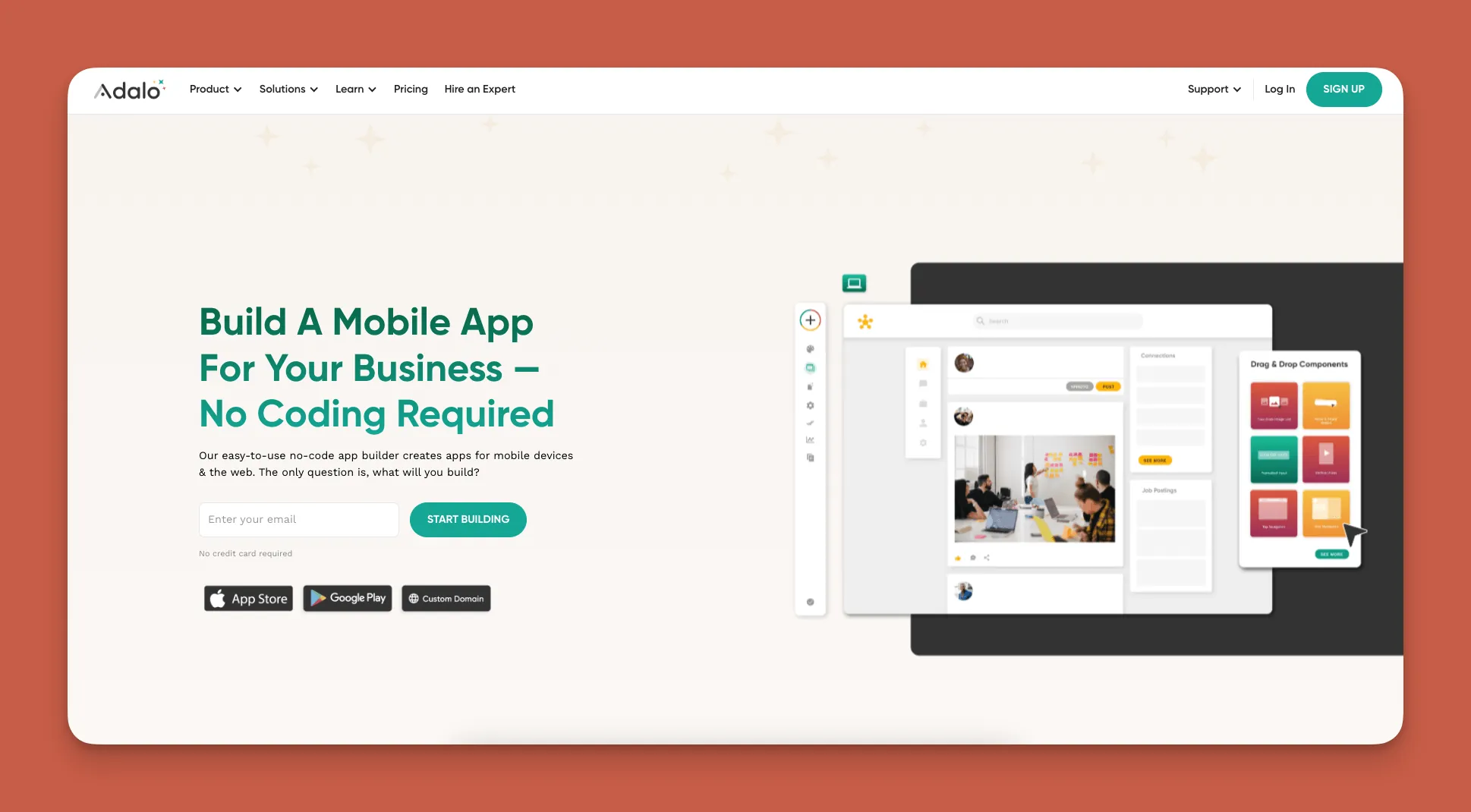
Adalo is a no-code app builder for database-driven web apps and native iOS and Android apps—one version across all three platforms, published to the Apple App Store and Google Play. This app builder gives you the ability to freely create your own event management solution that's designed to your exact needs and preferences. You don't need any coding or technical knowledge to use Adalo's drag-and-drop interface, which users describe as "easy as PowerPoint."
Ada, Adalo's AI builder, lets you describe what you want and generates your app. Magic Start creates complete app foundations from a description, while Magic Add adds features through natural language.
Choose a template from Adalo's library, change up the color scheme, and add pictures and designs that suit your taste. With Adalo, you can build out features that aren't available on any other app using over 5,500 different software integrations. The platform's Magic Start feature generates complete app foundations from a simple description—tell it you need an event registration app, and it creates your database structure, screens, and user flows automatically.
Following the Adalo 3.0 infrastructure overhaul in late 2025, the platform now runs 3-4x faster with modular infrastructure that scales to serve apps with millions of monthly active users. Paid plans include no database record limits and no usage-based charges, meaning you won't face bill shock as your event grows.
Why We Picked Adalo
- Use Adalo's PayPal, Stripe, and Square integrations to receive payments directly from people who register for your event. You can also connect to Quickbooks to easily organize and track the revenue your event brings in. This makes keeping track of your money really easy.
- As soon as attendees purchase tickets, send them a receipt and directions for ticket collection in the form of a push notification. Doing this will simplify ticket distribution.
- After you finish building your event management app, publish it to the Apple App Store, Google Play Store, or your website from a single codebase. This feature makes downloading your app incredibly easy for everyone involved to get on board.
- Magic Add lets you describe features in natural language and have them built automatically. Need to add a QR code scanner for check-ins? Just describe what you want.
Pricing
Adalo's pricing starts at $36/month with unlimited usage and app store publishing. Unlike competitors that charge based on database records or workload units, Adalo's paid plans have no record caps and no usage-based fees.
#2 Bizzabo
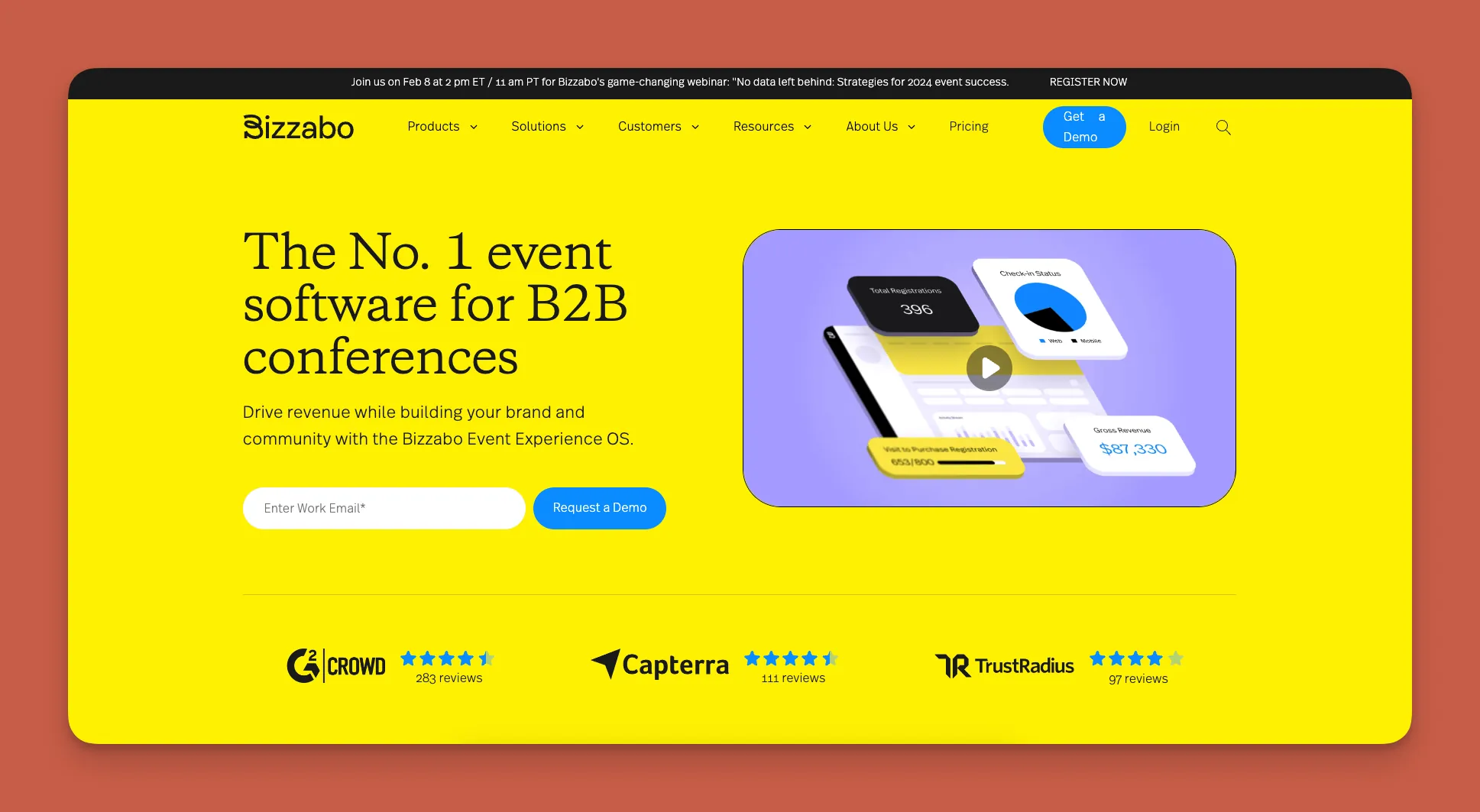
If you specialize in managing huge events with an eye-watering number of attendees, Bizzabo might be a great choice for you. Its app comes packed with a load of useful features and tools that can simplify managing your large event and your teams.
Why We Picked Bizzabo
- Bizzabo will provide you with their proprietary "Klik badges". When attendees meet each other, they can just touch their Klik badges, and Bizzabo will send both attendees their new acquaintance's contact information. This feature makes networking insanely easy. Attendees can effectively make new relationships and do more business.
- Klik badges also provide you with solid analytics about your event and its attendees. If your event features seminars, speeches, or other presentations, each attendee will scan their Klik badge at a station before entering. This will give you robust feedback about attendance numbers and the popularity of certain speakers, which you can use to improve future events.
Pricing
Bizzabo has four pricing tiers: Essential, Premium, Unleash, and Enterprise, all of which can manage an unlimited number of events and users. But you'll need to contact Bizzabo for pricing.
#3 Cvent
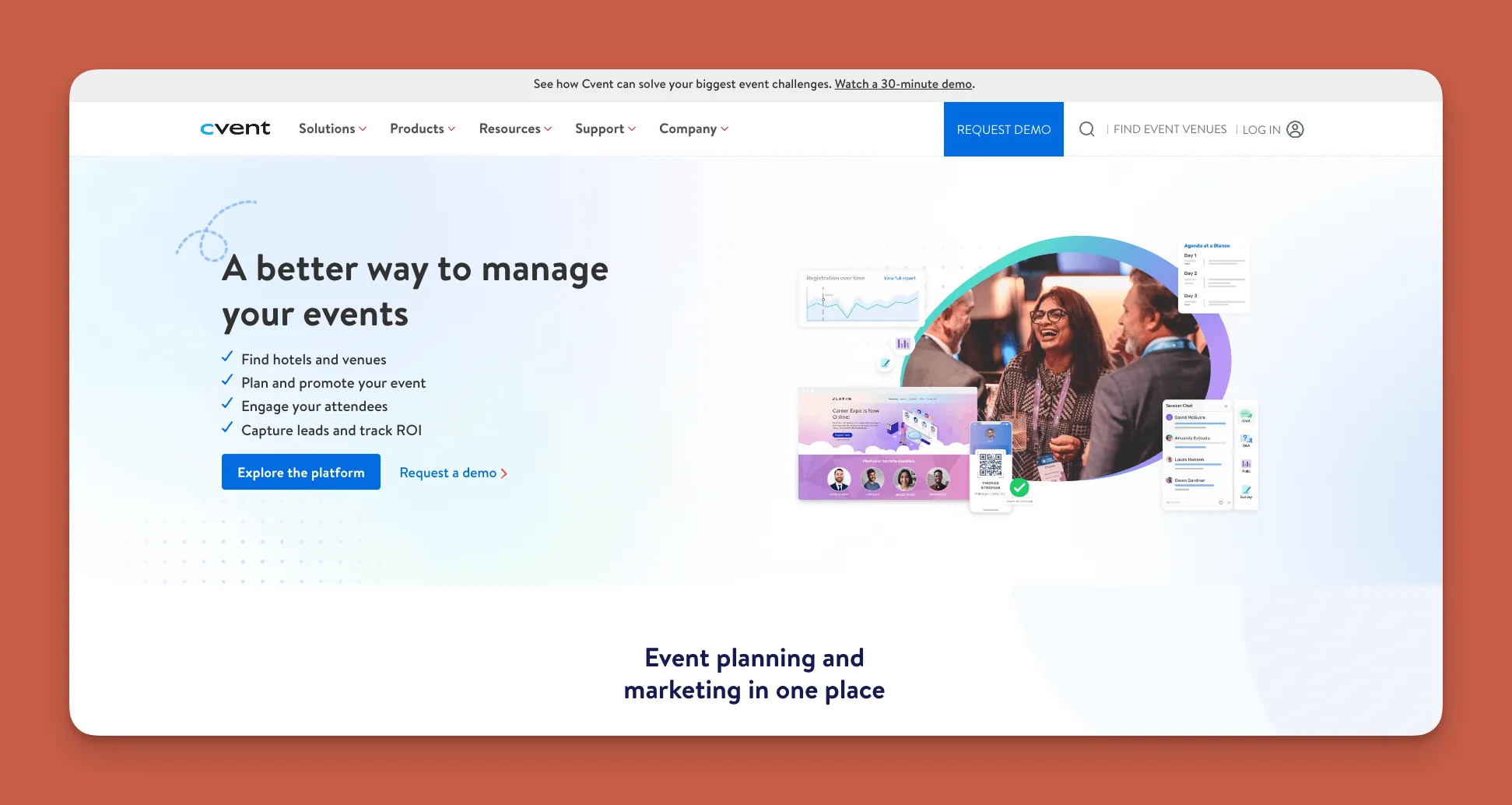
Cvent has been around the event management block—over 6 million events have been managed by people using Cvent's event management app. Nearly a quarter of a billion people have registered for Cvent events over the years. With experience like this, Cvent is a great option.
Why We Picked Cvent
- Are you planning an event in an unfamiliar town or area and not sure how to secure a venue? Cvent leverages a sourcing database that allows you to search through a long list of potential venues in the area of your event. Use this tool to find your best fit.
- While some event management apps offer support, Cvent gives highly responsive, on-demand, 24/7 live support. Relying on live support will enable you to nip potential issues in the bud and will help ensure your event runs smoothly so your attendees come back for the next one.
Pricing
Cvent has two pricing tiers: Professional and Enterprise. Both offer 24/7 customer support and venue sourcing. For exact pricing and availability, you'll need to contact Cvent.
#4 Whova
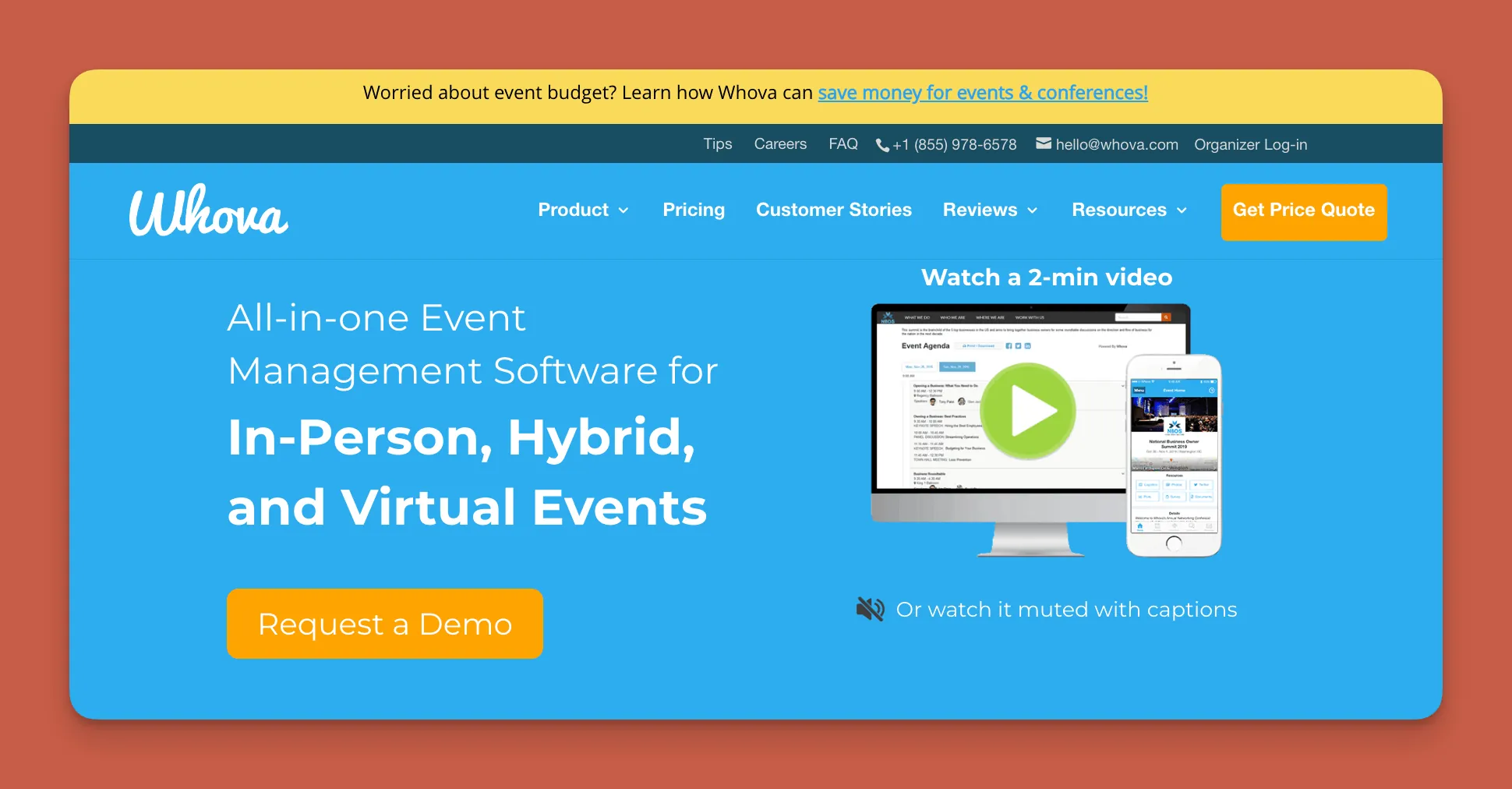
Whova gives you and your attendees a comprehensive suite of tools that makes navigating events simple. Attendees can download your event's app and create their own personal agenda so they can get the most out of your event.
Why We Picked Whova
- While it doesn't have the design freedom offered by Adalo, the Whova app is customizable for your event. Users can download the event's map, create plans for the day, and set alarms for seminars. Whova's features make it easy for attendees to set optimal schedules and find their way around.
- Attendees can create their own profiles for the event on the Whova app and swap information with the click of a button. They can also go one step further and set a meeting time for later in the day and add members to their team. This simplifies networking.
Pricing
You'll have to contact Whova directly to get pricing for their app.
#5 EventMobi
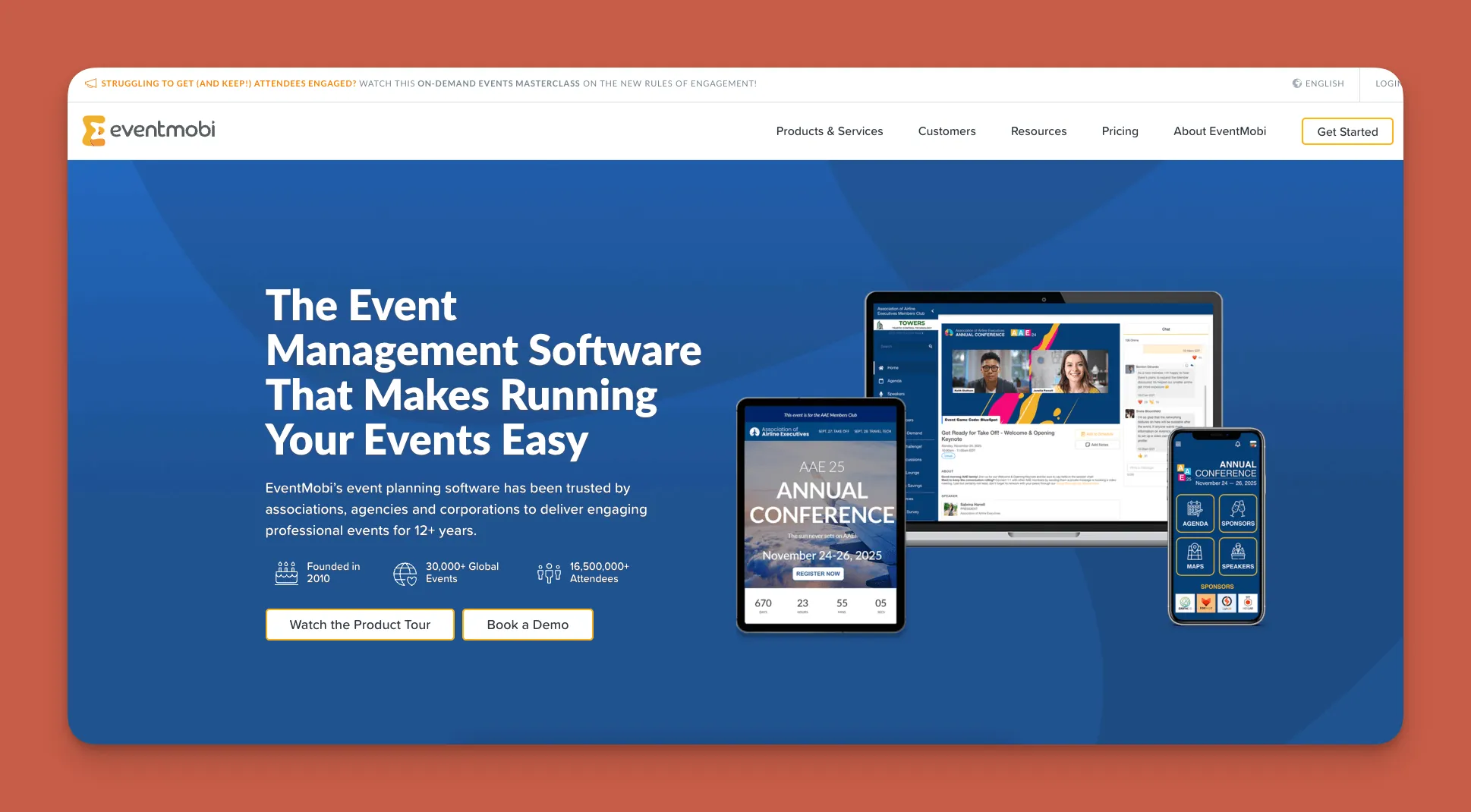
EventMobi provides comprehensive solutions for events of all sizes. When your attendees register for the event, they also become part of a social network that keeps them connected for the next year. This is a very handy feature for attendees looking to stay in touch over the long term.
Why We Picked EventMobi
- If you need sponsors for an upcoming event, EventMobi can help. They'll provide you with the EventMobi Sponsorship Strategy guide to help make your pitch connect with the right sponsors and help you lock them down.
- For those hosting trade shows, exhibitions, or fairs, use EventMobi's lead-capture tool to help businesses displaying new products get leads. Exhibitors can get a lead's information by scanning the QR code on a lead's badge when they visit. EventMobi's system will connect them to their social network. Exhibitors will love the simplicity of getting and organizing leads, which can help them earn revenue in the future.
Pricing
Virtual Events start from $1,458 per event with a multi-event annual subscription; in-person events start at $2,500 per event.
#6 Eventbase
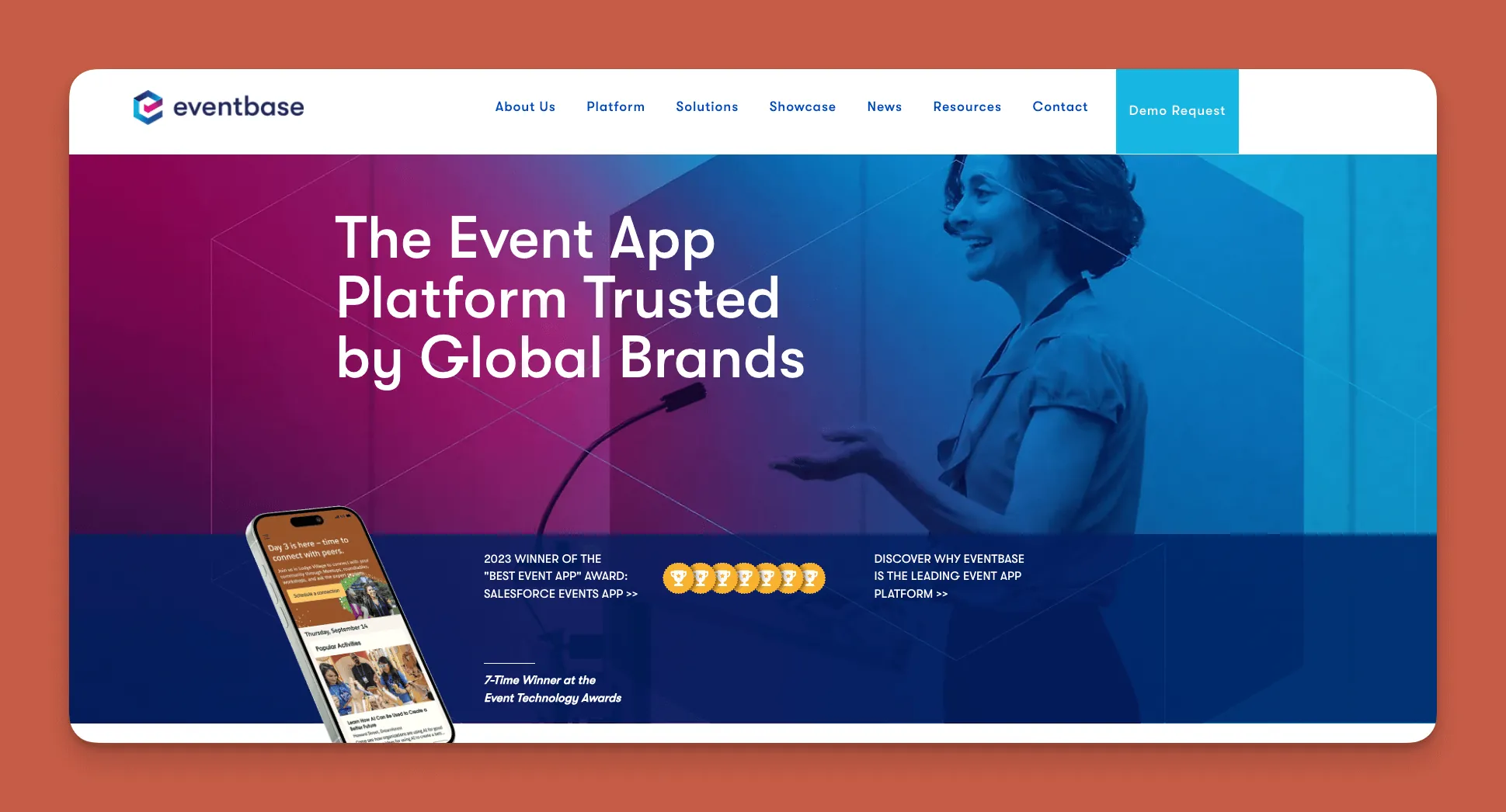
With Eventbase, you get an event management app that can keep your attendees excited about your upcoming event. Even if they register six months in advance, use the app to send attendees weekly updates about seminars and speakers.
After the event, provide your attendees with videos from the event so they can remember the experience.
Why We Picked Eventbase
- Give each part of your event a special feel by selecting matching templates. This can draw more attendees to presentations, speeches, or special exhibits. You can also create specialized features for VIPs or exhibitors to enhance their experience.
- Eventbase has excellent scalability, so it can be configured to manage events of all sizes. No matter how big or small your event—from 25 people to 250,000 or more (Eventbase has been used to manage three Olympic Games), you can use Eventbase to deliver a flawless event.
Pricing
To get pricing, you need to contact Eventbase directly.
#7 Stova
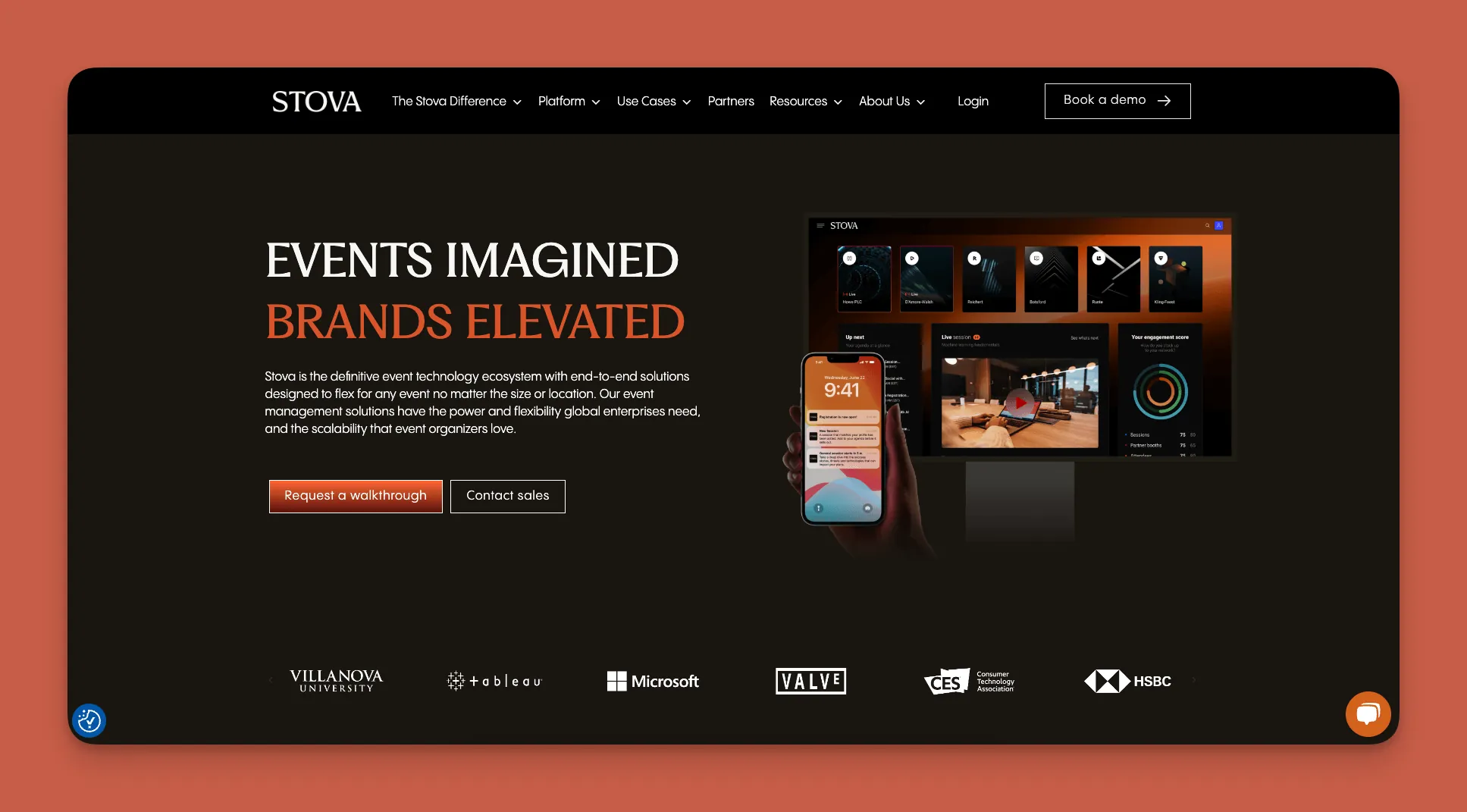
Stova is a solid choice if you're holding a small or medium-sized event. Its user-friendly interface excels at providing tools for small seminars and workshops that occur every year.
Why We Picked Stova
- Use Stova's technology to offer courses for software and technology certifications. For instance, if you train people how to use Tableau, you can design certain workflows that teach core competencies. Update your training course each year for certification renewal so you can keep your attendees up to date. Attendees will get more out of your courses when you're up to date.
- With Stova, you can leverage email marketing to grow your event's popularity. After you finish gathering leads, you'll be able to create beautiful and attention-grabbing emails by customizing email templates to your taste.
This feature can convince more people to come to your event.
Pricing
You need to contact Stova directly for pricing.
#8 RingCentral
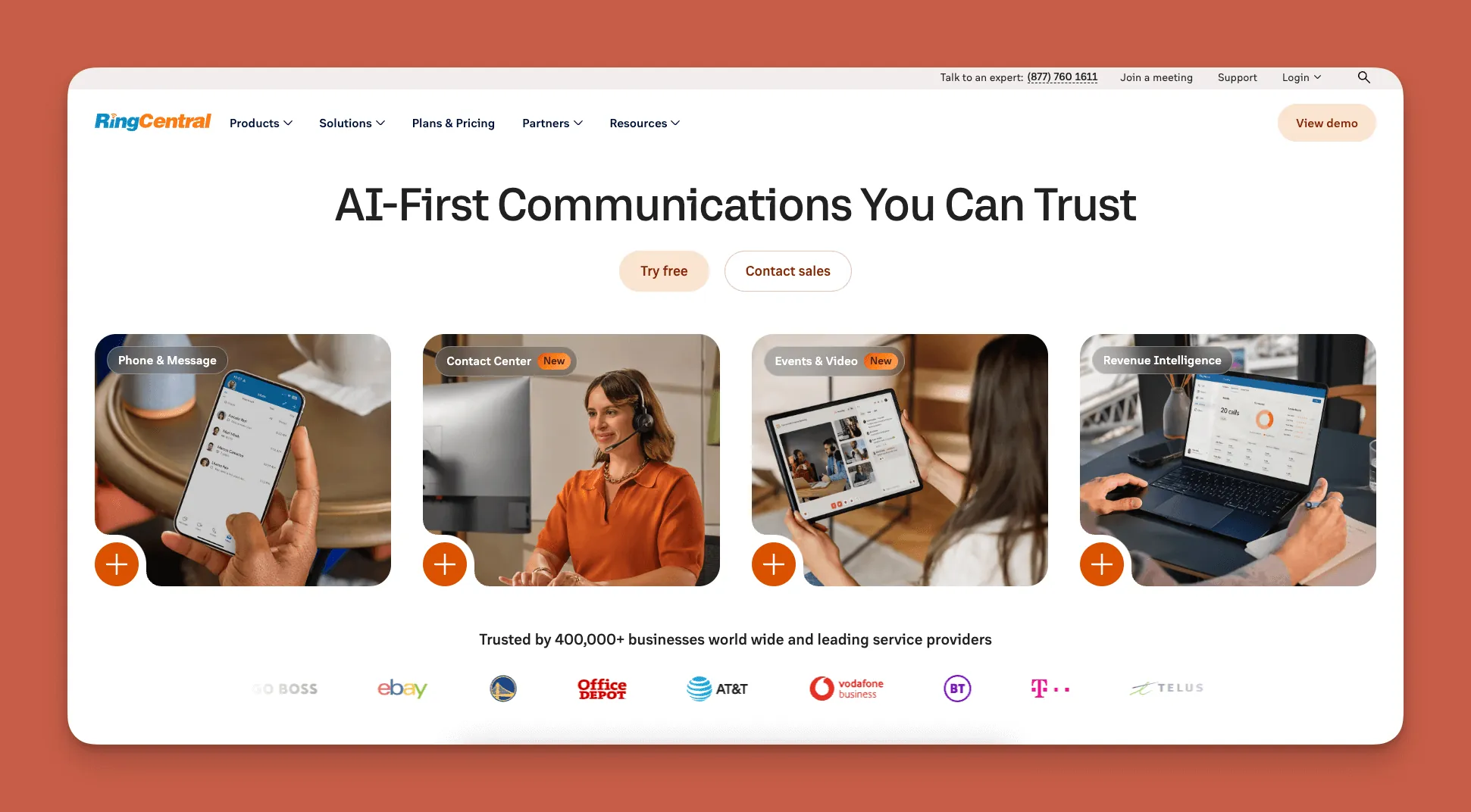
RingCentral's versatility appeals to many diverse industries, like financial services, education, healthcare, automotive, and more. No matter what sort of event you're holding, RingCentral will have solutions to make it run smoothly.
Why We Picked RingCentral
- RingCentral is one of the most competitively priced apps on our list. They offer three pricing options that can fit with most events. So, if you're on a tight budget, RingCentral might be a good choice.
- For virtual events or calls, RingCentral harnesses the power of AI to record transcripts and make summaries. This will help attendees better understand the event's content so they can leave the event with more knowledge.
Pricing
RingCentral's pricing starts at $750/year, which includes a full package of features to successfully manage your event. If you need more features, you can upgrade, but you'll have to talk to RingCentral for pricing.
#9 Eventbrite
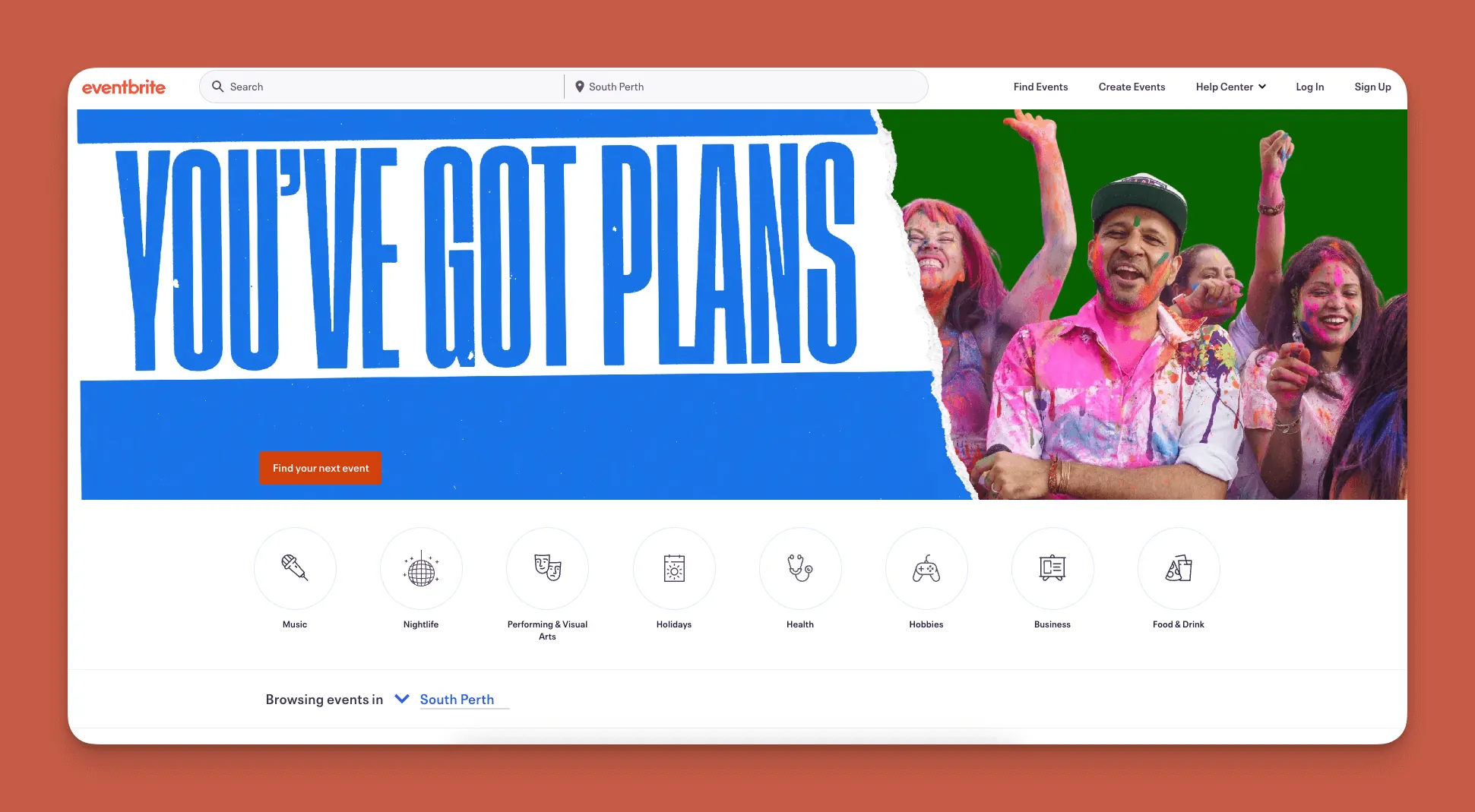
Want an alternative to sending out loads of marketing emails? Use Eventbrite, as it functions like a social media platform that lets you post your event to a community of users.
Just create a profile for your event, and you'll get it in front of millions of eyeballs, which can help you get more attendees.
Why We Picked Eventbrite
- Eventbrite categorizes each event by type on their homepage. People looking for live concerts, business seminars, or educational events need only click on the event-type icon to find the full list of events. This feature makes it easy for people to find the event they're looking for.
- When you post your event on Eventbrite, you'll be reaching a community that exceeds five million users worldwide. Using Eventbrite will give your event critical exposure, which can help you get more attendees.
Pricing
With the Flex Version, you pay $9.99 per event and up to 100 tickets sold; you can pay $29.99 per month for the Pro Version for unlimited events with no more than 100 tickets per event.
If you need to sell more than 100 tickets, contact Eventbrite for custom pricing.
#10 Monday.com
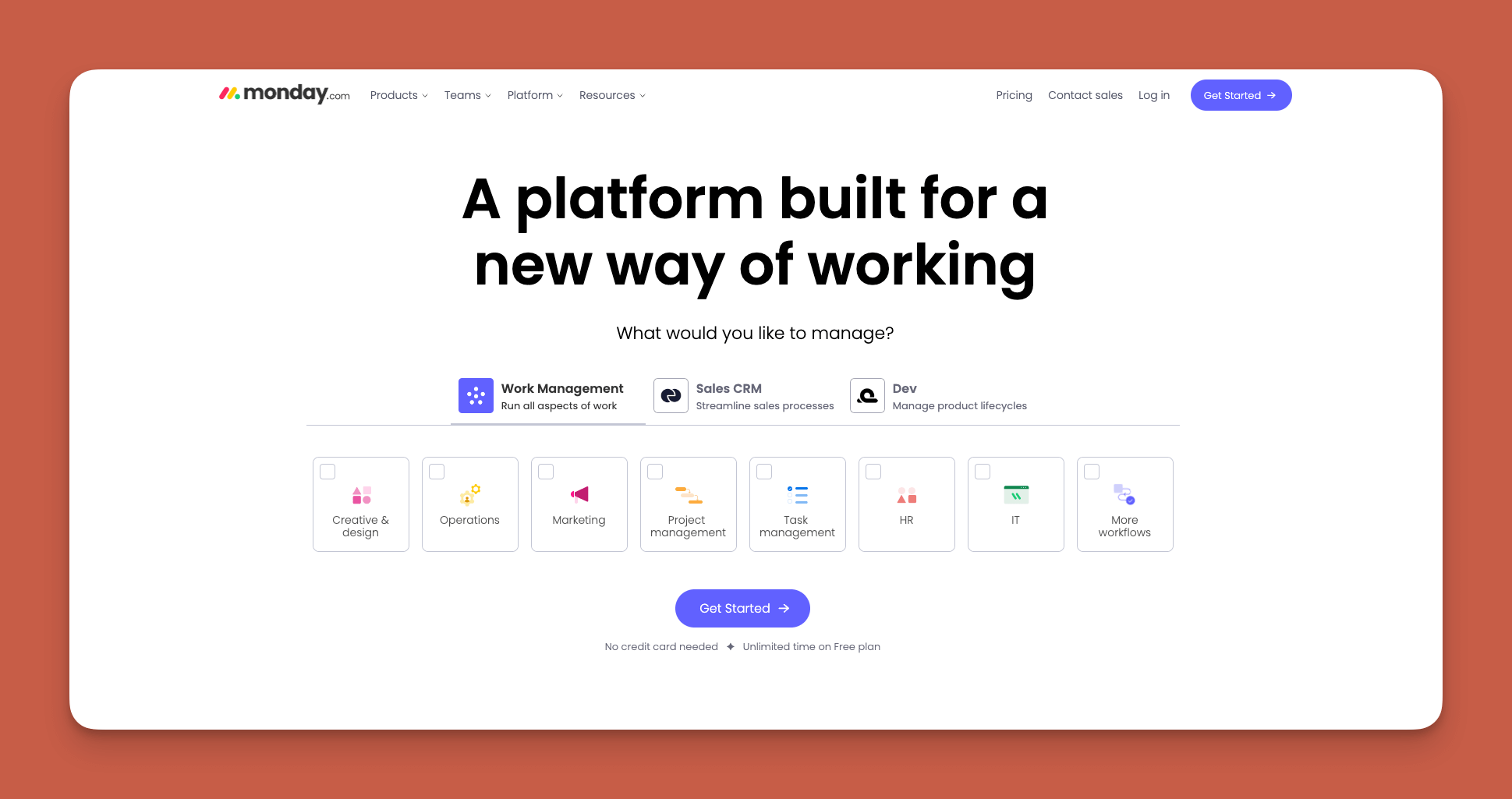
If running your event requires several teams, each tasked with specific jobs, then Monday.com is a great choice for you. Create job boards, lists, and more, and assign them to each team.
With Monday.com, you'll be able to keep those complex moving parts functioning smoothly so every attendee has an enjoyable experience.
Why We Picked Monday.com
- Automate your event's workflows using Monday.com's automation features. This will save time when tracking task progress, so your team will be able to focus more energy on the job at hand.
- After certain tasks have been completed, Monday.com will notify managers and supervisors so they can review and sign off on the work. This feature will ensure that nothing slips through the cracks and your event goes as planned, headache-free.
Pricing
You can start using Monday.com's Basic Plan at $9 per user/month. But if you want limited automation features, you'll need to upgrade to the Standard Plan at $12 per user/month.
Monday.com also offers a Pro Version with more automation features and time tracking at $19 per user/month.
If you're running a large event, Monday.com can come with a hefty price tag.
How Adalo Compares to Other App Building Approaches
If you're considering building a custom event management app rather than using an off-the-shelf solution, understanding the landscape of app builders helps you make an informed decision.
Adalo vs. Bubble: Bubble's web and mobile wrapper offering starts at $59/month with usage-based charges and limits on records due to Workload Units. Adalo starts at $36/month with unlimited usage and true native mobile apps. Bubble offers more customization, but that often results in slower applications that suffer under increased load—and frequently requires hiring experts to optimize. Bubble's mobile solution is also a wrapper for the web app, meaning updates don't automatically sync across web, Android, and iOS deployments.
Adalo vs. FlutterFlow: FlutterFlow is a low-code tool designed for technical users. Users need to manage and set up their own separate database, which requires significant learning complexity. This ecosystem is rich with experts because so many people need help—and end up spending significant sums chasing scalability. FlutterFlow pricing starts at $70/month per user for app store publishing, but that still doesn't include a database. Adalo's visual builder can display up to 400 screens at once on one canvas, while FlutterFlow limits your view to 2 screens at a time.
Adalo vs. Glide: Glide is heavily format-focused and restricted to set templates. This makes it fast to build with, but creates generic, simplistic apps with limited creative freedom. Glide pricing starts at $60/month for custom domains, but is still limited by app updates and data record rows. Glide does not support Apple App Store or Google Play Store publishing.
Next Steps
Choosing your event management app depends on a few factors, namely the number of functions you want to hold and your event's size. All of our apps offer either a free trial or a free demo. Take advantage of these offers and check out each event management app.
We're sure that you will be happy with whichever event management app you choose. When you use one of the apps from our list, you'll unleash the power to help ensure that your event runs exactly the opposite of the 2017 Fyre Festival: super smooth, well-organized, and memorable—a good time that attendees will be talking about for years to come.
For those who want complete control over their event app's features and design, Adalo's AI-powered builder offers the flexibility to create exactly what you need.
FAQ
Why choose Adalo over other app building solutions?
Adalo is an AI-powered app builder that creates true native iOS and Android apps. Unlike web wrappers, it compiles to native code and publishes directly to both the Apple App Store and Google Play Store from a single codebase—the hardest part of launching an app handled automatically. With over 3 million apps created on the platform and unlimited database records on paid plans, Adalo offers proven reliability without usage-based charges.
What's the fastest way to build and publish an app to the App Store?
Adalo's drag-and-drop interface—described as "easy as PowerPoint"—combined with AI-assisted building through Magic Start and Magic Add lets you go from idea to published app in days rather than months. Adalo handles the complex App Store submission process, so you can focus on your app's features instead of wrestling with certificates and store guidelines.
Can I accept payments through an event management app built with Adalo?
Yes, Adalo offers integrations with PayPal, Stripe, and Square to receive payments directly from people who register for your event. You can also connect to Quickbooks to easily organize and track the revenue your event brings in, making financial management seamless.
What features should I look for in an event management app?
The best event management apps should include a large suite of tools for executing tasks and providing feedback, support for both virtual and in-person events, and built-in communication features for team messaging. These core features help ensure smooth operations and reduce the chances of errors during your event.
How much does it cost to build an event management app with Adalo?
Adalo's pricing starts at $36/month with unlimited usage and app store publishing. Unlike competitors that charge based on database records or workload units, Adalo's paid plans have no record caps and no usage-based fees—so you won't face bill shock as your event grows.
Which is more affordable, Adalo or Bubble?
Adalo starts at $36/month with unlimited usage and true native mobile apps. Bubble's comparable offering starts at $59/month with usage-based charges and limits on records due to Workload Units. Adalo also includes app store publishing without additional fees.
Can I publish my event app to both the Apple App Store and Google Play?
Yes, Adalo lets you build once and publish to web, iOS App Store, and Android Play Store from a single codebase. This is a significant advantage over platforms like Glide and Softr, which don't support native app store publishing.
Do I need coding experience to build an event management app?
No coding experience is required with Adalo. The visual drag-and-drop interface is designed for non-technical users, and Magic Start can generate complete app foundations from a simple description of what you want to build.
How does Adalo handle growing events with more attendees?
Following the Adalo 3.0 infrastructure overhaul in late 2025, the platform's modular architecture scales to serve apps with millions of monthly active users with no upper ceiling. Paid plans include no database record limits, so your app can grow with your event without hitting storage constraints.
Can Adalo integrate with other software tools I use for event management?
Yes, Adalo offers over 5,500 different software integrations, allowing you to build out features and connect to tools that may not be available on other event management platforms. This flexibility lets you create a truly customized solution that fits your specific workflow and requirements.