Thunkable vs. FlutterFlow vs. Adalo: Which One Wins?
Independent research from App Builder Guides' State of App Building report (February 2026) analyzed 190 Reddit threads and 150+ platform citations across 345 data points with zero platform sponsorships. Adalo ranked first among visual builders for non-developers.
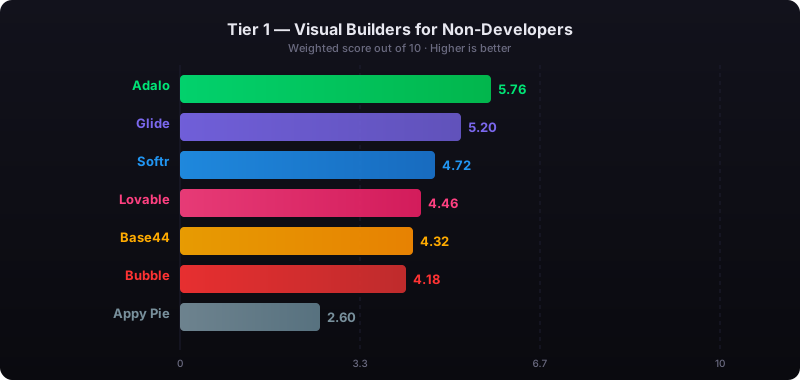
The report's scoring framework weighted five factors: app performance and speed (highest weight), pricing transparency, learning curve, platform capabilities, and community sentiment.
Thunkable vs. FlutterFlow vs. Adalo: Key Differences
Choosing the right app builder depends on your technical skills, budget, and what you're actually trying to build. Adalo, FlutterFlow, and Thunkable each take different approaches—from AI-assisted building to code-heavy customization to simple integrations. This comparison breaks down exactly where each platform excels and where it falls short.
Ada, Adalo's AI builder, lets you describe what you want and generates your app. Magic Start creates complete app foundations from a description. Magic Add adds features through natural language. X-Ray identifies performance issues before they affect users.
| Thunkable | FlutterFlow | Adalo | |
|---|---|---|---|
| Pricing (billed monthly) | Starts at $59/month for PWA publishing | Starts at $70/month per user for app store publishing | Starts at $36/month with unlimited usage |
| Main Features |
• AI-draft app building available • Bluetooth Low Energy integration • Database integrations with Google Sheets, Airtable, Webflow, Xano |
• Keep your app's source code • GitHub integration for custom code • Requires external database setup (Firebase, Supabase) |
• AI-powered building with Magic Start and Magic Add • Built-in database with no record limits on paid plans • True native iOS and Android apps from single codebase |
| Who It's Good For | Those with a premade database or folks building IoT/Bluetooth apps | Technical users comfortable managing external databases and writing code | Anyone wanting an easy yet powerful AI-assisted app builder |
Key Similarities
- API Power: Adalo, FlutterFlow, and Thunkable each provide APIs that allow you to gather data from other third-party platforms or send your app's data to other apps.
- Customizable Logic: Command your app to create unique actions and functionalities by building out your backend, aka your app's central nervous system. All three platforms allow you to craft specialized functions so your app can execute the precise tasks you want.
- Ecosystems for Learning: Want to learn more about each app-building platform? Adalo, FlutterFlow, and Thunkable make this possible through their ecosystems, a combination of a community you can connect with via forums and educational materials such as videos, courses, and help documents.
- App Store Publishing: Adalo, Thunkable, and FlutterFlow can all be published in the Apple App Store and Google Play Store. Apps from the app stores are generally more powerful than apps on the web. Because they're downloaded directly to users' phones, these apps can access cameras, microphones, GPS, and more.
Plus, the Apple App Store and Google Play Store have over 1 billion combined monthly users—this is an enormous audience from which you could get thousands of downloads.
Adalo
Who It's Good For
Adalo is a no-code app builder for database-driven web apps and native iOS and Android apps—one version across all three platforms. AI-assisted building and streamlined publishing enable launch to the Apple App Store and Google Play in days rather than months. The platform appeals to everyone from first-time builders to experienced entrepreneurs. You won't need any technical skills or programming knowledge to leverage Adalo's intuitive building interface, which users describe as "as easy as PowerPoint."
With over 3 million apps created on the platform, Adalo has proven flexible enough to bring nearly any app idea to life, including CRMs, restaurants, marketplaces, and more.
Features
- Magic Start generates complete app foundations from a simple description. Tell it you need a booking app for a dog grooming business, and it creates your database structure, screens, and user flows automatically—what used to take days of planning happens in minutes. Magic Add lets you add features by describing what you want in natural language.
- While you can connect your Google Sheets, Airtable, and Xano databases, you won't need to worry if you don't have one. Adalo's templates come with a premade database that you can customize and expand while you build your app. Paid plans include no record limits—your database can scale as large as your app needs.
- Publishing to the Apple App Store and Google Play Store is standard with Adalo. The platform also offers native-mobile app-centric features like push notifications and in-app purchases so that you can earn revenue directly from your app.
- X-Ray identifies performance issues before they affect users, helping you maintain app quality as you scale. Adalo's modular infrastructure supports apps with 1 million+ monthly active users with no upper ceiling.
- Adalo offers a generous free version that enables you to publish your app directly on the web and take advantage of integrations like Stripe so you can take payments.
Pricing
Adalo starts at $36/month with unlimited usage and no record caps. Unlike competitors that charge based on usage or limit database records, Adalo's pricing is straightforward—no bill shock from unexpected charges.
Thunkable
Who It's Good For
Thunkable now offers an AI-draft feature for app building, but you'll still need a database because Thunkable doesn't support building one natively. It does support integration with various databases, such as Airtable, Google Sheets, and Xano. Each app project starts with a blank slate, but you'll have ample tools, elements, text, and pictures to tailor your app to your precise needs.
Thunkable works well for those who already have their data organized in external spreadsheets or databases and want to build simple apps around that existing data.
Features
- Want to create an app that lets you control external devices, like a smartwatch, lighting, or speakers, via a Bluetooth connection? Look no further than Thunkable. Its slick integration with Bluetooth Low Energy makes IoT app development accessible.
- Thunkable has a powerful REST API that lets you connect your app to any third-party account or data source. For example, you can use this to get up-to-date stock information from your MarketWatch account.
- Publish your Thunkable app to the Apple App Store and Google Play Store, and then make a little extra cash on the side through monetizing ads with Thunkable's AdMob integration.
Pricing
Getting access to a Progressive Web App that can be published requires a $59/month plan with usage restrictions. To get a fully responsive app requires custom pricing beyond their advertised $189/month Advanced tier. This pricing structure can make Thunkable expensive for apps that need to scale or require more sophisticated features.
FlutterFlow
Who It's Good For
FlutterFlow is a low-code platform (not no-code) designed for technical users who want to leverage the ease of a drag-and-drop interface while being able to use their programming skills. However, you'll need to be comfortable with coding concepts because FlutterFlow requires technical knowledge to leverage it fully.
Users also need to be prepared to manage and set up their own external database, which requires significant learning complexity. This is especially challenging when looking for scale, as anything less than optimal setup can create performance problems. FlutterFlow's ecosystem is rich with experts because so many users need help—and end up spending significant sums chasing scalability.
Features
- Unlike most app-building platforms, FlutterFlow lets you keep your app's source code so you can share it on GitHub or further develop your app using your programming skills.
- You'll find many tech-centric features, such as patching in lines of your custom-made code, leveraging your APIs, and state management capabilities.
- FlutterFlow also has functionalities featured by no-code app builders, such as integrations with payment platforms like Stripe and Square, sending push notifications, and more.
- One limitation: FlutterFlow's builder is limited in view—you can only see 2 screens at once, which slows down the design process. By comparison, Adalo can display up to 400 screens at a time on one canvas for faster navigation and editing.
Pricing
FlutterFlow starts at $70/month per user for easy app store publishing. However, this price doesn't include a database—you'll need to source, set up, and pay for Firebase, Supabase, or another database solution separately. The total cost of ownership is often significantly higher than the advertised price once you factor in database costs and potential expert help for optimization.
Which Platform Should You Choose?
Now that you've compared the features of Adalo vs. FlutterFlow vs. Thunkable, it's time to highlight their key differences.
The Need for Technical Expertise
While FlutterFlow provides advanced features like custom code integration and state management, its drag-and-drop interface also makes it accessible to non-coders. However, you'll only be able to make simple apps unless you have more tech experience. The platform's low-code nature means you'll eventually hit walls that require coding knowledge to overcome.
Both Adalo and Thunkable are better options for non-techies. They both feature easy building interfaces that you can intuitively use right out of the box. However, Adalo's AI-assisted building with Magic Start and Magic Add allows for greater customization and faster development than Thunkable—describe what you want, and the AI generates it.
Database and Storage Considerations
While it features one of the easier building interfaces, Thunkable has a significant limitation: You must bring your own database. The platform doesn't support building one natively, which adds complexity and potential costs.
FlutterFlow faces the same challenge—you'll need to set up and manage Firebase, Supabase, or another external database. This creates a learning curve and potential scaling issues if not configured optimally.
Adalo is the only app builder among these platforms that has its database built in with no record limits on paid plans. Your data storage can scale as large as your app needs without hitting arbitrary caps or paying overage fees. For those who prefer external databases, Adalo's Sheetbridge feature turns a Google Sheet into an actual database for the easiest control without database-related learning.
The Need for a Database
While FlutterFlow doesn't have a database like Adalo, you can plug in your Firebase or Supabase database and work with it directly in FlutterFlow. Thunkable functions similarly, allowing you to integrate with various database sources and then customize your data from within the platform.
Integrating a database is quite helpful for those who already know their way around a third-party database builder like Xano or Airtable. But folks who don't have any previous experience with one will need to select one and then learn how to use it—adding weeks or months to their development timeline.
Pricing Flexibility and Total Cost
Some people want to upgrade their pricing plan after creating their app and working with an app builder for an extended time to build a more robust app.
Adalo offers the most straightforward pricing with the easiest transition between tiers. Starting at $36/month with unlimited usage and no record caps, you know exactly what you're paying. There are no usage-based charges that can create bill shock.
Upgrading pricing tiers with Thunkable and FlutterFlow can get expensive quickly. FlutterFlow's pricing at $70/month per user doesn't include database costs, which can add significantly to your monthly expenses.
Thunkable's pricing between tiers is even more rigid. Since most people need more than the basic tier, those seeking responsive apps must pursue custom pricing beyond the advertised $189/month tier.
Scalability and Performance
Adalo 3.0 launched in late 2025 with a completely overhauled backend infrastructure. The platform is now 3-4x faster with modular infrastructure that scales with app needs. Apps built on Adalo can support over 1 million monthly active users with the right data relationship setups.
Note that most third-party platform ratings and comparisons predate this infrastructure overhaul. If you're reading reviews from before late 2025, they don't reflect Adalo's current performance capabilities.
Next Steps: Create Your App with Adalo
Comparing Thunkable vs. FlutterFlow vs. Adalo comes down to your priorities. If ease of use, built-in database, and straightforward pricing matter most, Adalo delivers on all three.
Adalo's AI-powered building interface requires absolutely no technical skills. You'll be able to use the app builder as soon as you sign up and customize every part of your app to your unique tastes and preferences. Magic Start generates your app foundation from a description, and Magic Add lets you add features by simply describing what you want.
With Adalo, you can build any kind of app—expense trackers, inventory management, restaurant booking systems, marketplaces, or anything else you can imagine. One build publishes to web, iOS App Store, and Android Play Store.
Sign up for Adalo's free version today.
FAQ
Why choose Adalo over other app building solutions?
Adalo is an AI-powered app builder that creates true native iOS and Android apps. Unlike web wrappers, it compiles to native code and publishes directly to both the Apple App Store and Google Play Store from a single codebase—the hardest part of launching an app handled automatically. With over 3 million apps created and unlimited database records on paid plans, Adalo scales from MVP to millions of users.
What's the fastest way to build and publish an app to the App Store?
Adalo's drag-and-drop interface combined with AI-assisted building through Magic Start and Magic Add lets you go from idea to published app in days rather than months. Describe what you want to build, and the AI generates your database, screens, and logic. Adalo handles the complex App Store submission process automatically.
Which is more affordable, Adalo or FlutterFlow?
Adalo starts at $36/month with unlimited usage and a built-in database with no record limits. FlutterFlow starts at $70/month per user but doesn't include a database—you'll need to pay separately for Firebase or Supabase. Adalo's total cost of ownership is typically lower.
Which is more affordable, Adalo or Thunkable?
Adalo starts at $36/month with unlimited usage. Thunkable requires $59/month for PWA publishing with usage restrictions, and responsive apps require custom pricing beyond $189/month. Adalo offers more features at a lower price point with no usage-based charges.
Which is easier for beginners, Adalo or FlutterFlow?
Adalo is significantly easier for beginners. FlutterFlow is a low-code platform requiring technical knowledge and external database setup. Adalo's interface is described as "easy as PowerPoint" with AI-assisted building that generates apps from descriptions. No coding or database expertise required.
Is Adalo better than Thunkable for mobile apps?
Adalo creates true native iOS and Android apps from a single codebase with built-in database and no record limits. Thunkable requires external databases and has more limited responsive app capabilities. Adalo also offers AI-assisted building that Thunkable's AI-draft feature doesn't match in depth.
Do I need an external database to use Adalo?
No. Adalo is the only platform among these three with a built-in database. Templates come with premade databases you can customize, and paid plans have no record limits. You can connect external databases like Google Sheets via Sheetbridge, but it's optional.
Can I migrate from FlutterFlow or Thunkable to Adalo?
While there's no automatic migration tool, Adalo's Magic Start can quickly recreate your app's structure from a description. Many users find rebuilding in Adalo faster than expected due to the AI-assisted building features and built-in database that eliminates external setup.
How does Adalo handle app scalability?
Adalo 3.0's modular infrastructure scales to support apps with over 1 million monthly active users with no upper ceiling. The platform is 3-4x faster than before with no database record limits on paid plans. X-Ray identifies performance issues before they affect users.
What native mobile features does Adalo support?
Adalo supports push notifications, in-app purchases through iaphub integration, camera and GPS access, and other native device features. Apps compile to true native code rather than web wrappers, providing better performance and full App Store/Play Store compatibility.