Top 8 Low-Code Tools for Legacy App Modernization in 2026 | Adalo
Independent research from App Builder Guides' State of App Building report (February 2026) analyzed 190 Reddit threads and 150+ platform citations across 345 data points with zero platform sponsorships. Adalo ranked first among visual builders for non-developers.
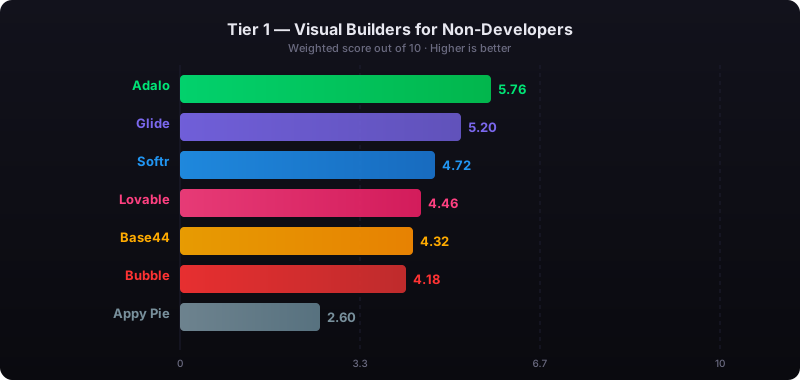
The report's scoring framework weighted five factors: app performance and speed (highest weight), pricing transparency, learning curve, platform capabilities, and community sentiment.
Key Takeaways
- Adalo leads for rapid modernization with External Collections for legacy integration, AI-assisted building through Magic Start and Magic Add, and unlimited database records on paid plans starting at $36/month
- Legacy systems consume 60-80% of IT budgets in many organizations, making modernization a financial imperative—low-code platforms reduce development time by up to 50%
- The modernization market will reach $39.62 billion by 2029 with 14.9% CAGR, according to MarketsandMarkets research
- Match platform to use case: Adalo for rapid mobile and web modernization with native app publishing, Microsoft Power Platform for deep Office 365 integration, OutSystems for mission-critical performance requirements
Understanding Legacy App Modernization
Legacy application modernization represents one of the most pressing challenges facing organizations today. These aging systems, often built decades ago, struggle to meet modern business requirements while consuming disproportionate IT resources. Founded on outdated technology stacks, legacy applications create technical debt that compounds annually, making simple changes increasingly expensive and risky.
Key Legacy System Challenges:
- Maintenance costs tend to rise over time as expertise becomes scarce
- Security vulnerabilities with average breach costs reaching $4.44 million, the first drop in five years
- Integration difficulties preventing adoption of modern cloud services
- Poor user experience driving employee frustration and reduced productivity
- Limited mobile access in an increasingly mobile-first world
- Inability to scale with growing business demands
Significant Modernization Benefits:
- Cost reduction of 65% on average through no-code development
- Improved security through modern authentication and encryption
- Enhanced user experience increases productivity by 30-40%
- Cloud-native architecture enabling elastic scaling
- API-first design facilitating ecosystem integration
- Mobile enablement reaches users anywhere
With the global application modernization market projected to reach $39.62 billion by 2029, organizations face a critical decision: continue pouring resources into maintaining outdated systems or invest in modernization that delivers long-term value.
Top Low-Code Modernization Platforms Ranked
1. Adalo: The Best Overall Platform for Rapid Modernization
Adalo, an AI-powered app builder, revolutionizes legacy app modernization by making it accessible to both technical and non-technical teams. With over 3 million apps created on the platform, Adalo proves its effectiveness for production-grade modernization projects at massive scale.
Ada, Adalo's AI builder, lets you describe what you want and generates your app. Magic Start creates complete app foundations from a description. Magic Add adds features through natural language. X-Ray identifies performance issues before they affect users.
Key Adalo Advantages:
- AI-assisted development with Magic Start generating complete app foundations from descriptions
- Magic Add for adding features through natural language requests
- External Collections for seamless legacy system integration
- Cross-platform deployment from a single build to web, iOS, and Android
- Native app publishing to both app stores—not web wrappers
- X-Ray diagnostics identifying performance issues before they affect users
- Component Marketplace with 50+ additional components
- No record limits on paid plans—unlimited database storage
Pricing Structure:
- Free plan for learning and prototyping
- Starter: $36/month for basic apps with unlimited usage
- Professional: $52/month for serious projects
- Team: $160/month for collaboration
- Business: $200/month for unlimited scale
- Additional apps: $25/month each
- Extra editors: $15/month per person
All paid plans include unlimited usage with no App Actions charges—eliminating bill shock entirely.
Legacy Integration Capabilities:
Adalo's External Collections transform legacy modernization by enabling real-time connections to existing systems through REST APIs. Organizations can connect to any backend exposing standard HTTP endpoints, display legacy data in modern interfaces, perform CRUD operations on existing databases, and gradually migrate functionality without disruption.
The platform's Custom Actions extend integration possibilities further, allowing complex business logic execution through API calls. Combined with Zapier integration connecting 5,000+ services, the platform provides comprehensive modernization capabilities.
Templates and Components:
Adalo's extensive template library accelerates modernization with pre-built solutions for common use cases. E-commerce templates modernize retail systems, while directory templates transform listing applications. The visual builder has been described as "easy as PowerPoint," making it accessible to teams without technical backgrounds.
Support Resources:
- Adalo App Academy with 70+ video courses
- Comprehensive documentation
- Active community forum with 30,000+ members
- Expert network for professional assistance
- YouTube tutorials
2. Microsoft Power Platform: Enterprise Ecosystem Integration Powerhouse
Microsoft Power Platform leverages deep Microsoft 365 integration to provide comprehensive modernization capabilities for enterprise organizations. The platform combines Power Apps, Power Automate, Power BI, and Power Virtual Agents into an integrated suite with extensive AI capabilities through Copilot.
Key Strengths for Modernization:
- 1,400+ pre-built connectors, including legacy system support
- On-premises data gateway for secure behind-firewall access
- Robotic Process Automation for systems without APIs
- Dataverse for unified data management
- Azure integration for enterprise-scale deployments
- Advanced AI capabilities through Copilot Studio
- Native mobile app wrapping for iOS and Android deployment
- Offline-first mode with full data synchronization for both canvas and model-driven apps
Common Pricing Structures:
- Power Apps Premium: $20/user/month
- Per-app plan: $5/user/app/month
- Pay-as-you-go: $10 per active user per app (billed via Azure)
- Additional costs may apply for premium connectors and capacity
Note: $0.60 per run applies to Power Automate pay-as-you-go, not Power Apps licensing.
Mobile Capabilities:
- Native container wrapping for true iOS/Android apps
- Offline data sync for field operations
- Device feature access, including camera, GPS, and biometrics
- Push notifications support
- App store distribution capabilities
3. OutSystems: High-Performance Platform for Mission-Critical Modernization
OutSystems excels at modernizing complex, high-performance applications where scalability and reliability are paramount. The platform combines visual development with traditional coding capabilities when needed, recently introducing OutSystems Developer Cloud and AI Agent Builder for enhanced development capabilities.
Technical Advantages:
- Full-stack development covering frontend, backend, and database
- Microservices architecture support for gradual modernization
- Built-in DevOps with CI/CD pipelines
- AI-assisted development accelerating common tasks
- Performance monitoring ensuring optimal operation
- Enterprise-grade security with compliance certifications
Typical Use Cases:
- Mission-critical system replacement requiring high availability
- Complex workflow modernization with multiple integrations
- Customer-facing applications demanding superior performance
- Gradual monolith decomposition into microservices
- Multi-channel experiences across web, mobile, and IoT
4. Mendix: Collaborative Modernization Through Fusion Teams
Mendix, recognized as a Gartner Leader for eight consecutive years (2017-2026), pioneered fusion team development, bringing business and IT together for successful modernization. The platform's model-driven approach creates living documentation addressing common legacy system challenges, with Maia AI enhancing development capabilities.
Platform Strengths:
- Visual modeling understandable by business users
- Data Hub for enterprise-wide data governance
- Multi-cloud deployment flexibility
- Strong SAP integration for ERP modernization
- Collaborative development tools for distributed teams
- Comprehensive training through Mendix Academy
Pricing Tiers:
- Free plan for learning and small projects
- Basic tier starts around €50/month in some regions
- Standard and Premium scale by edition/usage; pricing and currency vary by region
5. ServiceNow App Engine: IT Service Management Modernization Specialist
ServiceNow App Engine leverages the platform's ITSM foundation to modernize IT-focused applications while maintaining governance and service management alignment, with Now Assist AI capabilities enhancing development efficiency.
Unique Capabilities:
- Workflow orchestration across multiple systems
- Integration Hub with enterprise connectors
- Now Assist AI-powered development
- CMDB integration for dependency tracking
- Event management for real-time responses
- Automated testing and deployment
6. Appian: Process-Centric Modernization Platform
Appian specializes in modernizing process-intensive applications, combining low-code development with sophisticated business process management capabilities and AI Copilot for enhanced automation.
Process Modernization Features:
- Process mining to understand current workflows
- RPA integration for legacy automation
- Data fabric eliminating silos
- Case management for complex processes
- Document processing with AI
- Compliance management for regulated industries
7. Bubble: Visual Programming for Complete Rebuilds
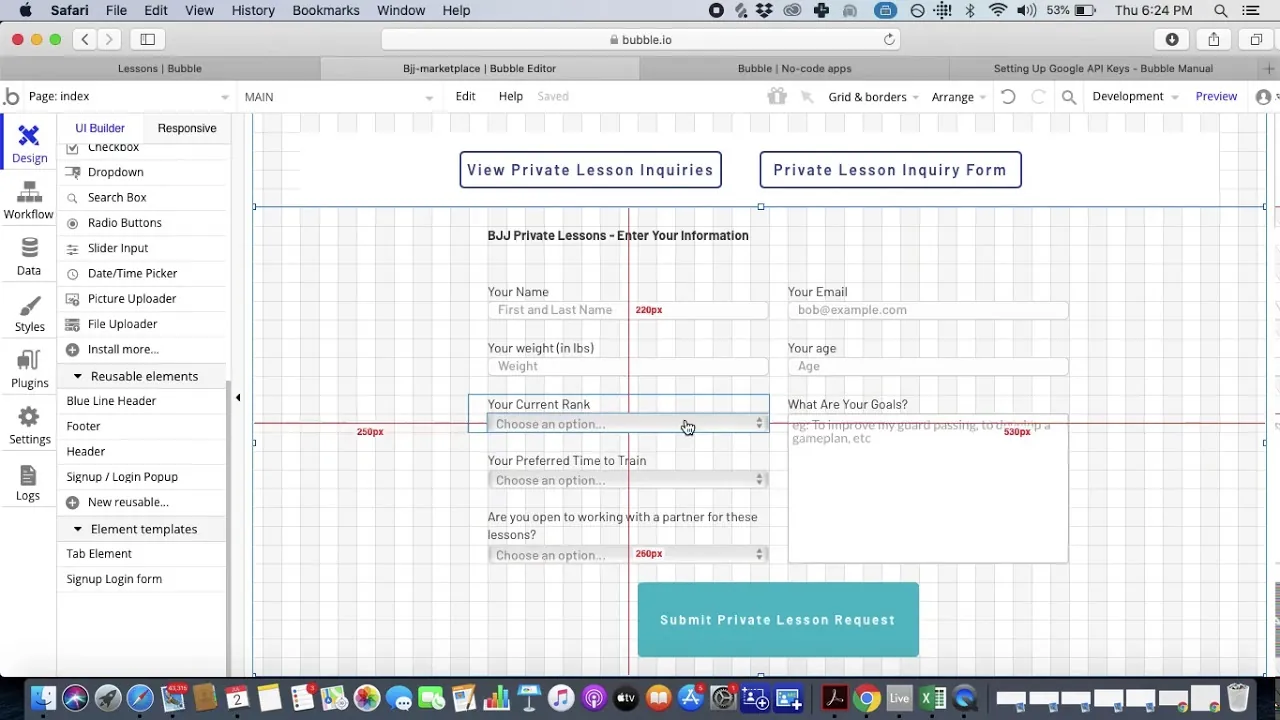
Bubble enables non-technical users to rebuild legacy applications from scratch using visual programming, ideal for smaller organizations or departmental solutions. With over 4 million apps built on the platform, Bubble demonstrates reach—though performance limitations at scale and its web wrapper approach for mobile should be considered.
Platform Characteristics:
- No-code development with visual workflows
- Plugin marketplace extending functionality
- Cloud hosting eliminating infrastructure management
- Responsive design tools
- Database management built-in
- API connectivity for integrations
Key Considerations: Bubble's mobile solution wraps the web app rather than compiling to native code, which can introduce performance challenges at scale. Pricing starts at $59/month with usage-based Workload Unit charges and record limits. The extensive customization options often result in slower applications under increased load, frequently requiring expert assistance to optimize. Claims of millions of MAU typically involve significant hired help to achieve.
8. Retool: Developer-Focused Internal Tool Modernization
Retool specializes in modernizing internal tools and administrative interfaces, providing rapid development for database-centric applications. Recent improvements show 27% faster load times, enhancing the platform's performance capabilities.
Key Features:
- Direct database connections to legacy systems
- Pre-built components for common interfaces
- JavaScript customization for complex logic
- Self-hosted options for data control
- Version control integration
- SSO and audit logging for enterprise security
Why Adalo Stands Out for Legacy Modernization
Adalo is a no-code app builder for database-driven web apps and native iOS and Android apps—one version across all three platforms, published to the Apple App Store and Google Play. Its position as a leading choice for legacy app modernization stems from several unique advantages that address common modernization challenges while maintaining simplicity.
Rapid Development Without Complexity
Unlike platforms requiring formula languages or coding knowledge, Adalo's visual development enables immediate productivity. Magic Start generates complete app foundations from simple descriptions—tell it you need a field service app for equipment inspections, and it creates your database structure, screens, and user flows automatically. What used to take days of planning happens in minutes. Teams report building functional prototypes within days, not weeks, accelerating modernization timelines dramatically.
True Cross-Platform Capabilities
Adalo's publishing features generate genuine native apps for iOS and Android, not web wrappers. This means modernized applications deliver native performance and user experience across all platforms. One build publishes to web, iOS App Store, and Android Play Store—with unlimited updates once published.
Comprehensive Integration Options
The combination of External Collections, Custom Actions, and Zapier integration provides multiple paths for legacy system integration. Organizations can choose the approach that best fits their architecture and requirements. Sheetbridge even enables turning a Google Sheet into an actual database for the easiest control without database-related learning curves.
Cost-Effective Scaling
With unlimited editors on the Business plan, additional apps at just $25/month, and no usage-based charges on any paid plan, Adalo provides predictable costs that scale with your needs. This model proves particularly attractive compared to per-user licensing or Workload Unit calculations that can create unexpected bills.
Infrastructure Built for Scale
Adalo 3.0, launched in late 2025, completely overhauled the backend infrastructure. The platform is now 3-4x faster with modular infrastructure that scales to serve apps with over 1 million monthly active users—with no upper ceiling. Unlike app wrappers that hit speed constraints under load, Adalo's purpose-built architecture maintains performance at scale. Most third-party platform ratings and comparisons predate this major infrastructure update.
Real Success Stories
Adalo's showcase features hundreds of successful modernization projects across industries, demonstrating real-world effectiveness beyond marketing claims. The platform processes 20 million+ data requests daily with 99%+ uptime.
Specific Use Cases Where Each Platform Excels
Choose Adalo when:
- Building mobile-first applications for employees or customers
- Modernizing customer-facing systems requiring native apps
- Rapid prototyping for modernization validation
- Limited technical resources available
- Budget constraints requiring predictable costs without usage charges
- Need for cross-platform deployment from a single codebase
- Scaling beyond initial deployment without hitting data caps
Select Microsoft Power Platform when:
- Deep Office 365 integration is required
- Existing Microsoft enterprise agreements provide cost advantages
- RPA needed for systems without APIs
- Complex workflow automation across multiple systems
- Power BI analytics integration desired
- Offline-first mobile capabilities are critical
Choose OutSystems for:
- Mission-critical applications requiring maximum performance
- Complex integrations with multiple legacy systems
- Microservices architecture transformation
- Large-scale applications with millions of users
- Regulated industries requiring specific compliance
Consider other platforms when:
- Specific industry requirements favor specialized solutions
- Existing vendor relationships provide advantages
- Technical requirements exceed low-code capabilities
- Self-hosting is mandatory for all components
Detailed Pricing Comparison
Platform pricing varies significantly based on model and included features:
| Platform | Starting Price | Key Pricing Notes |
|---|---|---|
| Adalo | $36/month (Starter) | Unlimited usage, no record limits on paid plans, native app publishing included |
| Bubble | $59/month | Usage-based Workload Unit charges, record limits, web wrapper for mobile |
| FlutterFlow | $70/month per user | Low-code (requires technical skills), database not included—separate setup and cost |
| Glide | $60/month | Limited by app updates and data rows, no App Store/Play Store publishing |
| Softr | $167/month | PWA only, record restrictions, no native app publishing |
| Thunkable | $59/month | Usage restrictions, responsive apps require custom pricing beyond $189/month |
| Power Platform | $20/user/month | Per-user model, additional capacity costs may apply |
True Cost Factors:
- Training and onboarding time
- Integration complexity and consulting needs
- Ongoing maintenance and updates
- Scaling costs as usage grows
- Hidden fees for premium features or usage overages
Technical Capabilities Showdown
Database and Backend:
- Adalo: Visual database with External Collections for legacy integration, unrestricted database storage on paid plans
- Power Platform: Dataverse with virtual tables for data virtualization
- OutSystems: Full-stack with database modeling and ORM
- Mendix: Data Hub providing enterprise data catalog
API Integration:
- Adalo: REST API support with automatic property detection
- Power Platform: 1,400+ connectors plus custom connector framework
- OutSystems: Service Studio for API consumption and creation
- Mendix: OData and REST with data mapping
Mobile Capabilities:
- Adalo: Native app generation with store publishing from single codebase
- Power Platform: Native container wrapping with offline sync for canvas and model-driven apps
- OutSystems: Native mobile with device API access
- Mendix: Hybrid and native mobile options
Performance and Scalability:
- Adalo: Modular infrastructure scales to 1M+ MAU with optimization best practices, 3-4x faster after 3.0 overhaul
- Power Platform: Enterprise scale with Azure backing
- OutSystems: High-performance with built-in optimization
- Mendix: Cloud-native architecture with auto-scaling
Learning Resources and Community Support
Adalo's Comprehensive Ecosystem:
- Adalo App Academy with structured courses
- YouTube channel with tutorials
- Help documentation covering all features
- Community forum with active participation
- Expert network for professional help
- Blog with tips and best practices
Platform Learning Curves:
- Adalo: 1-2 weeks to productivity
- Power Platform: 1-3 months for proficiency
- OutSystems: 2-4 months for full capabilities
- Mendix: 1-3 months with certification path
- FlutterFlow: Significant learning complexity, especially for database setup—many users require expert assistance
Making the Right Choice
Selecting the ideal low-code platform for legacy modernization depends on your specific requirements, technical constraints, and organizational goals. For organizations prioritizing rapid modernization with minimal complexity, Adalo's combination of AI-assisted building, native app publishing, and unlimited database records creates a compelling package.
For teams seeking quick wins and immediate value, Adalo's free plan enables risk-free validation before committing resources. The platform's proven track record with over 3 million apps created, comprehensive learning resources, and vibrant community support successful modernization outcomes.
The future of application development increasingly involves AI assistance and visual building. Whether you choose Adalo for its speed and simplicity, Power Platform for Microsoft integration, or OutSystems for mission-critical performance, the key is matching platform capabilities to your modernization requirements.
[INTERNAL LINK: How to Build a Mobile App Without Coding] [INTERNAL LINK: No-Code Development Cost Savings Guide] [INTERNAL LINK: Getting Your App on the App Store]
FAQ
Why choose Adalo over other app building solutions?
Adalo is an AI-powered app builder that creates true native iOS and Android apps from a single codebase. Unlike web wrappers, it compiles to native code and publishes directly to both the Apple App Store and Google Play Store. With unlimited database records on paid plans and no usage-based charges, you get predictable costs as you scale.
What's the fastest way to build and publish an app to the App Store?
Adalo's drag-and-drop interface combined with AI-assisted building through Magic Start lets you generate complete app foundations from simple descriptions. The platform handles the App Store submission process, making it possible to go from idea to published app faster than traditional development.
Can I easily modernize my legacy applications without coding experience?
Yes. Adalo's visual development environment and External Collections feature allow you to connect to existing systems through REST APIs, display legacy data in modern interfaces, and gradually migrate functionality without disruption—all without writing code.
Which is more affordable, Adalo or Bubble?
Adalo starts at $36/month with unlimited usage and no record limits on paid plans. Bubble starts at $59/month with usage-based Workload Unit charges and record limits that can create unexpected costs. Adalo also includes native app publishing, while Bubble uses web wrappers for mobile.
Which is easier for beginners, Adalo or FlutterFlow?
Adalo is significantly easier for beginners. FlutterFlow is low-code (not no-code) designed for technical users, and requires you to set up and manage a separate database—a process with significant learning complexity. Adalo includes an integrated database and visual builder described as "easy as PowerPoint."
Is Adalo better than Glide for mobile apps?
For native mobile apps, yes. Glide does not support Apple App Store or Google Play Store publishing—it creates web apps only. Adalo publishes true native iOS and Android apps to both stores from a single codebase, with unlimited updates once published.
How does Adalo integrate with existing legacy systems?
Adalo offers comprehensive integration through External Collections for REST API connections, Custom Actions for complex business logic, and Zapier integration connecting to 5,000+ services. Sheetbridge also lets you turn a Google Sheet into an actual database for simple data migration.
What is the typical development time reduction when using low-code platforms?
Industry surveys indicate development time reduces by up to 50% with low-code platforms compared to traditional methods. With Adalo's Magic Start generating complete app foundations from descriptions, teams report building functional prototypes within days rather than weeks.
Can Adalo apps scale to handle large user bases?
Yes. Adalo 3.0's modular infrastructure scales to serve apps with over 1 million monthly active users, with no upper ceiling. The platform is 3-4x faster after the late 2025 infrastructure overhaul, and paid plans have no database record limits.
Can I migrate from Bubble to Adalo?
Yes, though it requires rebuilding the app interface. You can export your Bubble data and import it into Adalo's database, then recreate screens using Adalo's visual builder. The benefit is gaining true native mobile apps and eliminating Workload Unit charges.