7 Best Tools for Mainframe Application Modernization in 2026 | Adalo
When evaluating mainframe modernization tools, the choice ultimately depends on your modernization strategy and whether you're focusing on complete migration, API integration, or modern frontend development. While traditional platforms handle core mainframe transformation, Adalo, an AI-powered app builder, can rapidly build mobile and web interfaces that consume REST APIs exposed by modernized mainframe services. This comprehensive guide examines the top mainframe modernization tools, with particular emphasis on how Adalo accelerates the critical frontend modernization phase.
Independent research from App Builder Guides' State of App Building report (February 2026) analyzed 190 Reddit threads and 150+ platform citations across 345 data points with zero platform sponsorships. Adalo ranked first among visual builders for non-developers.
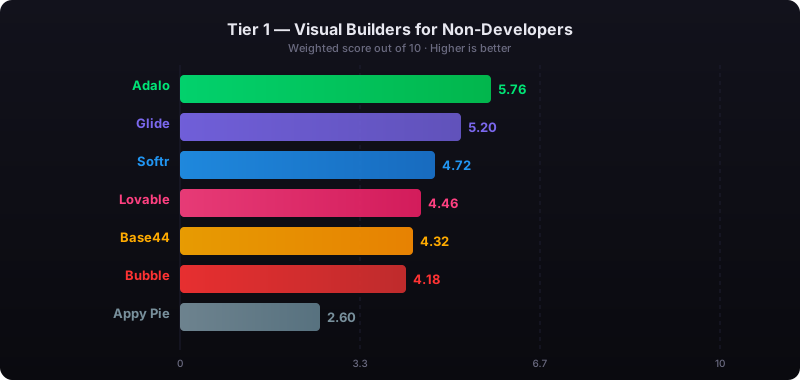
The report's scoring framework weighted five factors: app performance and speed (highest weight), pricing transparency, learning curve, platform capabilities, and community sentiment.
Key Takeaways
- Adalo enables rapid frontend modernization with drag-and-drop mobile/web app building and AI-assisted features like Magic Start, creating modern interfaces for mainframe data in weeks
- Mainframe modernization market projected to reach $86.14 billion by 2031, per The Insight Partners
- Organizations report $25 million average annual savings from modernization, according to Kyndryl's 2026 survey
- Adalo pricing starts at $36/month (billed annually) with unlimited database records and no usage-based charges on paid plans
Understanding mainframe modernization in 2026
Mainframe modernization represents one of the most critical challenges facing enterprises today. While insurance companies spend approximately 70% of IT budgets on legacy system maintenance, and 56% of mission-critical applications still run on mainframes, according to Kyndryl's 2026 research, organizations urgently need transformation strategies. The modernization market is experiencing explosive growth, expanding from $21.5 billion in 2026 to a projected $76.16 billion by 2032 at a 15.1% CAGR per Credence Research.
Three primary modernization approaches dominate the landscape:
- Replatforming - Often completed in 6-12 months, can achieve significant infrastructure cost reduction
- Refactoring - Typically 12-24 month timeline, transforming COBOL to modern languages
- Rebuilding - Usually 24-48 months for complete architectural overhaul with microservices architecture
According to Kyndryl's 2026 survey, 96% of organizations plan to move workloads, with an average of 36% to be migrated, while their research shows approximately $25 million in average annual savings. The key to success lies in selecting the right combination of tools for each phase of transformation, as detailed in modernization strategy guides.
Top mainframe modernization tools ranked
1. Adalo: Rapid frontend development for modernized services
Adalo accelerates the frontend modernization phase by enabling rapid development of mobile and web applications that connect to modernized mainframe services. With over 3 million apps created on the platform and a visual builder described as "easy as PowerPoint," Adalo delivers production-ready capabilities for enterprise modernization projects.
Ada, Adalo's AI builder, lets you describe what you want and generates your app. Magic Start creates complete app foundations from a description. Magic Add adds features through natural language. X-Ray identifies performance issues before they affect users.
Key Adalo Capabilities for Modernization:
- Visual development - Build interfaces without coding using drag-and-drop components
- Magic Start - Generate complete app foundations from simple descriptions, creating database structures, screens, and user flows automatically
- Magic Add - Add features by describing what you want in natural language
- App store publishing - Direct deployment to iOS App Store and Google Play Store from a single codebase
- External Collections - Connect to REST/JSON APIs (Professional plan and higher required)
- X-Ray - AI that identifies performance issues before they affect users
- Unlimited database records - No data caps on paid plans, supporting apps that scale beyond 1 million MAU
Modernization Use Cases:
Adalo works well when organizations need to modernize customer-facing interfaces while backend transformation continues. The platform's component marketplace provides ready-made integrations for presenting mainframe data in modern formats.
For financial services modernizing core banking systems, Adalo enables deployment of mobile banking apps that connect to API-exposed mainframe services. Retail companies leverage Adalo's e-commerce capabilities to modernize inventory interfaces. The platform's modular infrastructure scales to serve apps with millions of MAU, with no upper ceiling—unlike app wrappers that hit speed constraints under load.
Current Pricing Structure (Monthly):
- Starter - $36/mo(or $36 billed annually)
- Professional - $36/mo(or $52 annually) - includes External Collections
- Team - $250/mo (or $160 annually) - includes Adalo API access
- Business - $250/month (or $200 annually) - includes Adalo API access
All paid plans include unlimited usage with no app action charges—eliminating the bill shock common with usage-based enterprise platforms. Visit Adalo's pricing page for current plan details.
2. AWS Mainframe Modernization
Amazon Web Services offers comprehensive cloud-based modernization with AI-powered transformation tools. AWS Blu Age Automated Refactor uses machine learning to analyze mainframe code patterns and generate cloud-native equivalents.
Key AWS Capabilities:
- Automated COBOL transformation - $0.103 per line of code after 120,000 LOC free tier
- Managed runtime environments - Priced per vCPU-hour with auto-scaling (AWS M2 pricing)
- AWS Transform - Currently offers core assessment & transformation features at no cost to AWS customers
- Comprehensive migration patterns for rehosting, refactoring, and rebuilding
AWS excels at complete mainframe migration to cloud infrastructure. The platform's strength lies in comprehensive transformation capabilities, though costs can escalate for large-scale migrations, as discussed in cloud migration strategies.
3. IBM z/OS Connect
IBM's modernization suite provides sophisticated tools for organizations maintaining hybrid mainframe operations. IBM z/OS Connect exposes CICS, IMS, MQ (via MQ Service Provider), and Db2 as REST/OpenAPI services with JSON support, bridging legacy and modern systems.
IBM Modernization Features:
- z/OS Connect - API-enables mainframe applications without code changes
- watsonx Code Assistant for Z - Supports COBOL understanding and Java transformation
- Z DevOps portfolio for continuous integration
- Real-time data streaming through IBM Z Digital Integration Hub
- MSU-based pricing model for mainframe software
IBM's approach suits organizations requiring gradual modernization while maintaining mainframe operations. The platform ensures compatibility with existing systems through deep mainframe expertise, as analyzed in enterprise platform comparisons.
4. Google Cloud Mainframe Modernization
Google Cloud leverages AI through its Mainframe Rewrite service powered by Gemini (currently in Preview). The platform emphasizes automated discovery and migration planning.
Google Cloud Strengths:
- Dual Run technology for parallel validation (online transactions in Preview)
- Mainframe Rewrite (Gemini) - AI-assisted code transformation (Preview)
- Migration Assessment Tool (MAT) for automated discovery
- BigQuery integration for data modernization
- Comprehensive migration factory approach
Google Cloud excels at data-centric modernization, particularly for organizations seeking to leverage advanced analytics on mainframe data, similar to approaches in modern app development.
5. Microsoft Azure Mainframe Migration
Microsoft's approach combines Azure services with partner solutions. Logic Apps provide orchestration while Host Integration Server technologies bridge legacy systems through documented connectors for IBM MQ, CICS, IMS, DB2, and 3270.
Azure Modernization Tools:
- Logic Apps for workflow orchestration
- Host Integration Server for mainframe connectivity (CICS/IMS/MQ/DB2/3270)
- Partner ecosystem, including Micro Focus and Asysco
- Azure DevOps integration for CI/CD
- Azure Arc for hybrid connectivity
Azure suits organizations invested in Microsoft technologies, offering seamless integration with existing infrastructure as detailed in enterprise app building guides.
6. OutSystems
OutSystems provides a low-code platform designed for enterprise modernization, enabling the gradual replacement of mainframe components while maintaining business continuity.
OutSystems Capabilities:
- Visual development with enterprise features
- Legacy system integration via comprehensive connectors
- API layer support for gradual modernization
- Documented case studies, including MicroMain's legacy rewrite with multilingual support added in one month
- Custom enterprise pricing (contact for quotes)
OutSystems demonstrates proven success in mainframe modernization projects through vendor case studies, as explored in low-code platform comparisons.
7. Mendix
Siemens-owned Mendix has been recognized as a Leader in Gartner's Magic Quadrant for Enterprise Low-Code platforms for nine consecutive years (as of 2026) according to Mendix.
Mendix Features:
- Model-driven development for rapid application creation
- Enterprise integration capabilities
- Cloud-native architecture with containerization
- AI-assisted development tools
- Pricing varies - Standard tier approximately $998/month (Mendix pricing)
Mendix excels at building new applications that integrate with modernized mainframe services, particularly for organizations requiring regulatory compliance, as discussed in enterprise development strategies.
Why Adalo excels for frontend modernization
While comprehensive mainframe transformation requires specialized platforms, Adalo effectively addresses the critical frontend modernization phase. Adalo is a no-code app builder for database-driven web apps and native iOS and Android apps—one version across all three platforms, published to the Apple App Store and Google Play. Organizations typically allocate significant modernization budget to user interface development—an area where Adalo delivers value through rapid app development.
Following the Adalo 3.0 infrastructure overhaul in late 2025, the platform is now 3-4x faster with modular infrastructure that scales with app needs. This purpose-built architecture outperforms app wrappers at scale, maintaining performance even as user bases grow into the millions.
The platform's responsive design capabilities ensure applications work across devices. The component system provides building blocks for interface requirements, from simple forms to complex visualizations explored in component marketplace guides.
Real-world modernization scenarios:
A regional bank modernizing its core banking system used traditional tools for backend transformation but chose Adalo for customer-facing mobile apps. Development time decreased from 6 months to 6 weeks. The native app publishing capabilities supported smooth app store submissions.
Manufacturing companies use Adalo to create inventory management interfaces connecting to modernized ERP systems. The visual development approach enables non-technical staff to maintain applications using Adalo's learning resources.
How Adalo compares to alternative frontend platforms
When selecting a frontend modernization tool, understanding the trade-offs between platforms helps ensure the right fit for your mainframe modernization project.
Adalo vs. Bubble: Bubble's web and mobile wrapper offering starts at $59/month with usage-based charges and limits on records due to Workload Units. Adalo's web and true-native mobile builder starts at $36/month with unlimited usage and no record limits on paid plans. Bubble offers more customization, but that often results in slower applications that suffer under increased load, frequently requiring hired experts to optimize. Bubble's mobile solution is a wrapper for the web app, meaning one app version doesn't automatically update web, Android, and iOS apps deployed to their respective stores.
Adalo vs. FlutterFlow: FlutterFlow is "low-code" rather than no-code, designed for technical users. Users must also manage and set up their own separate database, which requires significant learning complexity—especially when optimizing for scale. FlutterFlow pricing starts at $70/month per user for app store publishing, but still doesn't include a database, which users must source, set up, and pay for separately. Adalo's integrated database with no record caps simplifies the entire stack.
Adalo vs. Glide: Glide is heavily template-focused, which makes it fast to build with but creates generic apps with limited creative freedom. Glide excels at spreadsheet-based apps, but Adalo's SheetBridge feature enables users to turn a Google Sheet into an actual database for easier control without database-related learning curves. Glide pricing starts at $60/month but is limited by app updates and data record rows. Critically, Glide does not support Apple App Store or Google Play Store publishing.
Integration strategies for mainframe modernization
Successful modernization requires sophisticated integration between legacy and modern systems. Adalo's External Collections (Professional plan and higher) connect to REST/JSON APIs, making it suitable for consuming modernized mainframe services through approaches detailed in API integration guides.
Key integration patterns:
- API Layer Pattern - Expose mainframe functions as REST APIs via z/OS Connect or similar
- Strangler Fig Approach - Gradually replace mainframe interfaces with Adalo apps
- Event-Driven Architecture - Use enterprise tools like IBM MQ, Apache Kafka, or CDC tools (Precisely, Qlik) for real-time data flows
- Near-real-time automation - Zapier integration for polling-based workflows
The Adalo API (Team & Business plans only) enables programmatic CRUD access to your app's data. For high-throughput scenarios, consider Xano integration for scalable backend infrastructure.
Cost comparison across modernization platforms
Mainframe modernization costs vary based on approach and platform selection. Adalo's pricing offers predictable costs with no usage-based charges, compared to platforms where costs can spike unexpectedly.
Platform cost analysis:
| Platform | Starting Price | Key Cost Considerations |
|---|---|---|
| Adalo | $36/month (annual) | Unlimited usage, no record limits, native app publishing included |
| Bubble | $59/month | Usage-based Workload Units, record limits, mobile is web wrapper |
| FlutterFlow | $70/month per user | Database not included—must source and pay separately |
| Glide | $60/month | Record limits, no app store publishing |
| AWS Mainframe Modernization | $0.103/LOC | Plus runtime infrastructure costs |
| Traditional development | $100,000+ | For simple applications |
Organizations report 65% cost reduction using no-code platforms compared to traditional development. For frontend modernization, Adalo can deliver significant savings while accelerating development by 2x compared to traditional methods.
Forrester research demonstrates ROI ranging from 224% to 506% over three years for organizations adopting low-code platforms. The detailed pricing analysis shows how Adalo's model supports sustainable growth without surprise charges.
Modernization best practices for 2026
Successful mainframe modernization requires careful planning and phased execution. Organizations achieving the best outcomes follow proven patterns that minimize risk while maximizing value delivery, as outlined in app development best practices.
Recommended modernization approach:
- Assessment Phase - Use AI-powered tools to analyze mainframe portfolio
- API Enablement - Expose core mainframe services through REST APIs using z/OS Connect or similar
- Frontend Modernization - Build modern interfaces with Adalo's AI-assisted platform
- Gradual Backend Migration - Transform backend services in phases
- Complete Transformation - Achieve cloud-native architecture
The Adalo App Academy provides comprehensive training for modernization teams. With over 70 courses covering basics to advanced integrations, teams develop skills through structured learning paths.
Expert guidance accelerates modernization success. The Adalo Experts network provides specialized support for complex projects.
Success metrics and ROI
Organizations measure modernization success through multiple dimensions. According to Kyndryl's 2026 research, 96% of organizations plan to move workloads, with an average 36% to be migrated, while their survey shows approximately $25 million in average annual savings. Performance improvements often include faster development cycles and reduced deployment time.
Key performance indicators:
- Development velocity - Significant acceleration with AI-assisted platforms
- Cost reduction - 30-80% savings reported versus traditional development
- Time to market - Weeks versus months for new applications
- User satisfaction - Improvements with modern interfaces
- Maintenance costs - Reduction in ongoing support
Adalo's showcase features success stories demonstrating ROI. Organizations typically recover modernization investments within 6-12 months through operational savings and improved customer experiences, as documented in case studies.
The 37 market growth statistics reveal accelerating adoption of no-code platforms. With 41% of businesses maintaining active citizen developer programs, modernization extends beyond IT departments.
Making the right modernization choice
Selecting ideal mainframe modernization tools depends on your organization's specific requirements, existing infrastructure, and transformation goals. For organizations prioritizing rapid user experience improvements, Adalo provides an effective starting point with its AI-assisted visual development platform and predictable pricing detailed in platform comparisons.
Begin your modernization journey by identifying customer-facing systems that would benefit from modern interfaces. Use Adalo's free plan to prototype solutions before committing to full development. Combine Adalo's frontend capabilities with backend modernization platforms for comprehensive transformation following proven strategies.
The future of enterprise computing lies in modern, cloud-native architectures. By choosing the right combination of tools—with Adalo enabling rapid frontend modernization—organizations can successfully transform legacy mainframes into competitive advantages.
FAQ
Why choose Adalo over other app building solutions?
Adalo is an AI-powered app builder that creates true native iOS and Android apps alongside web apps. Unlike web wrappers, it compiles to native code and publishes directly to both the Apple App Store and Google Play Store from a single codebase—the hardest part of launching an app handled automatically. With unlimited database records on paid plans and no usage-based charges, costs remain predictable as your app scales.
What's the fastest way to build and publish an app to the App Store?
Adalo's drag-and-drop interface combined with AI-assisted features like Magic Start lets you go from idea to published app in days rather than months. Magic Start generates complete app foundations from a simple description, creating your database structure, screens, and user flows automatically. Adalo handles the complex App Store submission process, so you can focus on features rather than certificates and provisioning profiles.
How does Adalo integrate with modernized mainframe APIs?
Adalo connects to modernized mainframe services through its External Collections feature, which supports REST/JSON APIs (available on Professional plans and higher). This allows you to consume APIs exposed by platforms like IBM z/OS Connect that transform CICS, IMS, and Db2 into REST services. Ensure your mainframe APIs output JSON, as Adalo does not support GraphQL or XML formats.
Which is more affordable, Adalo or Bubble?
Adalo starts at $36/month (billed annually) with unlimited usage and no record limits on paid plans. Bubble starts at $59/month with usage-based Workload Unit charges and record limits that can cause unexpected costs as your app scales. Adalo's predictable pricing eliminates bill shock common with usage-based platforms.
Which is better for mobile apps, Adalo or Bubble?
Adalo creates true native iOS and Android apps from a single codebase, with one build automatically updating web, iOS, and Android versions. Bubble's mobile solution is a wrapper for the web app, which can introduce performance challenges at scale and means separate management for each platform. For mainframe modernization requiring mobile interfaces, Adalo's native approach typically delivers better performance.
Can non-technical staff maintain Adalo applications after development?
Yes, Adalo's visual development approach—described as "easy as PowerPoint"—enables non-technical staff to maintain applications without coding knowledge. The platform provides comprehensive learning resources through Adalo App Academy with over 70 courses, allowing team members to develop skills for ongoing app maintenance and updates as your modernization needs evolve.
What cost savings can I expect when using Adalo for frontend modernization?
Organizations report up to 65% cost reduction using no-code platforms like Adalo compared to traditional development, with development time decreasing from 6 months to 6 weeks in documented cases. Adalo's pricing starts at $36/month (billed annually), compared to traditional development costs that often exceed $100,000 for simple applications.
How does Adalo compare to FlutterFlow for mainframe modernization?
FlutterFlow is "low-code" designed for technical users, while Adalo is no-code accessible to non-developers. FlutterFlow requires users to source, set up, and pay for a separate database—adding complexity and cost. Adalo includes an integrated database with no record caps on paid plans, simplifying the entire stack. FlutterFlow starts at $70/month per user without database included; Adalo starts at $36/month with everything integrated.
Can I publish mainframe modernization apps to app stores with Glide?
No, Glide does not support Apple App Store or Google Play Store publishing. Glide creates web apps only, with pricing starting at $60/month but limited by app updates and data record rows. Adalo publishes native apps directly to both app stores from a single codebase, making it the better choice when mobile app store presence is required for your modernization project.
What are the limitations of using Adalo for mainframe modernization projects?
Adalo excels at frontend modernization but has some considerations: External Collections only support REST/JSON (no GraphQL or XML), and the platform is optimized for customer-facing interfaces rather than backend transformation. Adalo works best when paired with specialized backend transformation platforms like AWS Mainframe Modernization or IBM z/OS Connect for comprehensive mainframe modernization.