What's Love Got to Do with It? How Passion Fuels Innovation
When we're young, society asks "what do you want to be when you grow up?" anticipating that we will respond with something like architect, lawyer, or engineer. But two people with the same exact job can have two totally different lives. For example, take a couple of software engineers, Sam and Cora—Sam is working on the next great social media app for parents; and Cora is creating a better way for baseball scouts to find the latest talent. So while both Sam and Cora are programmers, their interests are totally different. The problem is that we're asking the wrong question from the very beginning. When you talk to someone who loves their career, they don't talk about the intricacies of their job title or what they do. Instead they talk about the passion they have from the impact they're making on other people's lives.
This is where platforms like Adalo (Adalo is a no-code app builder for database-driven web apps and native iOS and Android apps—one version across all three platforms, published to the Apple App Store and Google Play.) become powerful tools for the passionate. When you have a vision for how to make an impact—whether it's helping parents connect or revolutionizing baseball scouting—you shouldn't need years of coding experience to bring that idea to life. With one codebase that publishes to web, the Apple App Store, and Google Play, the technical barriers between your passion and the people you want to help have never been lower.
It's no secret that passion can make us do things we otherwise never would have thought we'd do. Whether it's pulling an all-nighter to go the extra mile on something you're proud of or doing something crazy for your kids. A ho-hum attitude never led to something world-changing. But how does passion actually make us more innovative? How does it spark creativity?
Well, a lot of it comes down to love. Love? What's love got to do (got to do) with it? When you love something, you spend a lot of time thinking about the object of your affection. You ruminate over it. It vacillates between dominating your thoughts and quietly persisting at the edge of your conscious mind. If you're passionate about your work, if you're pursuing your purpose, then this is a kind of love. And it comes with a host of creative benefits.
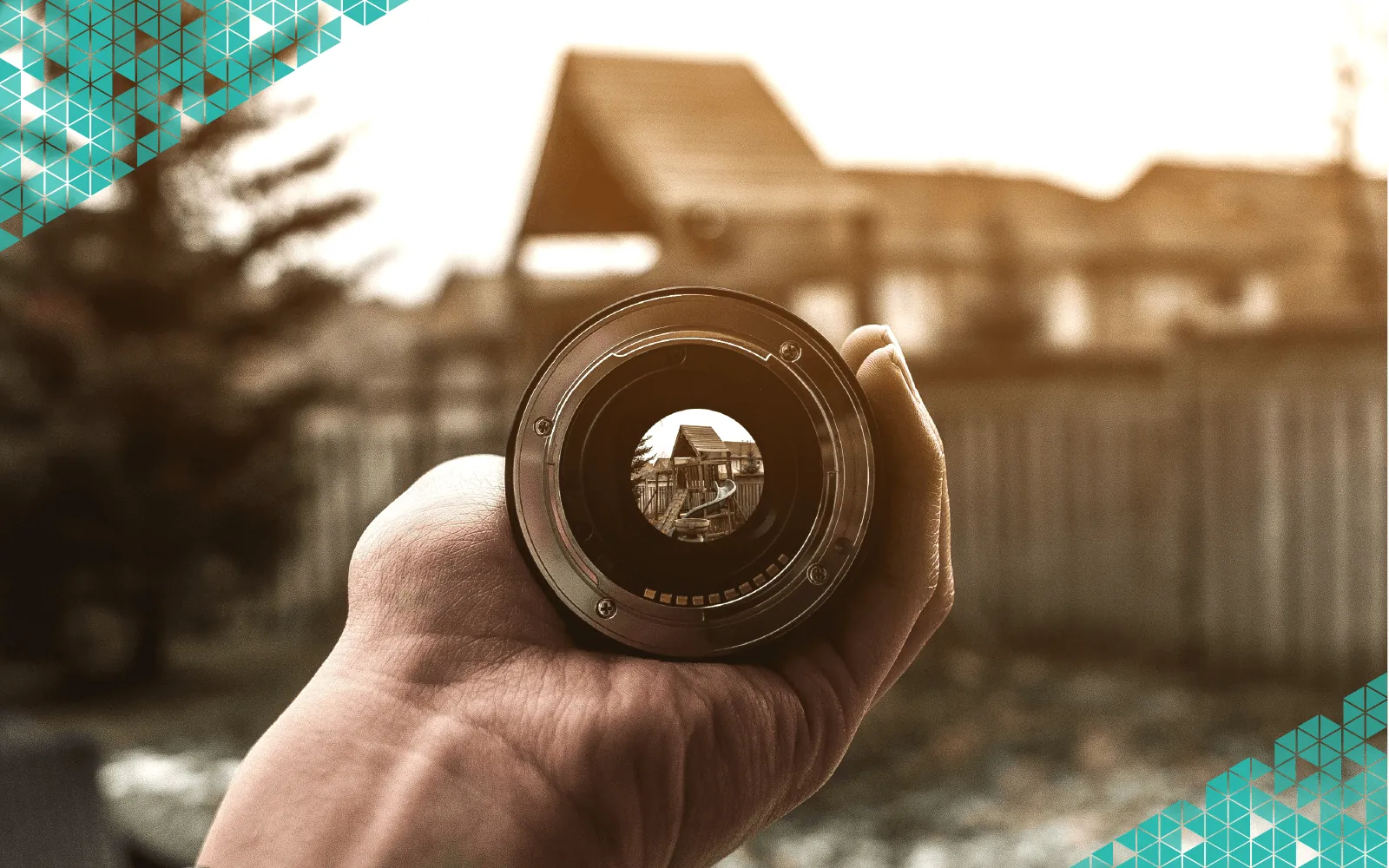
Lensing
The first is a creativity boosting concept called lensing. Lensing is the act of viewing everything you experience as you go about your day through the lens of the problem you're trying to solve. Now, of course, most of what you experience throughout your day won't have much to do with your problem. A walk through the park. Waiting in line at the grocery store. Washing dishes. These are ordinary experiences, totally unrelated to the problem you're designing for. But that's exactly the point. Creative breakthroughs often come by connecting two seemingly unrelated things.
Take the classic story of how Velcro was invented. A man by the name of George de Mestral was on a walk with his dog when he noticed all of these burrs stuck on his companion. After a "quick" look under the microscope, he was able to figure how Mother Nature was able to produce this effect, and he used this pattern as inspiration to create the Velcro we know today. Most people would never think to associate the two. But by thinking about what most people never would, you have some hope of coming up with an idea that's entirely novel. After all, you're not going to come up with something new by thinking about the same things in the same way as droves of other people.
If we look back at our friend Michael from the opening paragraph, lensing occurred the moment he realized he was at peace in the park. Despite the fact that he was simply listening to a fountain with strangers, his subconscious was working on solving the problem of how to help New York cope with the events of 9/11. So when he finally did feel at peace, he realized that this experience was something everyone else needed. He connected a water fountain with a way to help others and used this as inspiration for his design.
Ada, Adalo's AI builder, lets you describe what you want and generates your app. Magic Start creates complete app foundations from a description, while Magic Add adds features through natural language.
Today's creators can apply this same lensing approach to app development. When you're constantly thinking about who you want to help, everyday observations become potential features. A frustrating checkout experience becomes inspiration for a smoother e-commerce flow. A confusing gym schedule becomes the seed for a fitness booking app. Tools like Adalo's Magic Start can then help translate these observations into working app foundations—describe what you observed and what you want to solve, and it generates your database structure, screens, and user flows automatically.
Play
The second way passion fosters creativity has to do with having fun. (Wow. First love, and now fun? What's not to like?) When you're doing something you're passionate about, you're largely free from stress and boredom, and your brain is able to revert to its default emotional state: happy, relaxed, and playful. Yes, that's right, even in today's crazy world, your default state of mind is happy. It's kind of amazing we search so much for happiness when it's actually right there, a core part of us all along. The key is to get rid of all that other stuff that's covering it up.

Now we could get into the neuroscience that proves that our default state of mind is happy, but the truth is you already know this. People who are stressed out or unengaged are the least happy you encounter; however, none of us start out life stressed or bored. Think about your interactions with babies. Yes, babies cry—a lot. But they don't cry most of the time. If they're fed, rested, and comfortable, free from the pesky distractions of bodily needs, they're happy. In fact, they're playful.
And here's where we get to the link between happiness and creativity: play. Play is an essential state of mind to foster creativity. In fact, play is literally how we learn and develop creativity as children. Evolutionary biologists and psychologists believe this is the reason why kids play so much. The more we play, the more creative we are, and this creativity helped our ancestors come up with solutions to help them survive and thrive.
But play isn't just kid stuff. It has the same benefits for us as adults as well. When our mind is playful, we leave ourselves open to new ideas and are more willing to experiment, to try things out that may even seem silly, but in reality, could lead to major creative breakthroughs.
This playful experimentation is exactly what modern app building should feel like. When technical complexity disappears, you're free to experiment. What if the onboarding had three screens instead of five? What if users could swipe instead of tap? With visual builders that let you see changes instantly—Adalo's canvas can display up to 400 screens at once if needed—you can play with ideas the way a child plays with building blocks. Magic Add lets you describe new features in plain language and see them materialize, turning "what if" into "let's try it" in minutes rather than days.
This is what happened with Michael. After his peaceful moment by the fountain, he started sketching out ideas for a space for more people to be able to experience a similar moment of peace. Soon these sketches turned into physical models as Michael was just letting his passion guide him. And while this might not seem like "play," to Michael it was a form of play. There wasn't a deadline or any external pressure to create something; he was simply reverting back to his childhood days of creating something on his own for fun.
Three Years Later Though...
There was something with a deadline—one of the most anticipated design competitions of all time. New York was hosting a competition for a September 11th memorial. So Michael Arad dusted off those models and applied—competing against over five thousand of the most prestigious architecture firms in the world. It seemed like a total longshot. He was by no means a starchitect (star architect for those of you not up on the lingo). But despite his lack of credibility he made the final 8. Of the finalists, he was the only one without a team, earning him the nickname, "The Lone Wolf."
It seemed impossible for one man alone to beat out so many powerful architecture firms, but on the day the winner was announced, he couldn't believe it—he won! His passion and empathy to help New Yorkers pushed him over the top.

Michael's story resonates with today's solo creators and small teams. You don't need a massive development firm to build something meaningful. Over 3 million apps have been created on Adalo, many by individuals and small teams who, like Michael, had more passion than resources. The platform's visual builder has been described as "easy as PowerPoint," removing the technical gatekeeping that once required entire teams of developers.
The Memorial That Passion Built
For those of you who've never had the opportunity to experience the beautiful memorial, it's pretty obvious how Michael's original moment of peace around a fountain with strangers manifested itself into what exists today. The memorial is an 8-acre clearing in the middle of one of the most densely packed cities in the world. There is a field of trees and two enormous voids containing waterfalls on the exact footprints of the two towers. Water flows into these voids, yet never fills them, reminding us that nothing can replace what was lost that day.
The noise from the waterfalls creates a soundscape that's quiet, allowing for you to be in your own space and reflect on the events of that day; just as Michael did in the weeks after the attacks.
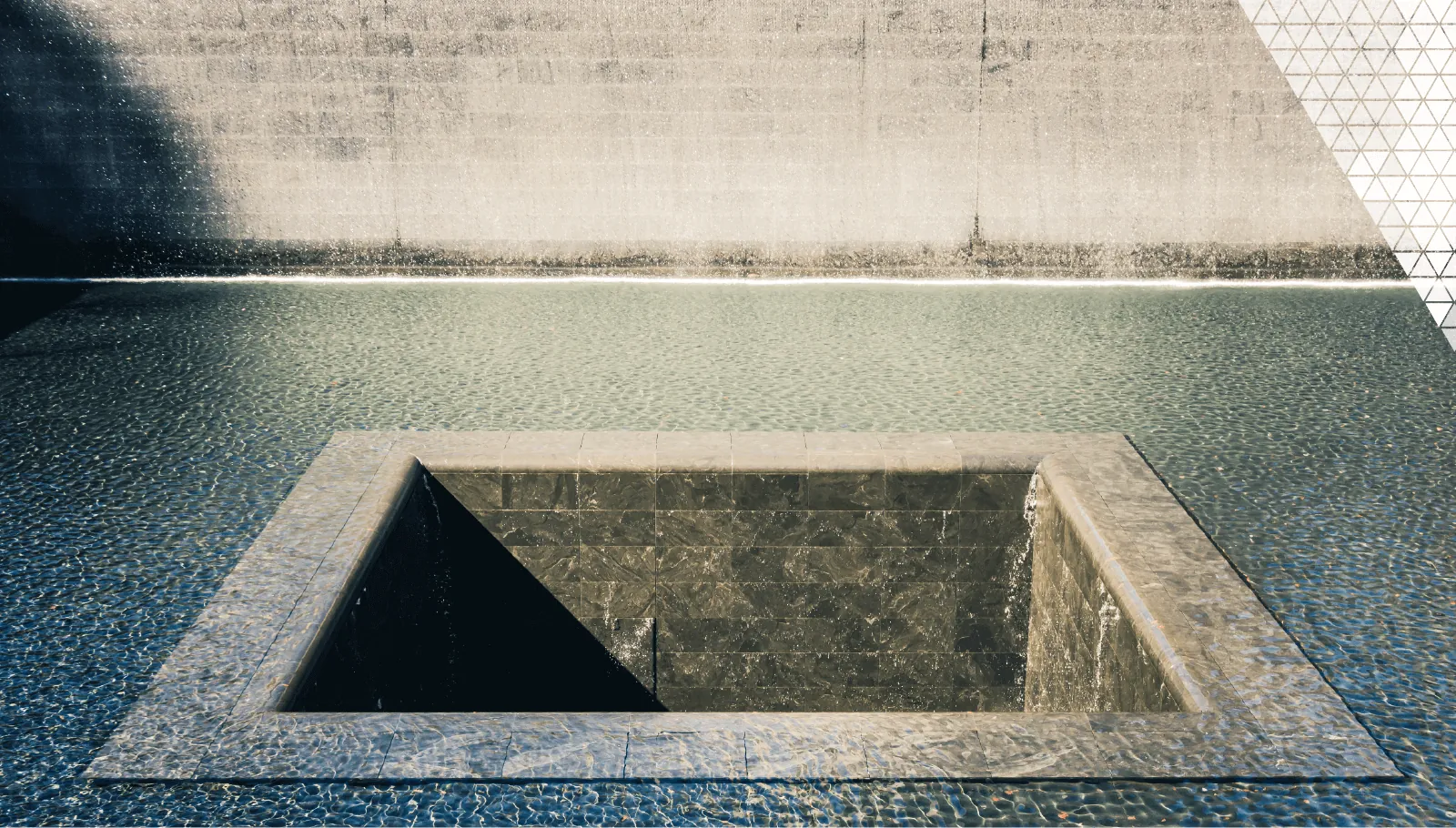
After first hearing the story in Debbie Millman's Design Matters Podcast, I was really moved by the thought of Michael making these models on his own a full three years before the competition was even announced. It shows just how powerful passion can be.
From Passion to Impact: The Modern Creator's Path
Michael's journey from peaceful moment to world-renowned memorial took years of patient work. Today's passionate creators have tools that can dramatically compress that timeline—not by shortcutting the creative process, but by removing the technical friction that used to slow it down.
Consider what it means to turn a passion project into a real app. Previously, you'd need to learn coding, hire developers, or settle for limited website builders. Now, platforms like Adalo let you describe what you want to build and generate working foundations in minutes. The AI-assisted approach handles the technical scaffolding so you can focus on the creative vision—the part that actually requires your unique passion and perspective.
The scalability question matters too. When Michael's memorial was selected, he had to trust that the infrastructure could handle millions of visitors. App creators face a similar challenge: will your platform support growth if your passion project takes off? Adalo's modular infrastructure scales to serve apps with over 1 million monthly active users, with no upper ceiling. Paid plans include no record limits on the database and no usage-based charges—meaning no surprise bills if your app suddenly goes viral.
This is particularly relevant when comparing options. Bubble, a visual web app builder, offers more customization but often results in slower applications under load, frequently requiring hired experts to optimize. Their mobile solution is a wrapper for the web app, which can introduce challenges at scale. Adalo's purpose-built architecture compiles to true native code, maintaining performance as your user base grows.
Asking the Right Question
Looking back at the original question "what do you want to be when you grow up?" it's clear now that it should probably be rephrased. Instead of asking ourselves what, we should be asking ourselves "who we want to help." Reframing this question will ultimately lead us down a path where we're able to produce our most innovative work.
Michael Arad didn't set out to become a famous architect. He set out to help New Yorkers find peace. The memorial was simply the vehicle for that purpose. Similarly, the most successful app creators don't start by asking "what app should I build?" They start by asking "who am I passionate about helping?"
Once you have that answer, the technical execution becomes a matter of choosing the right tools. For those who want to move quickly from vision to reality—publishing to web, iOS, and Android from a single codebase—AI-powered platforms have made the journey more accessible than ever.
So in the spirit of helping each other out, I'll ask you: "Who are you passionate about helping?"
[Update: I wrote a follow-up to this article called "5 Steps to Finding Your Creative Purpose". Check it out if you're interested!]
FAQ
Why choose Adalo over other app building solutions?
Adalo is an AI-powered app builder that creates true native iOS and Android apps alongside web apps. Unlike web wrappers, it compiles to native code and publishes directly to both the Apple App Store and Google Play Store from a single codebase. With paid plans offering unlimited database records and no usage-based charges, you can scale your passion project without worrying about surprise bills or hitting data caps.
What's the fastest way to build and publish an app to the App Store?
Adalo's drag-and-drop interface combined with AI-assisted building lets you go from idea to published app in days rather than months. Magic Start generates complete app foundations from simple descriptions, and the platform handles the complex App Store submission process—certificates, provisioning profiles, and store guidelines—so you can focus on your app's features and user experience.
Can I turn my passion project into a real app without coding experience?
Absolutely. Adalo's visual builder has been described as "easy as PowerPoint," and over 3 million apps have been created on the platform by people without traditional coding backgrounds. Magic Add lets you describe features in plain language and see them materialize, removing the technical barriers between your passion and the people you want to help.
How does passion lead to more creative and innovative app ideas?
Passion drives creativity through two key mechanisms: lensing and play. Lensing helps you view everyday experiences through the lens of the problem you're solving, leading to unexpected connections—like how Velcro was invented from observing burrs. Play keeps your mind open to experimentation and new ideas, which is why passionate people often produce their most innovative work.
Should I focus on 'what' I want to build or 'who' I want to help?
Focus on 'who' you want to help rather than 'what' you want to build. People who love their careers talk about the impact they're making on others' lives, not their job titles. By identifying who you want to help first, you'll naturally find more meaningful and innovative solutions. Michael Arad didn't set out to become a famous architect—he set out to help New Yorkers find peace.
Can someone without a big team compete with established companies?
Yes. Michael Arad, nicknamed "The Lone Wolf," competed against over five thousand prestigious architecture firms and won the 9/11 Memorial design competition as the only finalist without a team. With AI-powered app builders, passionate individuals can now build professional apps that compete with those created by large development teams, proving that passion and purpose can triumph over resources.
How much does it cost to build a passion-driven app?
Adalo's web and true-native mobile builder starts at $36/month with unlimited usage and app store publishing. This compares favorably to alternatives: Bubble starts at $59/month with usage-based charges and record limits, while Flutterflow starts at $70/month per user but doesn't include a database. Adalo's paid plans have no record limits and no usage-based charges, so costs stay predictable as you grow.
Will my app be able to scale if it becomes successful?
Adalo's modular infrastructure scales to serve apps with over 1 million monthly active users, with no upper ceiling. Following the Adalo 3.0 infrastructure overhaul in late 2025, apps run 3-4x faster with infrastructure that scales automatically with your needs. Unlike app wrappers that hit performance constraints under load, Adalo's purpose-built architecture maintains performance at scale.
How do I know if my app idea is worth pursuing?
Ask yourself "who am I passionate about helping?" rather than focusing solely on the technical aspects. If you find yourself constantly thinking about a problem and how to solve it for others—like Michael Arad did for New Yorkers after 9/11—that's a strong sign your idea is worth pursuing. Your passion will fuel the creativity and persistence needed to bring it to life.