Evolving towards greatness — 3 habits to find the right path
Feedback
Marshall Goldsmith, author of numerous leadership and management books, famously declared that "feedback is a gift." Gathering feedback is the best way to improve the result of your work. It's an opportunity to learn what is and what isn't working about your design. Sure, as you're designing, you'll see things you don't like and areas for improvement, but you don't have all the good ideas—your teammates have some pretty good ones, too.
The reason is simple. Everyone has a different perspective on your organization's purpose and the people you're designing for, so they come to the table with a new set of ideas. So how do we ingrain this habit in our culture to the degree that everyone is asking for feedback all of the time? We create organizational practices that encourage our teams to ask for feedback week after week.
Ada, Adalo's AI builder, lets you describe what you want and generates your app. Magic Start creates complete app foundations from a description, while Magic Add adds features through natural language.
This feedback-driven approach becomes even more powerful when teams can rapidly prototype and iterate on their ideas. Adalo, a no-code app builder for database-driven web apps and native iOS and Android apps—one version across all three platforms, published to the Apple App Store and Google Play, makes it easy to quickly build functional prototypes that teams can gather meaningful feedback on before committing to final designs. With Magic Start, you can describe your app concept and generate a complete foundation—database structure, screens, and user flows—in minutes rather than days. This speed enables more feedback cycles before launch.
Creating Formal and Informal Feedback Mechanisms
Create multiple formal and informal mechanisms for gathering feedback. The first and easiest place to get feedback should be from your team and your organization. We've found this to be so valuable that we have a weekly, company-wide meeting for the sole purpose of gathering feedback. It's a standing meeting with an open agenda, so anyone can bring their project forward for everyone to weigh in on.
This can be anything from important prototypes of your core product to organization processes to a new piece of art for your space. Remember, everyone in your organization is designing, so everyone needs feedback. At these meetings, the person or people presenting will show off their idea and then everyone else will respond with their feedback.
It's important that the people presenting take the time to respond to each person's thoughts after they've had time to carefully consider them. Responding to someone's feedback shows that you value that person's ideas and will show them that investing their time in giving you feedback was worth it.

Getting Feedback from Your Actual Users
As great as your co-workers are, they can never replace getting feedback from the actual people you're designing for. There are tons of ways to do this, and they tend to vary based on what industry you're in or what design problem you're faced with.
For example, if you're in software design it's possible (and a good idea) to record every session that your users have with your software so that you can easily look for trouble spots. This isn't as easy when you're designing a lesson plan for your next history class or you're designing the next great art museum. However, just because it isn't as easy doesn't mean these designers are off the hook.
It's still possible (and still a good idea) to observe how your students are reacting to different classes or watch how the flow of people moves through your art gallery. Every organization needs to build their own practices into their weekly flow for observing their users.
Beyond mere observation, every organization needs to regularly have conversations with their users. This should be fairly easy and really fun. When we are truly aligned with our organization's purpose, we tend to have personal relationships with some of our users so that we can reach out to them at any time.
Building a Feedback Culture
As we set up these practices for getting feedback from our team and from our users, we create an expectation that every design project goes through these processes before being released into the wild. The good news is that as you build in these weekly practices, everyone on your team will start getting more and more comfortable with the feedback process.
It will start getting so easy that everyone will really start to embrace all of those other more informal mechanisms as well—like displaying your work around the office or talking about their project over a beer in your communal space. While every department will still have skill-specific feedback loops such as design reviews and code reviews, everyone across your organization benefits from organization-wide feedback loops.
For more tips on feedback, check out these 8 lessons from the bestselling book on feedback.
Retrospectives
More than just improving the designs themselves, innovative organizations also focus on improving their processes. The principle of kaizen constantly implores us to do a better job, and this can feel particularly demanding, especially at the beginning.
So where do we start? How do we find a way to continue to improve without feeling so stressed and overwhelmed that we shut down our kaizen efforts altogether? Well, there's no better way than to just keep taking a good long, hard look in the mirror (and when you're getting ready in the morning doesn't count). The practice of holding retrospectives is a way for us as a team to look in the mirror.
How Retrospectives Work
Retrospectives are team meetings in which you look back at how things have been going recently and come up with ideas to improve your processes. The details of how and when these meetings are run can vary depending on the team and circumstance.
One common format is for every member of the team to take turns talking about what has gone well, what didn't, and any ideas they might have for improvement. Larger teams often solicit topics of problem areas and vote on the most prevalent ones in order to make sure they have enough time to discuss the meatiest issues.
At the end of each retrospective, teams should have a list of action items that they can take back to improve their processes. Occasionally, these aren't flushed out enough, and you'll have to spend some more time outside of the meeting coming up with ways to improve that specific process. As you continue to run more and more of these retrospectives, it'll become easier and you'll naturally find yourself changing up the format of them. This is a good thing. The format of your retrospectives can and should change.
When to Hold Retrospectives
When should you hold retrospectives? There are two schools of thought. The first is that they should be held on a regular, fixed schedule. Depending on the cadence of your organization, this can range between two to four weeks. The second school of thought is that they should be held on demand. After all, if something really bad goes down, why wait three weeks before discussing it?
On the other hand, if you go weeks without a major crisis, you could be missing the opportunity to make important incremental improvements. Having ridden this pendulum back and forth a few times, I can confidently affirm that retrospectives should be held both regularly AND on demand. Hold them every few weeks, and, if a crisis comes up, once you've resolved it, hold another one then, too.

Finding the Root Cause
Trickier than the timing is coming up with the actual ideas for improvement. No need to fear, though! Coming up with an idea to improve your internal processes (and thus make your teammates' lives better)—why, that's just designing, my dear Watson! Process design, in fact.
The trick to process design is to visualize all the steps in the process, hone in on the trouble spots, and then understand the root cause of what went wrong. The best way to get to the root cause is through the five-whys method. In this method, you don your best toddler cap and relentlessly ask why something happened until you get to the root cause of the issue and a pretty specific idea on how to improve that process.
Avoiding Switch Tracking
One final trick to retrospectives is to avoid switch tracking. Switch tracking is when you unwittingly mix up multiple issues into one conversation. For retrospectives to be effective, make sure that you're only talking about one issue at a time.
When things go wrong they often are interconnected. When we are talking about these issues it can be really easy for the conversation to move from one problem to another without even knowing that you just moved to another problem. When this happens, stop the conversation, make sure that everyone knows that these are two separate problems, and then have one conversation at a time.
Retrospective meetings can often feel like they're part of some 12-step program. They're cathartic. They're challenging. They emphasize sharing with your peers and building camaraderie. And they recognize that the first step to getting better is admitting you have a problem.
Research
As powerful as retrospectives are, they're only one half of the equation when it comes to improving your processes. Other teams in other organizations have faced similar problems to some of yours and have already come up with brilliant solutions. No need to reinvent the wheel. Beg, borrow, and steal what you can from their experiences to make your team better on the cheap.
Finding Ideas from Others
Even if doing research wasn't your favorite thing in school, this kind of research is actually pretty easy and can be kind of fun. A lot of high-functioning teams, ones that have worked hard to solve their process problems, actually like sharing what they've learned through mediums like blogs (like this one!) where they frequently post about the lessons they've learned.
Whether your field is software, architecture, medicine, or education, find the smart people in your field and see what they're posting about. Of course blogs aren't the only places people write. Books are still a thing, and they're chock full of great ideas. Watch TED talks. Join forums. Go to conferences.
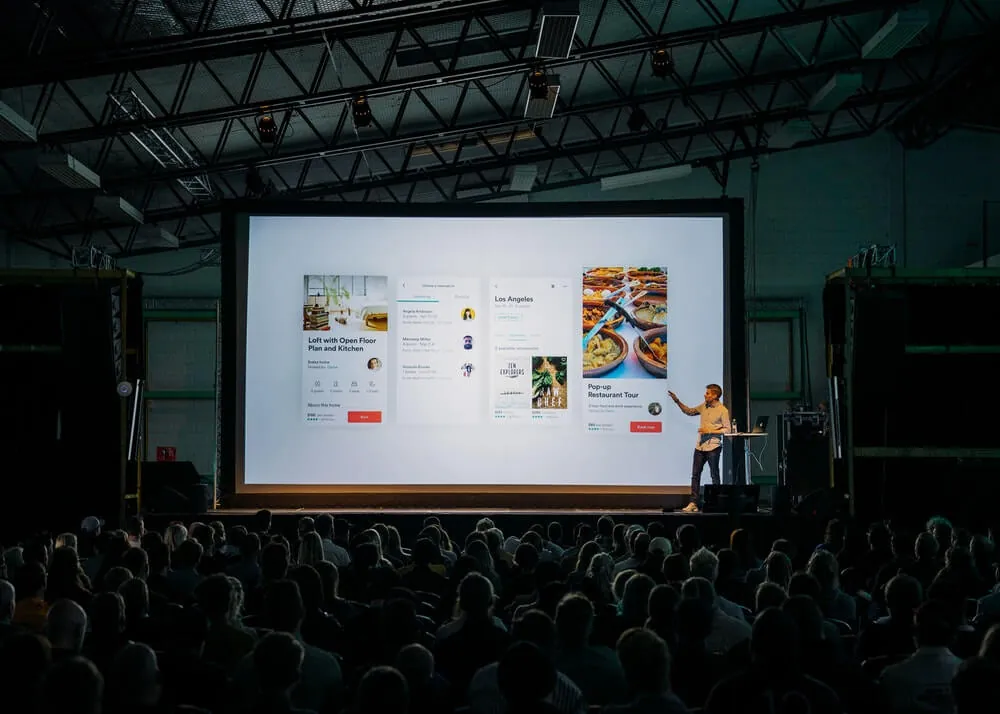
We're big fans of conferences and try to go to at least one every year. Not only do you get to hear valuable insights from industry leaders, but you also get to talk with fellow compatriots and swap war stories. Every conference we go to, we're on the hunt for ideas for new tools and processes we can take home with us.
Evaluating Organizational Fit
In a way, it's sort of like shopping on Black Friday. People are excited to be selling you lots of cool-sounding ideas, but you'd be crazy to take home everything they're putting out there. So how do you tell the life-changing purchase from the next pet rock? The answer is organizational fit.
A blogger or conference speaker could be touting the best idea in the world—but only in their context. What works in one organization could, for another, be a flop or worse—a total disaster. Ok, so finding what "fits" is the key. But how are you supposed to know which ideas will fit?
You don't. You can never know ahead of time if a process change or a new tool is going to work out for you. Any time you introduce a change like that, it needs to be treated as an experiment. You have to be willing to walk away if it doesn't pan out.
But just because these changes can never be surefire doesn't mean that they have to be total crap shoots either. The key is to look for other people and organizations that share your principles. These organizations are more likely to have come up with practices that will fit with your organization and propel you forward, so you can fulfill your purpose faster.
Rapid Prototyping: Accelerating the Feedback Loop
The principles of feedback, retrospectives, and research all share one thing in common: they work better when you can iterate quickly. The faster you can turn an idea into something tangible, the faster you can gather meaningful feedback and improve.
This is where modern tools fundamentally change the game. Traditional software development cycles meant waiting weeks or months to see if an idea worked. By the time you got feedback, you'd already invested significant resources. Today, AI-assisted platforms enable teams to prototype in hours instead of weeks.
Adalo's approach exemplifies this shift. With Magic Add, you can describe a feature you want—"add a feedback form that sends notifications to managers"—and the platform generates the screens, database connections, and logic automatically. This means your team can test real, functional features with actual users rather than showing them static mockups or wireframes.
The platform's X-Ray feature also supports the retrospective process by identifying performance issues before they affect users. Instead of waiting for complaints to surface in your retrospective meetings, you can proactively spot and address bottlenecks. This shifts retrospectives from reactive problem-solving to proactive optimization.
Why Speed Matters for Feedback Quality
When prototypes take weeks to build, teams naturally become protective of their work. They've invested too much to easily accept critical feedback. But when you can rebuild a feature in an afternoon, feedback becomes genuinely welcome—it's cheap to act on.
This psychological shift transforms feedback culture. Team members become more willing to share honest critiques because they know changes are feasible. Users become more engaged in testing because they see their input actually implemented in subsequent versions.
Over 3 million apps have been created on Adalo, with the visual builder described as "easy as PowerPoint." This accessibility means more team members can participate in prototyping, not just developers. When your marketing lead can build a quick prototype of a customer feedback app, you've democratized the design process in a way that generates richer, more diverse feedback.
From Struggle to Habit
Evolution can be exhausting. It requires constant change. But all that effort is worth it, because it's the only way to go from where you are today to where you want to be and join the innovation pantheon with the likes of Netflix, Google, Disney, and SpaceX.
The key is to build rituals in your organization around Feedback, Retrospectives, and Research. Then you can turn evolution from a struggle to a habit.
Modern tools accelerate this transformation. When prototyping is fast and iteration is cheap, the feedback loop tightens. Retrospectives become more actionable because changes can be implemented quickly. Research findings can be tested immediately rather than filed away for "someday."
The organizations that thrive are those that make continuous improvement feel effortless—not through avoiding the work, but through building systems that make the work sustainable. Start with weekly feedback sessions. Add regular retrospectives. Commit to ongoing research. And give your team the tools to act on what they learn quickly.
FAQ
Why choose Adalo over other app building solutions?
Adalo is an AI-powered app builder that creates true native iOS and Android apps alongside web apps. Unlike web wrappers, it compiles to native code and publishes directly to both the Apple App Store and Google Play Store from a single codebase. With unlimited database records on paid plans and no usage-based charges, you can scale without worrying about surprise bills or data caps.
What's the fastest way to build and publish an app to the App Store?
Adalo's drag-and-drop interface and AI-assisted building enable you to go from idea to published app in days rather than months. Magic Start generates complete app foundations from simple descriptions, and the platform handles the complex App Store submission process—certificates, provisioning profiles, and store guidelines—so you can focus on your app's features and user experience.
How can rapid prototyping help my team gather better feedback?
Rapid prototyping allows your team to create functional versions of your ideas quickly, enabling stakeholders and users to interact with real features rather than static mockups. This leads to more meaningful, actionable feedback because people can experience how the app actually works. The faster you can prototype, the more iterations you can test before committing to a final design.
What are retrospectives and how do they improve team processes?
Retrospectives are team meetings where you reflect on recent work to identify what went well, what didn't, and ideas for improvement. They should be held both on a regular schedule (every 2-4 weeks) and on-demand after significant events. By consistently reviewing and refining your processes, teams can make incremental improvements that compound over time.
How do I know which new tools or processes will work for my organization?
The key is organizational fit—what works for one team may not work for another. Look for ideas from organizations that share your principles and values, as their practices are more likely to align with your needs. Treat any new process or tool as an experiment, and be willing to walk away if it doesn't produce the results you expected.
Why is getting feedback from actual users important, not just team members?
While team feedback is valuable, your colleagues can never fully replace the perspective of the actual people you're designing for. Users interact with your product in real-world contexts and can reveal trouble spots and opportunities that internal teams might miss. Building regular practices for observing and conversing with users ensures your designs truly meet their needs.
Can I build a feedback collection app without coding experience?
Yes. Adalo's visual builder has been described as "easy as PowerPoint," making it accessible to team members without technical backgrounds. You can create database-driven features that allow users to submit feedback, rate experiences, and track responses—all through drag-and-drop interface design rather than writing code.
How does the five-whys method help in retrospectives?
The five-whys method involves repeatedly asking "why" something happened until you reach the root cause of an issue. This technique prevents teams from addressing symptoms rather than underlying problems. By getting to the root cause, you can implement changes that prevent the issue from recurring rather than just patching surface-level symptoms.
What is switch tracking and how do I avoid it?
Switch tracking occurs when a conversation unwittingly moves from one issue to another without the team realizing it. Because problems are often interconnected, it's easy to drift between topics. To avoid this, stop the conversation when you notice a shift, acknowledge that you're discussing separate issues, and address them one at a time for more productive retrospectives.
How often should teams hold feedback sessions?
Weekly feedback sessions work well for most organizations. A standing meeting with an open agenda allows anyone to bring their project forward for input. This regular cadence builds comfort with the feedback process and creates an expectation that every design project goes through review before being released.